
Quick answer: room scheduling changeover policy reset time mismatch
Review focus: room scheduling changeover policy reset time mismatch.
A room scheduling changeover policy reset time mismatch appears when booking software releases a space before the changeover crew can physically reset it. The gap is rarely a software fault. It usually comes from treating a movable partition as a push-button room divider rather than a coordinated building element. For contractors, architects and facility teams, the practical fix is to align the booking rule with the maintained product facts, the reviewed layout and the confirmed reset sequence. This article sets out an evidence-bounded framework for that alignment.
Why the Mismatch Happens in Real Buildings
Project review term: room scheduling changeover policy reset time mismatch.
Booking platforms optimise for calendar density. They see a room as available the moment the previous booking ends. Changeover crews see a sequence: close the current session, move people out, release any pass-door, walk the partition line, move panels individually along the top track, and park them at the planned stacking position. Each step consumes time that the calendar does not display.
The suitability of each route and parking arrangement depends on the approved layout, circulation, ceiling interfaces and operating sequence. The exact route, junction arrangement, continuous overhead path and parking position must be confirmed from the coordinated project drawings. If the layout review has not confirmed how panels travel and where they park, the booking system is promising a room configuration that the building may not support in the stated window.
What the Maintained Product Facts Actually Support
Coordination scope: room scheduling changeover policy reset time mismatch.
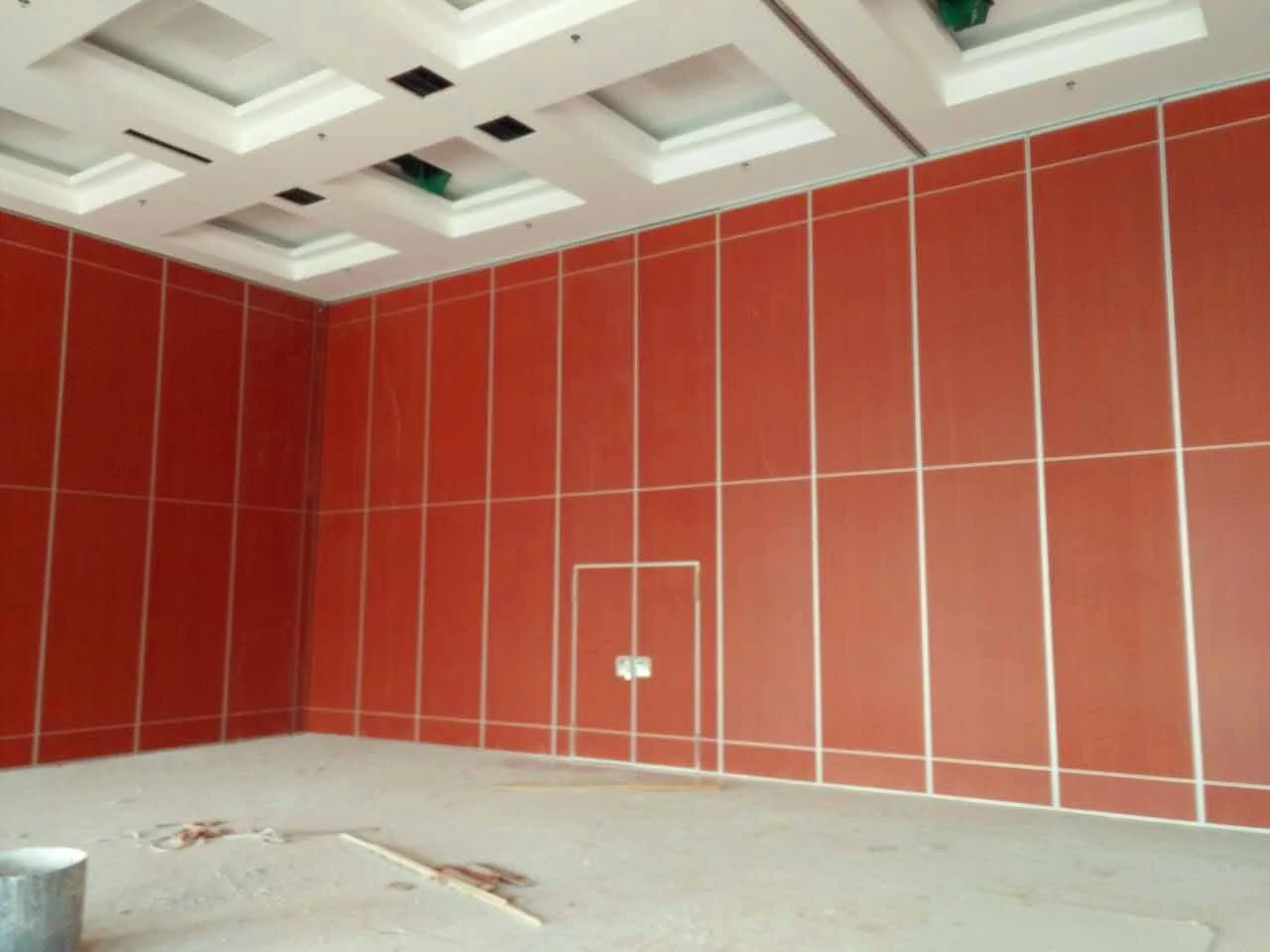
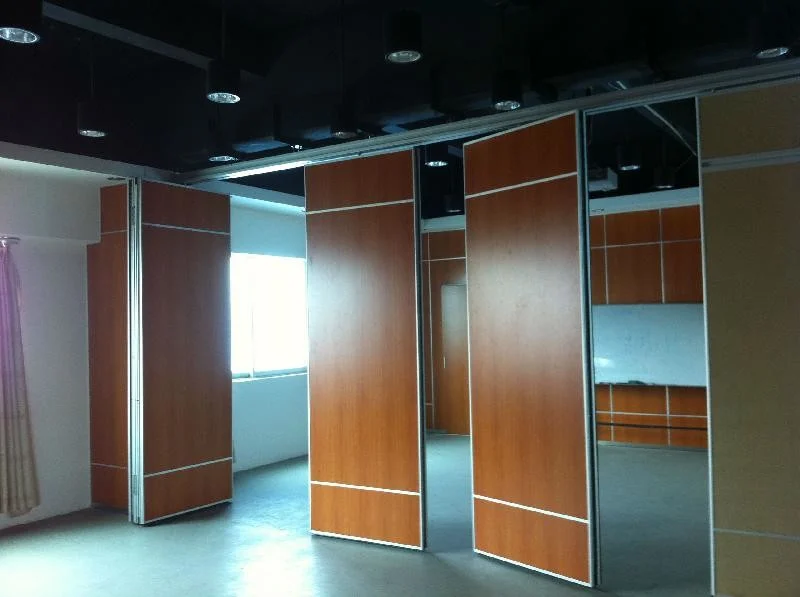
EBUNGE movable wall panels are individually movable and suspended from a top track. They cross the opening without a floor track, so the floor remains clear along the partition line. Panels park at a planned stacking position. Straight, turning and stacking routes are reviewed from the layout.
Confirmed finish options include laminate, melamine, fabric, leather, glass and other approved surfaces. Pass-door requirements and project documentation can be discussed. These facts describe configuration and movement logic. Visible references can support layout discussion but do not verify hidden construction or performance.
Where Evidence Stops
Do not infer hidden performance from a visible finish, a photograph or a drawing. The exact overhead route and support arrangement must be confirmed by the responsible project team from coordinated drawings.
A Decision Checklist for Booking Policy Alignment
Checklist focus: room scheduling changeover policy reset time mismatch.

- Map the actual changeover sequence from session end to room-ready, including pass-door handling and panel parking.
- Confirm the reviewed movement route: straight, turning and stacking paths must be continuous and supported.
- Identify who releases the room and who confirms the reset is complete.
- Panel handling and the operating sequence must be confirmed for the selected layout and project conditions.
- Record which requirements still need project-specific confirmation before the policy is published.
This checklist is a coordination tool, not a performance guarantee. It helps teams expose assumptions before they become booking promises.
Coordinating the Reset Sequence Across Disciplines
The booking owner states the intended room combinations. The changeover lead describes the physical reset. The design team confirms whether the reviewed routes and parking positions support those combinations.
When those three views are separated, the mismatch persists. When they are combined, the booking policy can be written around confirmed movement logic rather than optimistic assumptions.
Questions to Resolve Before Publishing a Policy
- Which room combinations will the booking system offer?
- Which of those combinations have a reviewed movement route and parking position?
- What pass-door arrangements are required, and how do they affect the reset?
- Which finish or surface requirements affect handling during changeover?
- What documentation is needed so the policy can be audited later?
Specification Boundaries Buyers Should Document
A room scheduling changeover policy reset time mismatch specification should separate confirmed facts from open items. Confirmed facts include the top-hung, floor-track-free movement concept and the planned parking approach. Open items include support review, acoustic requirements and dimensional coordination.
| Item | Confirmed basis | Still requires project confirmation |
|---|---|---|
| Panel movement | Individually movable, top-hung | Route continuity and support |
| Floor condition | No continuous floor track along partition line | Interface with adjacent finishes |
| Parking | Planned stacking position | Space and layout coordination |
| Acoustics | Conceptual STC/Rw awareness | Project-specific acoustic review |
Use this table as a documentation aid. It prevents a booking policy from silently converting an open item into a promise.
How to Review Drawings Without Overclaiming
Drawing review should trace the movement path from the closed position to the parked position. If the drawing shows a gap, the route is incomplete and the booking policy should not assume that configuration.
Reviewers should also check that the parking position does not block circulation or conflict with other building services. These are layout questions, not product performance claims. They belong in the project-specific review record.
Evidence Note
Booking speed is a policy choice. Reset feasibility is a project-specific finding. Keep the two separate until the layout, support and acoustic requirements have been confirmed.
Frequently Asked Questions
What causes a room scheduling changeover policy reset time mismatch?
It usually occurs when booking software treats a room as instantly reconfigurable while the physical changeover requires moving panels individually, handling pass-doors and parking panels at a planned position. The policy and the layout review are not aligned.
Can movable partitions eliminate changeover time?
No. Movable partitions support flexible division and combination, but they do not remove the need for a reset sequence. The realistic reset depends on the reviewed layout, route and project-specific requirements.
Do EBUNGE panels need a floor track along the partition line?
The maintained product facts describe top-hung panels that cross the opening without a continuous floor running track or floor hardware along the partition line.
How should STC or Rw be used in booking policy discussions?
Provide the current layout, opening dimensions, ceiling information, intended room use, and relevant project drawings for review. The exact overhead route and support arrangement must be confirmed by the responsible project team from coordinated drawings.
What should be confirmed before publishing a changeover policy?
Confirm the reviewed movement route, parking position, pass-door requirements, support conditions, acoustic requirements and dimensional coordination. Until those are confirmed, the policy should state the open items clearly.
Where can project teams find further planning context?
Review the movable walls product context and the resources library, then contact the team to discuss project documentation and pass-door requirements.
Conclusion and Next Step
The practical path is to align the policy with maintained product facts, reviewed movement routes and project-specific confirmation. Start by mapping the real reset sequence, then document which items remain open.
To discuss your layout, pass-door requirements and project documentation, contact EBUNGE.