
Quick answer: room changeover policy
Review focus: room changeover policy.
A room changeover policy partition state variation framework helps a venue move between layouts without relying on memory or verbal instructions. When movable wall panels are individually movable, suspended from a top track, cross the opening without a floor track and park at a planned stacking position, the room can exist in several valid states. Each state needs a name, a route and an owner. This guide is for contractors, architects, interior designers, owners, renovation teams, distributors and construction teams who must coordinate operations planning without inventing performance or engineering conclusions.
Why Partition State Variation Breaks Informal Changeover Habits
Project review term: room changeover policy.
Informal changeover works while a room has one obvious configuration. It fails when the same opening can be fully open, partly closed, fully closed or parked in a stacking position. Staff may assume a panel is available when it is already committed to another layout. A written policy removes that ambiguity by treating each configuration as a defined state rather than a casual arrangement.
State variation also affects how routes are reviewed. Straight, turning and stacking routes must be checked from the layout, because a panel path that works in one arrangement may not suit another. The policy should therefore describe states and routes together, not as separate documents.
Define Every Partition State Before Writing Rules
Coordination scope: room changeover policy.
Start with a state register. Give each configuration a short operational name and describe which panels are closed, open or parked. Avoid vague labels such as normal or flexible, because they mean different things to different teams.
State register fields to agree
- State name and the room layout it supports.
- Which panels are in the opening, and which are at the stacking position.
- The overhead route the panels follow to reach that state.
- The person authorised to approve the change.
- Any pass-door requirement associated with the state.
Keep the register aligned with the approved layout drawings. If a state cannot be traced to a reviewed drawing, mark it as unconfirmed rather than adding it to daily practice.
A Step-by-Step Process for Setting the Policy
Checklist focus: room changeover policy.
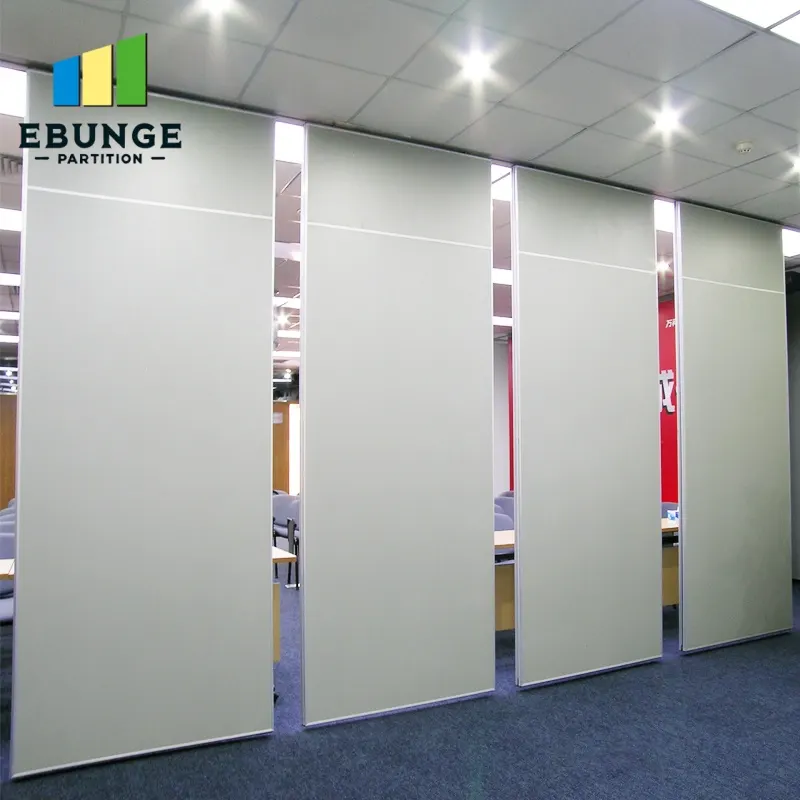
Use a numbered process so the policy is built once and then maintained. Panel handling and the operating sequence must be confirmed for the selected layout and project conditions.
- Collect the room layouts that the venue actually intends to use.
- Convert each layout into a named partition state.
- Review straight, turning and stacking routes against those states.
- Confirm pass-door needs and project documentation with the relevant parties.
- Assign an owner for each state and a backup approver.
- Record the evidence available for each claim in the policy.
- Issue the policy, then review it after the first operational cycle.
Step six matters because a policy often mixes operational rules with performance expectations. Keep those categories separate. Visible references can support layout discussion but do not verify hidden construction or performance.
Roles, Handover and Communication Boundaries
A changeover policy only works when responsibility is explicit. Name who may initiate a change, who confirms the room is ready and who records the final state. For multi-tenant buildings, agree how neighbouring occupants are informed when a shared opening changes.
Coordination points to document
- Who holds the current state register.
- How a change request is logged and closed.
- Which drawings are the reference version.
- How finish options such as laminate, melamine, fabric, leather, glass and other approved surfaces affect handling expectations.
- Where project documentation is stored for future review.
The suitability of each route and parking arrangement depends on the approved layout, circulation, ceiling interfaces and operating sequence. Do not infer hidden performance from a visible surface. If a claim matters to the project, ask for matching project-specific evidence.
Evidence Boundaries for Acoustic and Dimensional Claims
Treat acoustic expectations as project-specific requirements to be confirmed, not as policy statements.
Evidence note: a visible finish, photograph or drawing does not prove acoustic, fire, durability, load, maintenance or commercial performance. Comparative and absolute statements need corresponding evidence, or they should be rewritten as a confirmation boundary.
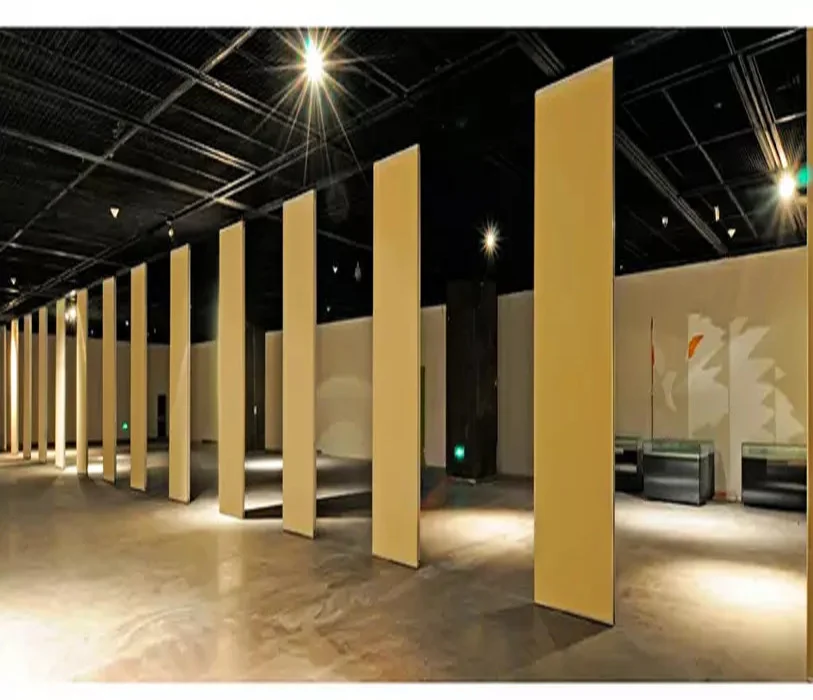
Dimensional requirements follow the same rule. The exact overhead route and support arrangement must be confirmed by the responsible project team from coordinated drawings. The policy should state who confirms those items and where the confirmation is recorded.
Reviewing Routes, Parking and Pass-Door Needs
Every proposed movement path requires a continuous connected overhead route and project-specific support review. The exact route, junction arrangement, continuous overhead path and parking position must be confirmed from the coordinated project drawings. When a layout suggests a turning movement or a remote stacking position, the route must be checked from the drawing before it becomes part of the policy.
Parking style is customised to the customer layout and project requirements, and may support compact stacking when the coordinated design permits it. The policy should describe the planned stacking position and the state it serves, without assuming that any position is available at any time.
Pass-door requirements and project documentation can be discussed with the supplier and design team. Record the outcome in the state register so operators know which states include a pass door and which do not.
Checklist: Is the Policy Ready to Issue?
- Every state has a name, a drawing reference and an owner.
- Straight, turning and stacking routes are reviewed from the layout.
- Pass-door requirements are recorded per state.
- Acoustic and dimensional expectations are marked as project-specific confirmations.
- Finish options are listed without performance inference.
- Contact details for escalation are current.
If any item is unresolved, issue the policy as a draft and state the open confirmation. A clear boundary is more useful than a confident guess.
Frequently Asked Questions
What is a room changeover policy partition state variation?
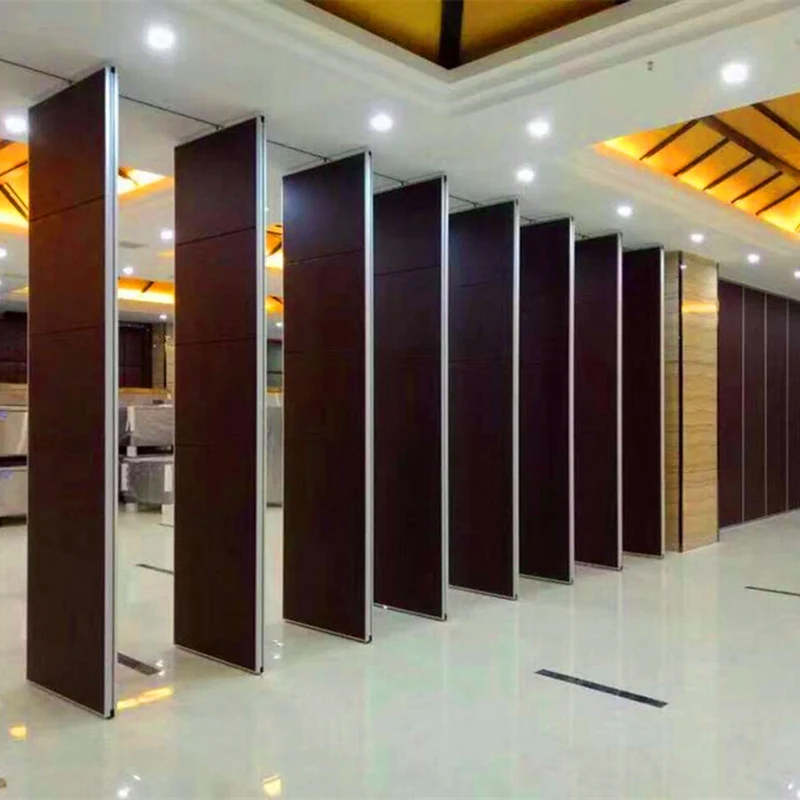
It is a written rule set that names each usable partition configuration and explains how the room moves between those states, including routes, owners and confirmation points.
Do movable partitions need a floor track for changeover?
EBUNGE movable partition panels are top-hung and move without a continuous floor running track or floor hardware along the partition line.
Can the policy include acoustic targets?
It can record that acoustic requirements exist, but the target and its evidence must be confirmed for the specific project.
How often should the state register be reviewed?
Review it when layouts change, when routes or stacking positions change, or after the first operational cycle. Keep the reviewed drawing as the reference version.
Who should approve a changeover?
Assign a primary owner and a backup. The owner confirms the requested state, the route and the final condition before the room is released for use.
What should be excluded from the policy?
Exclude unsupported performance claims, assumed manpower or timing, and any statement that cannot be traced to maintained product facts or project documentation.
Conclusion and Next Step
A room changeover policy works when it describes states, routes and responsibilities in plain operational language, and when every performance expectation is tied to project-specific confirmation. Start with the state register, review the drawings, and keep evidence boundaries visible.
To discuss pass-door requirements, project documentation or layout review for your movable wall project, contact the EBUNGE team. You can also review the movable walls product range and the planning resources before finalising your policy.