
Quick project answer
Review focus: changeover policy review.
A room booking rules changeover policy review is the point where a calendar stops being an administrative document and starts informing the physical design of a flexible space. When booking rules allow back-to-back sessions with different layouts, the room must be reset between them. That reset has a route, a parking position and a sequence. If those are not reviewed early, the operations team inherits a daily problem that no amount of goodwill can solve.
Why Booking Rules Are an Operational Signal
Project review term: changeover policy review.
Booking rules describe how a room is actually used: session length, turnover gaps, setup expectations and who is allowed to reconfigure the space. They are not a technical specification, but they are a reliable signal of how much changeover activity the room will see.
A room booked in long blocks behaves differently from one booked in short, alternating slots. The first may need a partition moved once a day; the second may need it moved several times. That difference belongs in the planning conversation, not in a post-handover complaint.
What a Changeover Policy Review Should Cover
Coordination scope: changeover policy review.
A changeover policy review is a structured look at how the room moves between configurations. It should be done with the people who write the booking rules and the people who reset the room.
Route and parking
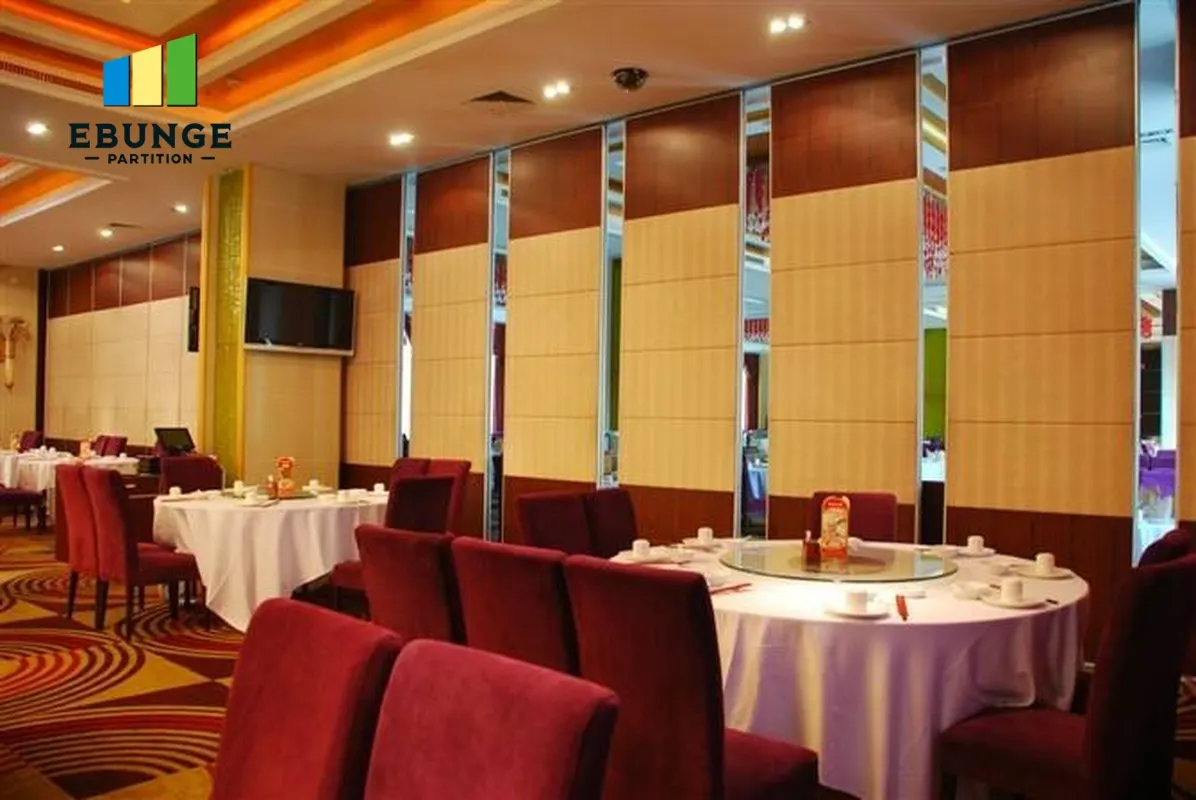
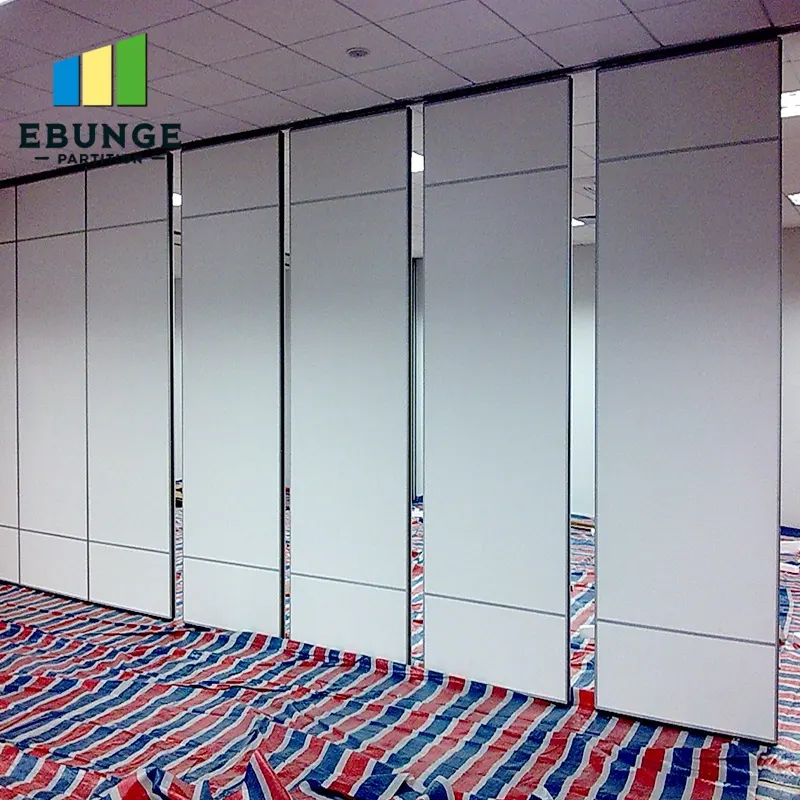
EBUNGE movable wall panels are individually movable and suspended from a top track. They cross the opening without a floor track and park at a planned stacking position. Straight, turning and stacking routes are reviewed from the layout, so the review must include the actual path panels take and where they rest when the room is open.
Sequence and responsibility
Who moves the panels, in what order, and what happens if a session overruns? These are policy questions. They do not require engineering answers, but they do determine whether the layout is workable.
Finish and appearance
Confirmed finish options include laminate, melamine, fabric, leather, glass and other approved surfaces. The review should note whether the finish choice affects how the room reads in each configuration, without assuming cleaning or durability performance that has not been confirmed for the project.
A Decision Checklist for Booking and Layout Alignment
- Do booking rules allow overlapping or back-to-back sessions in the same room?
- Is there a defined turnover gap, or is reset time assumed to be zero?
- Does the layout drawing show a continuous connected overhead route for every proposed panel movement?
- Is the parking position reachable without crossing an untracked gap?
- Are pass-door requirements identified for the closed configuration?
- Has the operations team confirmed who is responsible for each changeover?
- Are project-specific support, acoustic and dimensional requirements flagged for confirmation?
How to Run the Review as a Numbered Process
- Collect the current booking rules, including session lengths and turnover assumptions.
- Map the configurations the room must support across a typical week.
- Overlay those configurations on the layout drawing and mark every panel route.
- Identify where the route depends on a continuous connected overhead track and project-specific support review.
- Confirm the parking position and whether it interferes with circulation or adjacent uses.
- Record pass-door and access requirements for each configuration.
- Agree the changeover sequence and the responsible party.
- Document open items that require project-specific confirmation before specification.
Where Evidence Ends and Project Confirmation Begins
The suitability of each route and parking arrangement depends on the approved layout, circulation, ceiling interfaces and operating sequence. Acoustic behaviour depends on the complete assembly, the surrounding construction and the project conditions.
Those must be confirmed for the project. The same applies to support points, dimensional limits and any engineering outcome. A drawing review with the project team is the appropriate place to resolve them.
Evidence note: the maintained product facts confirm top-hung movement, clear-floor operation along the partition line, customized parking and a broad application scope. They do not confirm performance values, installation outcomes or commercial results for any specific project.
Common Coordination Gaps Between Bookings and Partitions
Most changeover problems appear at the boundary between departments. Facilities writes booking rules, design specifies the partition, and operations absorbs the consequences.
Assumed reset time
If booking rules assume a room can be reset instantly, the layout may be judged against an unrealistic standard. The review should surface that assumption early.
Parking conflicts
A parking position that blocks a corridor or a neighbouring room’s access will be abandoned in practice. Review it against the real circulation plan.
Undocumented movement paths
Every proposed movement path requires a continuous connected overhead route and project-specific support review. Paths that appear obvious on a plan may not be viable once the ceiling and structure are considered.
Turning the Review into a Specification Brief
The output of the review is a short brief: configurations required, routes, parking, pass-door needs and open items. That brief supports the movable wall specification conversation and keeps the booking rules and the physical design aligned.
Project documentation can be discussed with the EBUNGE team, and additional planning context is available in the resources section. Where the review identifies unresolved support, acoustic or dimensional questions, they should be confirmed for the specific project rather than inferred from a generic example.
FAQ: Room Booking Rules and Changeover Policy

What is a changeover policy review?
It is a structured review of how a flexible room moves between configurations, covering routes, parking, sequence and responsibility. It connects booking rules to the physical layout.
Do booking rules affect partition selection?
They affect how often the room must change shape and how much reset time is realistic. That informs the layout and route review, though project-specific requirements still need confirmation.
Can panels cross a gap without a floor track?
Panels are suspended from a top track and cross the opening without a floor track along the partition line. Every proposed movement path still requires a continuous connected overhead route and project-specific support review.
Which finishes can be considered?
Confirmed options include laminate, melamine, fabric, leather, glass and other approved surfaces. Finish suitability for a specific environment should be confirmed for the project.
How are acoustic requirements handled?
Project-specific acoustic requirements should be confirmed with the project team.
When should the review happen?
Before the layout is fixed. Reviewing booking rules early prevents routes, parking and reset assumptions from being locked in without coordination.
Conclusion and Next Step
Booking rules are an early warning system for changeover pressure. When they show frequent reconfiguration, the project needs a changeover policy review that covers routes, parking, sequence and responsibility. Keeping that review evidence-bounded and tied to the layout drawing prevents assumptions from becoming operational problems.
To discuss pass-door requirements, project documentation or a layout review for your project, contact the EBUNGE team and confirm the project-specific support, acoustic and dimensional requirements before specification.