
Quick answer: renovation phasing split-level track run release
Review focus: renovation phasing split-level track run release.
Renovation phasing split-level track run release is a sequencing problem before it is an installation problem. When a phased renovation crosses split-level floors, the movable partition track run may need to be released in stages while other trades continue working. The panels are individually movable, suspended from a top track, cross the opening without a floor track, and park at a planned stacking position. That operating concept is simple, but the phasing logic around it is not. This article sets out a planning framework for contractors, architects and renovation teams who must coordinate track works across levels without inferring performance, support capacity or completion outcomes that have not been confirmed for the project.
Why Split-Level Phasing Changes the Track Release Sequence
Project review term: renovation phasing split-level track run release.
On a single level, a track run is usually reviewed as one continuous overhead route. The suitability of each route and parking arrangement depends on the approved layout, circulation, ceiling interfaces and operating sequence. The release sequence therefore has to follow the route, not the calendar alone. The exact route, junction arrangement, continuous overhead path and parking position must be confirmed from the coordinated project drawings.
This is why the phasing plan should identify every segment of the track run, the level it serves, and the condition that must be met before that segment is released. The condition is often a support review, a drawing approval or the completion of adjacent works, not a fixed date.
Route continuity is the first constraint
Every proposed movement path requires a continuous connected overhead route and project-specific support review. In a split-level sequence, that means the release of one segment should not create a temporary break that the panels are expected to cross. If a break is unavoidable during construction, the phasing plan should state how the route is protected and when continuity is restored.
Level changes are coordination points, not assumptions
The turning and stacking routes are reviewed from the layout, and the layout must show how the route behaves at each level transition. Do not derive support points, loads or dimensions from a drawing symbol alone.
Information to Collect Before Releasing Any Segment
Coordination scope: renovation phasing split-level track run release.
Before a segment is released, the project team should be able to point to the current layout drawing, the approved route, and the coordination status of adjacent trades. The following checklist is a planning aid, not a substitute for project-specific engineering.
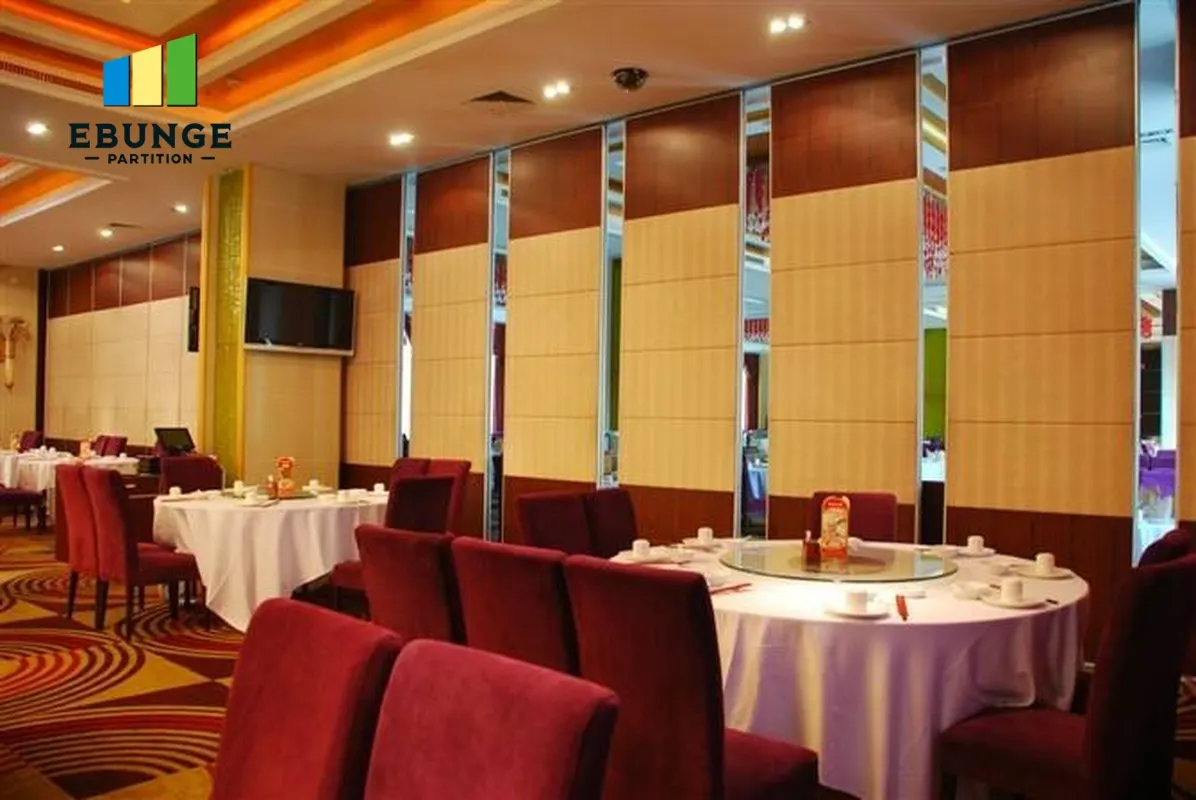
- Current layout drawing showing the full track run and each split-level segment.
- Confirmed parking position and stacking arrangement for each phase.
- Status of adjacent structure, ceiling and services that affect the overhead route.
- Written confirmation of support requirements for each segment.
- Agreed sequence for restoring route continuity between phases.
- Record of any temporary condition that affects panel movement.
If any item is unresolved, the segment is not ready for release. This is a coordination boundary, not a performance statement.
Sequencing Options for a Split-Level Release
Checklist focus: renovation phasing split-level track run release.
There is no single correct sequence. The choice depends on which level can accept track works first, where the parking position can be established, and how the route crosses between levels. Two broad approaches are common in planning discussions.
| Approach | When it may be considered | Coordination focus |
|---|---|---|
| Level-by-level release | One level is ready while the other is still under structural or services work | Protecting route continuity at the level transition |
| Route-first release | The overhead route can be established before either level is finished | Confirming support and parking for the full run |
Neither approach implies a schedule, cost or performance outcome. Both require drawing review and project-specific confirmation.
Parking and Stacking Coordination Across Phases
Review focus: renovation phasing split-level track run release.
Parking style is customized to the customer layout and project requirements and may support compact stacking when the coordinated design permits it. In a phased renovation, the parking position may be one of the last areas to become available, or it may be temporarily occupied by other trades. The phasing plan should identify where panels will park during each phase and whether that position remains reachable from the released track segments.

If the parking position changes between phases, the route review should be updated. A parking position that works for one phase may not work for the next if the approach route is interrupted.
Pass doors and access during phasing
Pass-door requirements can be discussed as part of the project documentation. During phasing, access through the partition line may affect how panels are moved and parked. The phasing plan should note any temporary access requirement and confirm it against the layout.
Evidence Boundaries for Track Run Release Decisions
Project review term: renovation phasing split-level track run release.
Renovation phasing decisions often sit between disciplines, and it is easy to treat a drawing, a finish sample or a photograph as evidence of performance. It is not. Visible references can support layout discussion but do not verify hidden construction or performance.
Where acoustic separation matters, the project-specific requirement should be confirmed with the responsible acoustic consultant and matched to the approved documentation.
Evidence note: every recommendation in this article is a planning boundary. Support, acoustic and dimensional requirements must be confirmed for the specific project before release.
Documentation and Handover Between Phases
Each phase should close with a record of what was released, what remains open, and what condition applies to the next segment. This record helps the next trade understand the current state of the overhead route and the parking position.
Project documentation can be discussed with the EBUNGE team through the contact page. General product context is available on the movable walls page, and further planning resources are listed in the resources section.
Frequently Asked Questions
What does renovation phasing split-level track run release mean in practice?
It means dividing a movable partition track run into segments that can be released in sequence across split-level floors, while keeping the overhead route continuous and the parking position reachable. The sequence is defined by the layout and support review, not by a generic schedule.
Can panels move across a gap if one track segment is not yet installed?
No. Every proposed movement path requires a continuous connected overhead route and project-specific support review. A temporary gap should be treated as a construction condition to be managed, not as a normal operating path.
How should parking be planned during a phased renovation?
Parking style is customized to the customer layout and project requirements. The phasing plan should identify the parking position for each phase and confirm that it remains reachable from the released track segments.
Do split-level floors change the finish options?
Confirmed finish options include laminate, melamine, fabric, leather, glass and other approved surfaces. Finish selection is separate from the phasing sequence, but the approved finish should be recorded in the project documentation for each phase.
What should be confirmed before releasing a track segment?
Confirm the current layout drawing, the support requirements for that segment, the parking position, and the condition of adjacent works. If any item is unresolved, the segment is not ready for release.
Can pass doors be included in a phased track run?
Pass-door requirements can be discussed as part of the project documentation. Their position and access implications should be reviewed against the layout for each phase.
Conclusion and Next Step
A split-level track run release is a coordination exercise. Keep the overhead route continuous, confirm support and parking for each phase, and record what has been released before the next segment begins. Do not infer performance, dimensions or support capacity from drawings or finishes. For project-specific support, acoustic and dimensional requirements, contact the EBUNGE team through the contact page and review the current layout documentation together.