
Quick answer: renovation phasing patchwork track zone
Review focus: renovation phasing patchwork track zone.
Renovation phasing patchwork track zone release is the coordination problem that appears when a project cannot hand over one clean strip of ceiling for the movable partition track. Instead, the track zone is released in fragments: one bay today, another after a ceiling inspection, a third once a service conflict is resolved. The panels themselves are individually movable, suspended from a top track, cross the opening without a floor track, and park at a planned stacking position. That product logic does not change with phasing, but the sequence in which the overhead route becomes available does. This article sets out an evidence-bounded way to plan that sequence.
Why a Patchwork Release Changes the Planning Conversation
Project review term: renovation phasing patchwork track zone.
In a straightforward installation, the track zone is treated as one continuous overhead route. In a patchwork release, the route is assembled from separately released segments. Each segment must connect to the next before any panel movement is proposed across it. A gap in the released zone is not a shortcut; it is a break in the route.
The practical consequence is that the phasing plan and the partition layout must be read together. Straight, turning and stacking routes are reviewed from the layout, so the order in which those routes become available affects when each opening can be served. Project teams should confirm support, acoustic and dimensional requirements against the actual drawings rather than assuming a generic sequence.
Start With the Route, Not the Room
Coordination scope: renovation phasing patchwork track zone.
Teams often begin with room handover dates. For a patchwork track zone release, begin with the route. Trace the intended path from the parked position, through any turn, across the opening, and back to the parked position. Mark which parts of that path sit in each release package.
Route segments to identify
- The parking or stacking position and the ceiling zone it occupies.
- Any turning section where the route changes direction.
- The main opening crossing, including the full width to be served.
- The connection points between one released segment and the next.
- Areas where other trades still need access above the finished ceiling line.
This list is a coordination aid, not an engineering conclusion. Each point still requires project-specific review of support conditions and dimensions.
Release Packages and the Overhead Connection
Checklist focus: renovation phasing patchwork track zone.
A release package is the portion of the track zone that can be made available as one coordinated unit. The critical question is whether adjacent packages will connect. If package A and package B are released weeks apart, the connection between them must be planned so that the route remains continuous when both are complete.
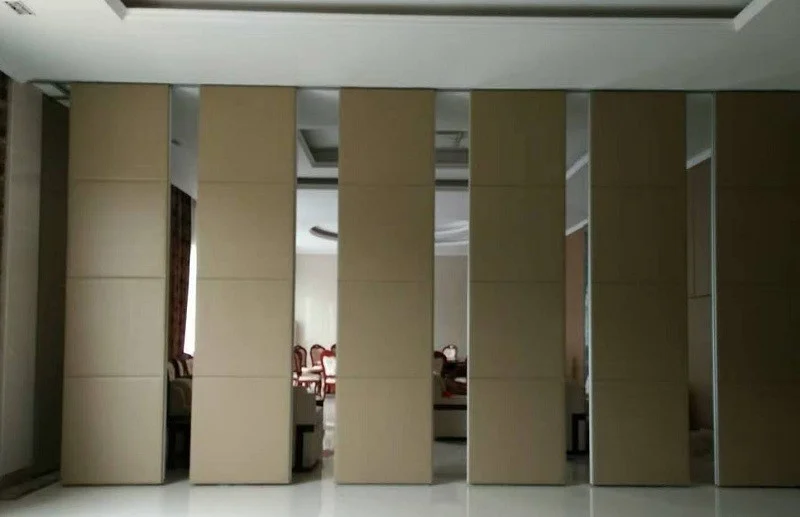
The exact route, junction arrangement, continuous overhead path and parking position must be confirmed from the coordinated project drawings. Every proposed movement path requires a continuous connected overhead route and project-specific support review. Where a connection cannot yet be made, the honest planning position is that the affected opening is not yet served by the movable partition route.
Evidence note
Product facts confirm that panels are top-hung and move without a continuous floor running track along the partition line. They do not confirm support capacity, deflection limits, acoustic results or installation durations for any specific project. Those items require matching project evidence.
Coordinating With Other Trades in a Patchwork Sequence
Review focus: renovation phasing patchwork track zone.
Patchwork release usually means other trades are still working above or near the track zone. The coordination task is to define what must be complete before a segment is treated as released. This is a sequencing question, not a performance claim.
| Coordination item | Why it matters to the track zone | Confirmation needed |
|---|---|---|
| Ceiling structure access | Released segments may be reopened if later work needs access | Project-specific support review |
| Service routing | Services may cross the intended overhead route | Coordinated layout review |
| Adjacent finishes | Finish zones may define where panels can park | Dimensional check against drawings |
| Handover sequence | Defines which opening can be served first | Agreed phasing plan |
The table is a discussion framework. It does not replace a drawing review or a support assessment by the responsible parties.

Parking and Stacking in a Phased Handover
Project review term: renovation phasing patchwork track zone.
Parking style is customized to the customer layout and project requirements and may support compact stacking when the coordinated design permits it. In a patchwork release, the parking zone is often released later than the opening itself. That creates a temporary condition where the route exists but the planned parking position does not.
Teams should decide early whether a temporary parking arrangement is acceptable, or whether the opening should remain out of service until the planned parking zone is released. Either decision has consequences for how the space is used during the renovation. Both should be recorded in the phasing plan rather than left to site improvisation.
Documentation and Specification Boundaries
Coordination scope: renovation phasing patchwork track zone.
Pass-door requirements and project documentation can be discussed with the supplier. For a patchwork release, the useful documents are the layout showing straight, turning and stacking routes, the phasing plan showing release packages, and the coordination notes showing which trades must finish before each segment is treated as available.
A specification should state what is confirmed and what remains open. Avoid writing performance conclusions into a phasing document. The suitability of each route and parking arrangement depends on the approved layout, circulation, ceiling interfaces and operating sequence.
Reviewing the Plan Before Release
Before any segment is released, walk the plan against the drawings. Confirm that the route is continuous where movement is proposed, that the parking position is defined, and that support and dimensional questions have been directed to the responsible parties.
Decision checklist
- Is the full movement route shown on the layout, including turns and parking?
- Does each release package connect to the next without an untracked gap?
- Has the parking or stacking zone been coordinated with the phasing plan?
- Are support, acoustic and dimensional requirements confirmed for this project?
- Are finish selections from the confirmed options: laminate, melamine, fabric, leather, glass and other approved surfaces?
- Is there a named point of contact for documentation questions?
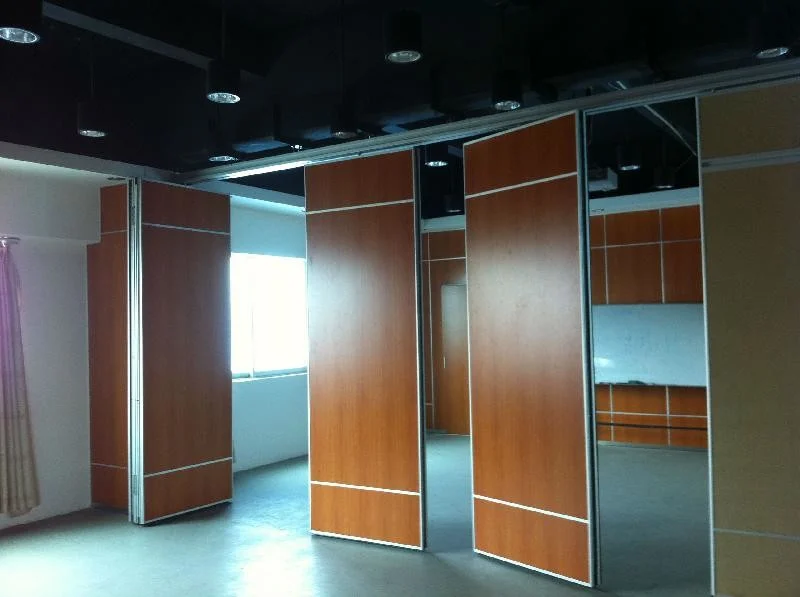
Use the movable walls product page for maintained product context and the resources section for general planning material. Neither replaces project-specific confirmation.
Frequently Asked Questions
What does patchwork track zone release mean in a renovation?
It means the overhead track zone becomes available in separate segments rather than as one continuous strip. The planning task is to ensure those segments connect into a continuous route before panel movement is proposed.
Can panels move across a section where the track is not yet installed?
No. Every proposed movement path requires a continuous connected overhead route and project-specific support review.
How should parking be handled when the parking zone is released late?
Decide early whether a temporary arrangement is acceptable or whether the opening stays out of service. Parking style is customized to the layout and project requirements, so this should be confirmed against the coordinated design.
Do movable partitions need a floor track for this phasing approach?
No. The panels are top-hung and move without a continuous floor running track or floor hardware along the partition line. The overhead route remains the controlling coordination item.
Which finish options can be considered?
Confirmed finish options include laminate, melamine, fabric, leather, glass and other approved surfaces.
What documentation should accompany a patchwork release plan?
Useful documents include the layout showing straight, turning and stacking routes, the phasing plan showing release packages, and coordination notes. Pass-door requirements and project documentation can be discussed directly.
Conclusion
A patchwork track zone release is manageable when the route, the release packages and the parking position are planned together. Keep the plan evidence-bounded: confirm support, acoustic and dimensional requirements for the specific project, and avoid writing performance conclusions into a phasing document. Where a route is incomplete, say so plainly.
To discuss pass-door requirements, documentation or a specific layout, contact the EBUNGE team and share the drawings under review.