
Quick answer: movable partition track
Review focus: movable partition track.
When a renovation project includes operable walls, the existing overhead track may need to be re-set to suit a new layout, a changed opening, or a revised parking position. The suitability of each route and parking arrangement depends on the approved layout, circulation, ceiling interfaces and operating sequence. This article sets out an evidence-bounded framework for planning that sequence without assuming hidden performance or engineering outcomes.
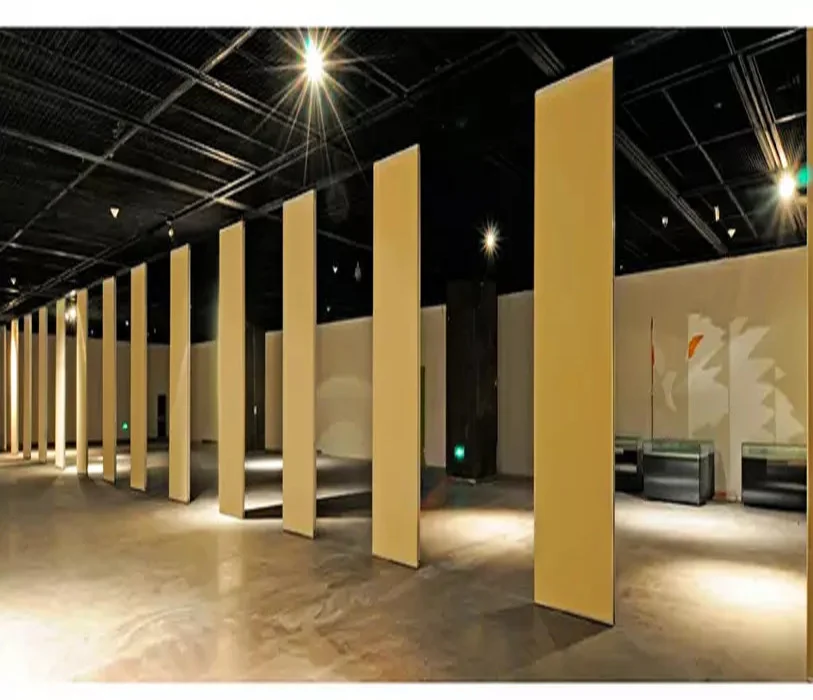
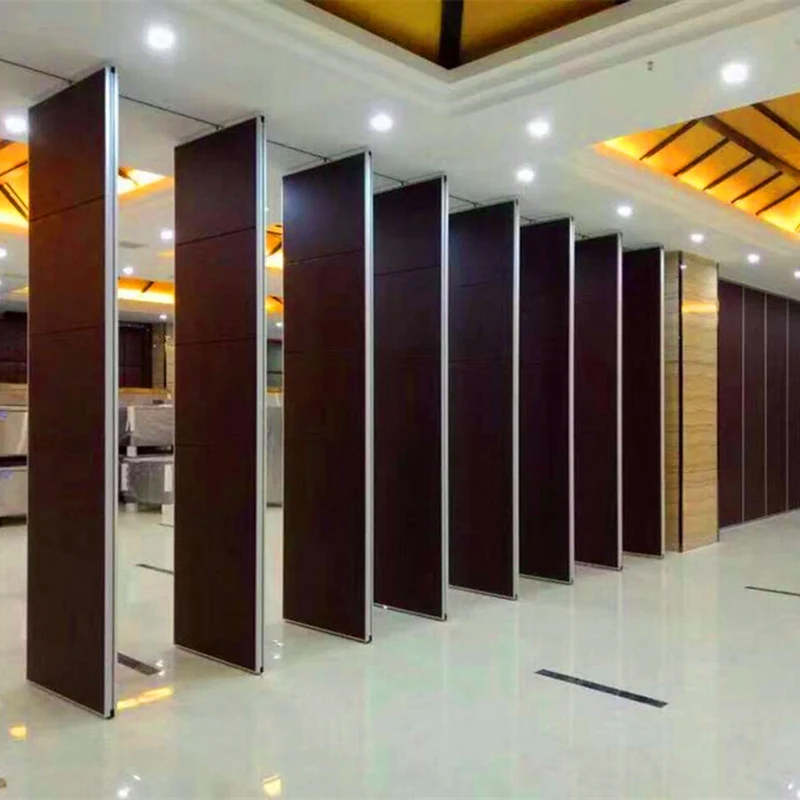
EBUNGE movable partition panels are individually movable, suspended from a top track, cross the opening without a floor track, and park at a planned stacking position. Straight, turning and stacking routes are reviewed from the layout. Those maintained facts shape how a re-set should be phased, but every project still needs its own support, acoustic and dimensional confirmation.
Why Track Re-Set Is a Phasing Problem, Not Just a Fixing Task
Project review term: movable partition track.
A track re-set changes the relationship between the partition, the structure above, and the adjacent ceiling or soffit. If the overhead route is interrupted by new ductwork, a revised beam, or a changed ceiling zone, the movement path may no longer be continuous. The exact route, junction arrangement, continuous overhead path and parking position must be confirmed from the coordinated project drawings.
Phasing therefore has to answer three questions early: what is being demolished or altered above the opening, when the new overhead route can be made continuous, and how the panels will be stored or protected while that work proceeds. These are coordination questions, not performance claims. They belong in the renovation programme before finishes are ordered.
What the layout review should establish
Review the straight, turning and stacking routes against the proposed room arrangement. Confirm where panels will park and whether that position remains available during each phase. If the parking position is temporary, state how long it will be used and what protection is required.
Information to Gather Before Any Re-Set Is Priced or Scheduled
Coordination scope: movable partition track.
Contractors and owners often ask for a re-set scope before the drawings are coordinated. That creates risk. A useful starting point is a document set that shows the existing track, the proposed track, the structure above, and the ceiling zone. Without those drawings, any sequence is provisional.
- Existing and proposed reflected ceiling plans showing the full overhead route.
- Layout drawings showing straight, turning and stacking routes.
- Finish schedule for adjacent walls, ceilings and floor finishes.
- Any pass-door requirements and project documentation needs.
This checklist is not a substitute for project-specific engineering. It simply identifies the inputs that allow a re-set to be phased realistically rather than guessed.
A Phased Sequence for Track Re-Set in Occupied or Partial Renovations
Checklist focus: movable partition track.
Where part of a building remains in use, the sequence matters as much as the installation itself. The following numbered process is a coordination framework, not a fixed method statement. Each step should be adjusted to the project’s own support and access conditions.
- Survey and record. Document the existing track position, the overhead route, and any obstructions before demolition begins.
- Confirm the new route. Review straight, turning and stacking routes against the revised layout and ceiling plan.
- Coordinate structure and services. Agree how new beams, ducts or ceiling zones will interact with the continuous overhead route.
- Plan temporary parking. Decide where panels will be parked during the works and how they will be protected.
- Sequence ceiling closure. Close ceilings only after the overhead route and support conditions are confirmed.
- Re-set and verify movement.
- Complete finishes and handover. Finish adjacent surfaces and record any project documentation agreed with the team.
Each step depends on the previous one. Skipping the survey or the route confirmation usually shifts risk into the installation phase, where changes are more disruptive.
Coordination Boundaries Between Trades
Review focus: movable partition track.
Clear boundaries reduce the chance that a continuous overhead route is broken after it has been agreed. A simple responsibility matrix helps, even on small projects.
| Activity | Typical coordination lead | Evidence to record |
|---|---|---|
| Overhead route confirmation | Design team and partition specialist | Marked-up layout and ceiling drawings |
| Support condition review | Structural engineer and contractor | Project-specific support confirmation |
| Temporary parking plan | Contractor and owner | Agreed parking position and protection note |
| Ceiling closure | Ceiling trade and contractor | Inspection record before closure |
| Movement check | Partition installer and contractor | Signed check that panels move and park as planned |
This table is a planning aid. It does not assign contractual responsibility, which remains a project-specific matter for the appointed team.
Acoustic and Finish Considerations During Re-Set
Project review term: movable partition track.
A re-set can affect the continuity of the partition line, the ceiling interface, and the perimeter conditions. Those interfaces should be reviewed as part of the project-specific acoustic design, not inferred from a finish sample or a drawing alone.
Confirmed finish options include laminate, melamine, fabric, leather, glass and other approved surfaces. Visible references can support layout discussion but do not verify hidden construction or performance.
Questions to resolve before finishes are ordered
Will the re-set change the visible ceiling line? Are adjacent finishes affected by temporary protection? Does the parking position remain accessible after finishes are installed?
Evidence Notes: What Can and Cannot Be Confirmed from Drawings
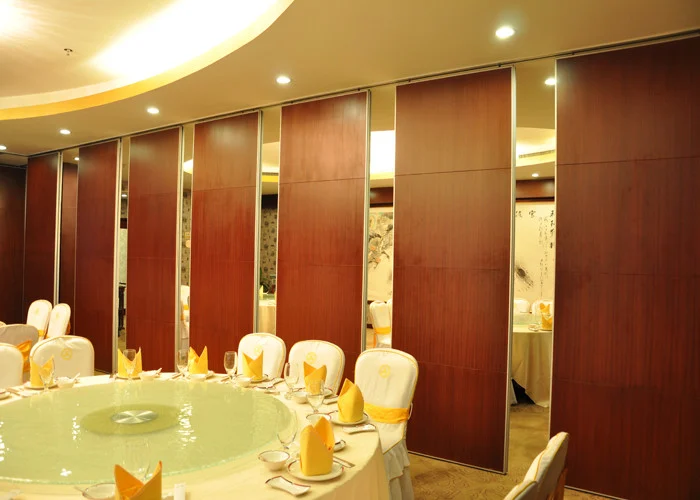
Evidence note: A drawing can show a proposed route, a parking position, and a finish schedule. Those require matching project-specific evidence. Do not derive hidden performance from a visible shape, finish, photograph, or drawing.
This boundary is useful in meetings because it separates what the team knows from what still needs confirmation. It also prevents optimistic assumptions from becoming fixed in the programme.
Frequently Asked Questions
What does renovation phasing movable partition track re-set involve?
It involves coordinating the removal or alteration of an existing overhead track and the installation of a re-set track so that panels can move and park as planned.
Can panels be moved without a continuous overhead route?
No. Every proposed movement path requires a continuous connected overhead route and project-specific support review.
Do movable partitions need a floor track?
EBUNGE movable partition panels are top-hung and cross the opening without a floor track.
When should the track re-set be scheduled?
It should be scheduled after the overhead route and support conditions are confirmed, and before ceiling closure and finish installation. The exact sequence depends on the project programme and access constraints.
Can acoustic performance be confirmed from a finish sample?
No.
What documentation should be discussed with the supplier?
Pass-door requirements and project documentation can be discussed with the supplier. Layout drawings, ceiling plans, and support information help the team review the re-set scope more accurately.
Conclusion: Plan the Route, Then Phase the Work
A successful track re-set depends on confirming the overhead route, the support conditions, and the parking position before finishes and ceilings close the work in. Treat the re-set as a coordination sequence, not a single trade activity, and keep performance claims tied to project-specific evidence.
For movable wall options and project planning resources, review the movable walls product page and the resources library. To discuss your layout, pass-door requirements, or documentation needs, contact the EBUNGE team.