
Renovation Phasing When Half the Track Run Must Wait for a Later Phase
Quick project answer
Review focus: track run.
When a building is occupied or partially operational, renovation work rarely proceeds as one continuous operation. A common constraint is the renovation phasing half track run deferred phase: the overhead route for a movable partition can only be completed along part of its length now, while the remainder must wait for a later stage. This article sets out a coordination framework for contractors, architects, designers and owners who need to plan that split without assuming performance, structure or completion outcomes that have not been confirmed for the project.
Why a Split Track Run Changes the Planning Conversation
Project review term: track run.
EBUNGE movable partition panels are individually movable, suspended from a top track, and cross the opening without a floor track. They park at a planned stacking position. Because the panels depend on a continuous connected overhead route, a track run that stops short of its final extent is not a minor detail; it defines what movement is possible in the current phase.
The planning question is therefore not simply “can we install half now?” It is “what can the current phase support, what must remain untouched, and what information must be carried forward so the deferred phase connects correctly?” Those answers come from the layout, the support conditions and the project programme, not from a generic assumption.
Evidence note: A visible track segment or a finish sample does not demonstrate acoustic performance, structural capacity, fire behaviour or completion of a real project. Each of those requires project-specific documentation and review.
Start With the Movement Route, Not the Panel Count
Coordination scope: track run.
Straight, turning and stacking routes are reviewed from the layout. Before agreeing a phased installation, mark on the drawing where panels will travel, where they will park, and where the current phase ends. A route that appears simple on plan may involve a turn or a stacking position that depends on the deferred section.
Questions to resolve on the drawing
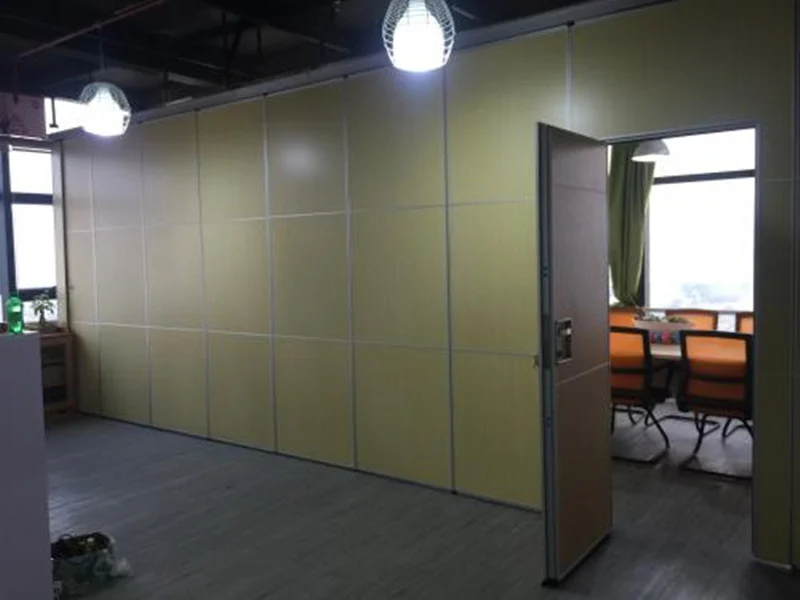
- Does the current phase include a usable parking position, or does parking depend on the later section?
- Is the overhead route continuous and connected for every movement proposed in this phase?
- Are turning points and stacking clearances shown, or only implied?
- Does the deferred junction have a defined interface that both phases can build to?
If any answer is unclear, treat the route as unconfirmed. The exact route, junction arrangement, continuous overhead path and parking position must be confirmed from the coordinated project drawings.
Define the Phase Boundary in the Specification
A phase boundary should be a documented line, not a verbal understanding. The specification can describe which overhead route sections are in scope, which are deferred, and what condition the deferred interface must be left in. This is where the operable partition product context should be read alongside the project drawings rather than in isolation.
Coordination points for the project team
- Record the extent of the current and deferred track runs on the same layout drawing.
- The exact overhead route and support arrangement must be confirmed by the responsible project team from coordinated drawings.
- Agree how the deferred junction will be protected and documented until the later phase.
- Confirm finish selections for the current phase and note whether deferred panels must match them.
- State the pass-door requirements, if any, and whether they fall in the current or later scope.
- Keep a single revision of the layout that both phases reference.
Confirmed finish options include laminate, melamine, fabric, leather, glass and other approved surfaces. Finish continuity across phases is a specification decision; it should be recorded rather than assumed.
Acoustic Intent Across a Deferred Junction
The suitability of each route and parking arrangement depends on the approved layout, circulation, ceiling interfaces and operating sequence. Where a partition line is split by phasing, the junction and the surrounding construction become part of the acoustic conversation.
Seals and closing details are often discussed generically in this context, but their selection and behaviour depend on the project. The correct approach is to state the acoustic intent, identify the junction as a coordination item, and ask for project-specific acoustic review.
Parking and Temporary Conditions During the Current Phase
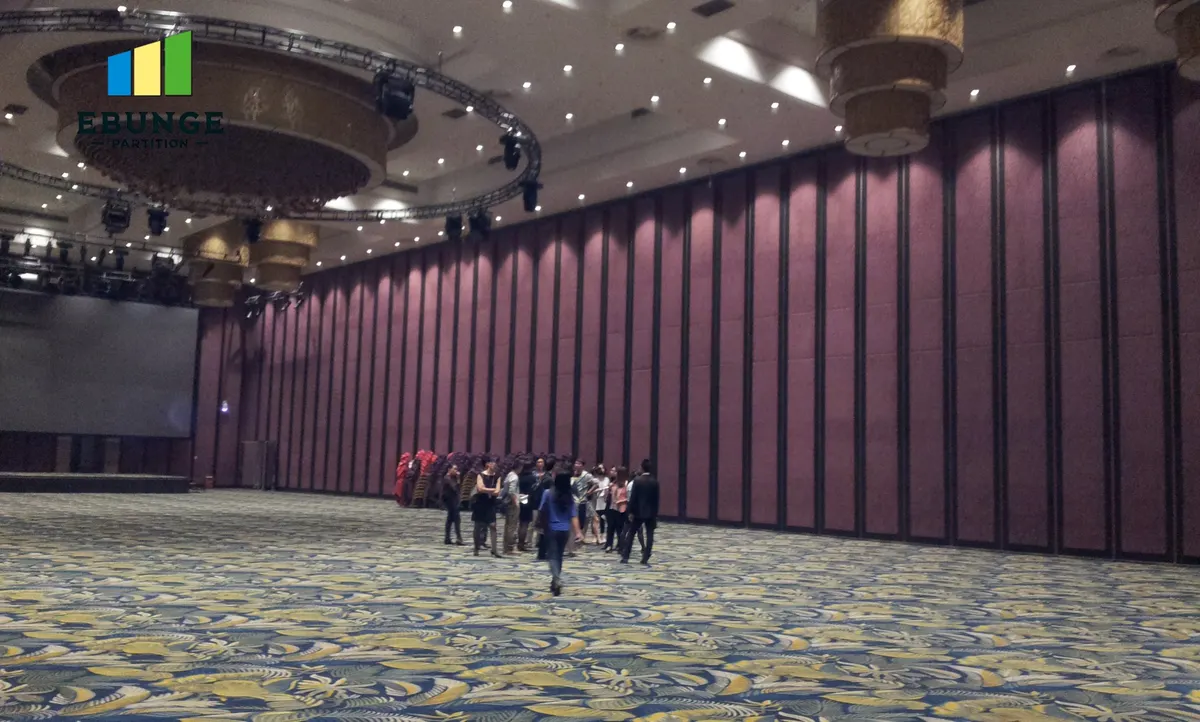
Parking style is customized to the customer layout and project requirements and may support compact stacking when the coordinated design permits it. In a phased renovation, the temporary parking position deserves explicit attention. A position that works during construction may not be the final intended location.
Checklist for temporary parking
- Is the temporary parking position shown on the phased layout?
- Does it obstruct an escape route, a service zone or another trade’s work area?
- Is the overhead route to that position complete and reviewed?
- Has the final parking position been reserved for the deferred phase?
- Have the panels’ finish surfaces been protected from adjacent works?
These are coordination questions, not performance claims. The answers belong in the project documentation and site planning.
Documentation to Carry Into the Deferred Phase
Phasing fails most often when information is lost between stages. The deferred phase should inherit a clear record of what was built, what was reviewed and what remains open.
The EBUNGE resources section can support general planning discussions, but it does not replace project-specific drawings, engineering review or acoustic assessment. Where a document is missing, record it as an open item rather than filling the gap with an assumption.
FAQ: Phased Track Runs and Movable Partitions
Can a movable partition be used while half the track run is deferred?
That depends on whether the current phase provides a continuous connected overhead route and a reviewed parking position for the movement proposed. The layout must be checked; a partial track alone does not confirm usability.
Do the panels need a floor track during the deferred phase?
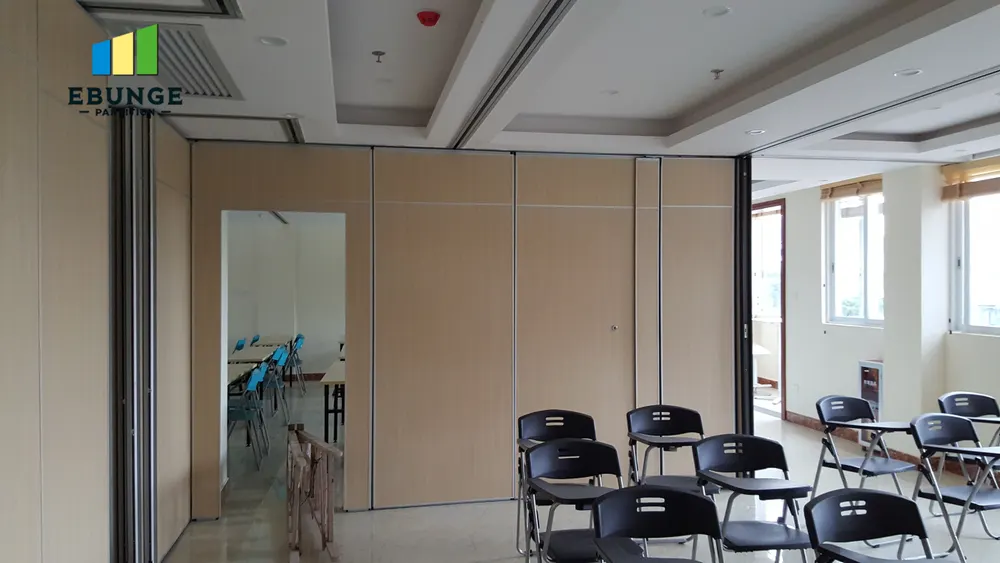
EBUNGE movable partition panels are top-hung and move without a continuous floor running track or floor hardware along the partition line. The overhead route and its support remain the governing coordination item.
How should the phase boundary be shown?
Show it on the same layout drawing as the full route, with the current and deferred sections clearly distinguished. The junction condition and responsibility for the deferred connection should be recorded.
Can acoustic performance be confirmed for a split configuration?
Provide the current layout, opening dimensions, ceiling information, intended room use, and relevant project drawings for review. The exact overhead route and support arrangement must be confirmed by the responsible project team from coordinated drawings.
What finishes can be discussed for each phase?
Confirmed options include laminate, melamine, fabric, leather, glass and other approved surfaces. Continuity between phases should be specified and approved rather than assumed.
What should the project team confirm before release?
Provide the current layout, opening dimensions, ceiling information, intended room use, and relevant project drawings for review. The exact overhead route and support arrangement must be confirmed by the responsible project team from coordinated drawings.
Conclusion and Next Step
A deferred half track run is manageable when the phase boundary is drawn, the movement route is reviewed, and the documentation carries forward. It becomes risky when teams assume that a partial installation will behave like a completed one. Keep every recommendation tied to the maintained product facts and the project’s own drawings.
To discuss pass-door requirements, finish options or project documentation for a phased installation, contact EBUNGE with your layout and phase information. Project-specific support, acoustic and dimensional requirements should be confirmed before work proceeds.