
Quick answer: bidder track fixing assumption
Review focus: bidder track fixing assumption.
Track fixing is one of the most common sources of commercial and technical friction in movable partition tenders. Bidders price from the drawings and addenda available at the time, while the tender addenda bidder track fixing assumption reconciliation process determines whether those prices remain comparable. The suitability of each route and parking arrangement depends on the approved layout, circulation, ceiling interfaces and operating sequence. This article sets out an evidence-bounded framework for reconciling bidder assumptions with addenda before award.
Why Track Fixing Assumptions Drift From Addenda
Project review term: bidder track fixing assumption.
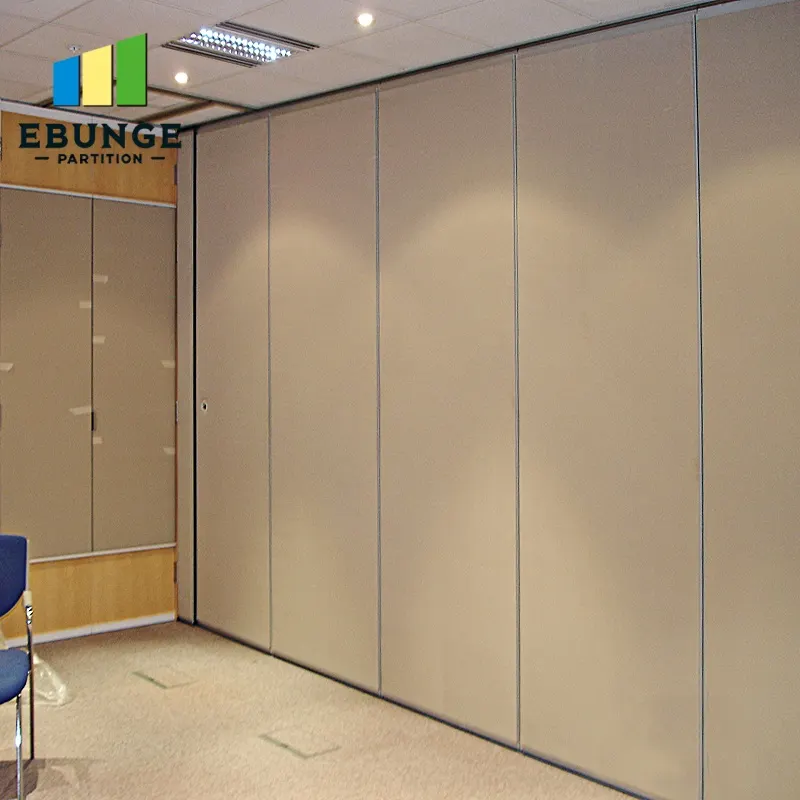
Addenda are issued to correct, clarify or extend the tender documents. Bidders, however, often price from an earlier drawing set or from a standard assumption about how a top track will be supported. Because EBUNGE movable wall panels are individually movable, suspended from a top track, cross the opening without a floor track and park at a planned stacking position, the overhead route and its support condition are central to the offer.
The reconciliation task is not to guess which bidder is right. It is to make each bidder’s stated basis visible and comparable.
Build a Single Reconciliation Register
Coordination scope: bidder track fixing assumption.
Create one register that links every addendum item to the bidder assumptions it affects. Keep it short enough to be used in a meeting, but structured enough to survive a post-tender review.
| Register field | What to record | Evidence boundary |
|---|---|---|
| Addendum reference | Number, date and subject | Issued document only |
| Affected assumption | Track route, support interface or stacking position | Bidder’s stated basis |
| Drawing reference | Current coordinated drawing | Latest revision |
| Open question | What remains unresolved | RFI or clarification |
| Status | Open, answered or withdrawn | Dated record |
This register is not a performance model. It is a traceability tool. It prevents a bidder from silently carrying an outdated assumption into the final account.
Review the Overhead Route Before Comparing Prices
Straight, turning and stacking routes are reviewed from the layout. That review should happen before prices are compared, because a route change can alter the support condition, the number of track sections and the parking arrangement.
What the route review should confirm
- The proposed movement path is continuous and connected overhead.
- Turning and stacking positions match the coordinated layout.
- The exact route, junction arrangement, continuous overhead path and parking position must be confirmed from the coordinated project drawings.
- Parking style is consistent with the project layout and requirements.
If any of these points is unclear, the correct action is a clarification, not an inference. A drawing that looks complete may still omit the support interface that the bidder priced.
Separate Visible Evidence From Engineering Conclusions
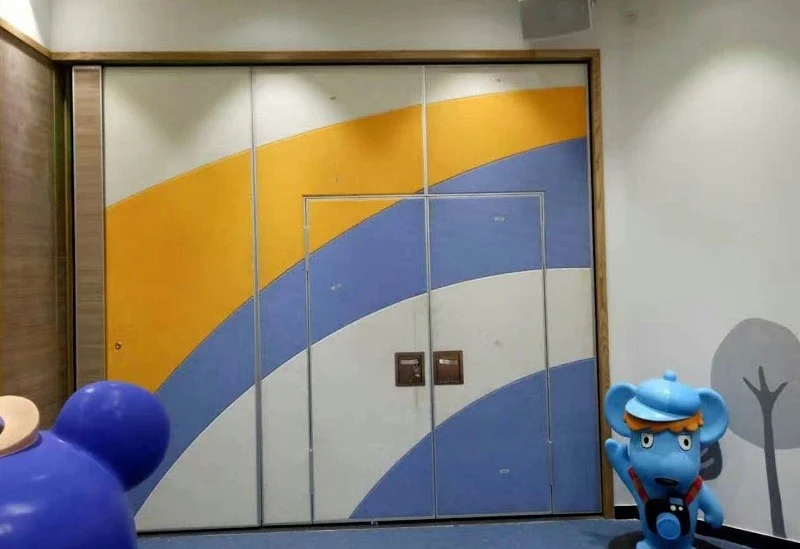
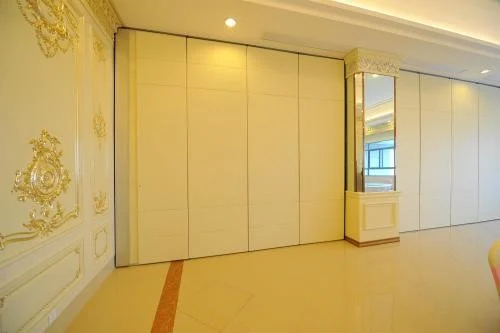
Finishes and drawings show what a system looks like, not what it can carry. Confirmed finish options include laminate, melamine, fabric, leather, glass and other approved surfaces. Visible references can support layout discussion but do not verify hidden construction or performance.
Evidence note: a visible finish, photograph or drawing does not establish support capacity, acoustic result, fire behaviour, durability or commercial outcome. Those require project-specific confirmation.
When a bidder’s assumption depends on an engineering conclusion, ask for the basis in writing. If the basis is missing, mark the item as unverified rather than treating it as agreed.
Run a Structured Reconciliation Meeting
A short, disciplined meeting resolves more than a long email chain. Use a numbered process so the outcome is auditable.
- Circulate the register and current drawings before the meeting.
- Walk through each addendum item and its affected assumption.
- Ask each bidder to confirm or restate their basis.
- Record unresolved items as RFIs with an owner and a date.
- Reissue the reconciled position as a single addendum or clarification.
This process keeps the tender addenda bidder track fixing assumption reconciliation project planning effort proportionate. It also gives the evaluation team a defensible record if a bidder later claims a different basis.
Coordinate Acoustic and Dimensional Requirements
Dimensional requirements follow the same rule. Opening width, height, stacking space and route geometry all interact. A bidder who has not reviewed the current coordinated layout may be pricing a different configuration. Pass-door requirements and project documentation can be discussed with the supplier so that the tender basis is explicit.
Common Reconciliation Pitfalls
Treating silence as agreement
If an addendum does not mention track fixing, do not assume the bidder has absorbed it. Ask for confirmation.
Comparing prices without comparing scope
Two bids may look similar while covering different support assumptions. Normalise the scope before ranking.
Accepting a drawing as proof
A drawing shows intent.
Frequently Asked Questions
What is tender addenda bidder track fixing assumption reconciliation?
It is the process of comparing each bidder’s stated track fixing basis with the latest tender addenda and coordinated drawings, then resolving differences through clarifications or RFIs before award.
Why do track fixing assumptions diverge between bidders?
Bidders may price from different drawing revisions, apply standard assumptions about support conditions, or interpret route and stacking requirements differently. Addenda can change any of these inputs.
Does a top-hung movable wall need a floor track?
EBUNGE movable wall panels are suspended from a top track and cross the opening without a floor track.
Can I compare bids before the route is confirmed?
You can compare them, but the comparison may not be like for like. Confirm straight, turning and stacking routes from the layout first, then normalise scope.
How should acoustic requirements be handled in the tender?
State the project-specific acoustic requirement and ask for the supporting evidence.
What documentation should be requested?
Request the bidder’s stated basis, current drawing references and any clarification responses. Pass-door requirements and project documentation can be discussed directly with the supplier.
Conclusion and Next Step
Reconciling bidder track fixing assumptions with tender addenda is a discipline of traceability. Keep one register, review the overhead route from the layout, separate visible evidence from engineering conclusions, and resolve differences through written clarifications. Confirm project-specific support, acoustic and dimensional requirements before award.
To discuss your project documentation, pass-door requirements or finish options, contact the EBUNGE team. You can also review movable wall systems and browse further planning resources.