
Quick answer: tender deviation register
Review focus: tender deviation register.
The exact route, junction arrangement, continuous overhead path and parking position must be confirmed from the coordinated project drawings. It is not a substitute for the tender documents. It is the place where post-tender clarifications, drawing revisions and site observations are logged so that the project team can see what has changed, who owns the next action and what still requires project-specific confirmation.
This article sets out a practical framework for running that register. It is written for overseas contractors, architects, interior designers, owners, renovation companies, distributors and construction teams who need to coordinate movable partition scope without inferring hidden performance from a drawing or a finish sample.
Why Track Scope Needs Its Own Deviation Register
Project review term: tender deviation register.
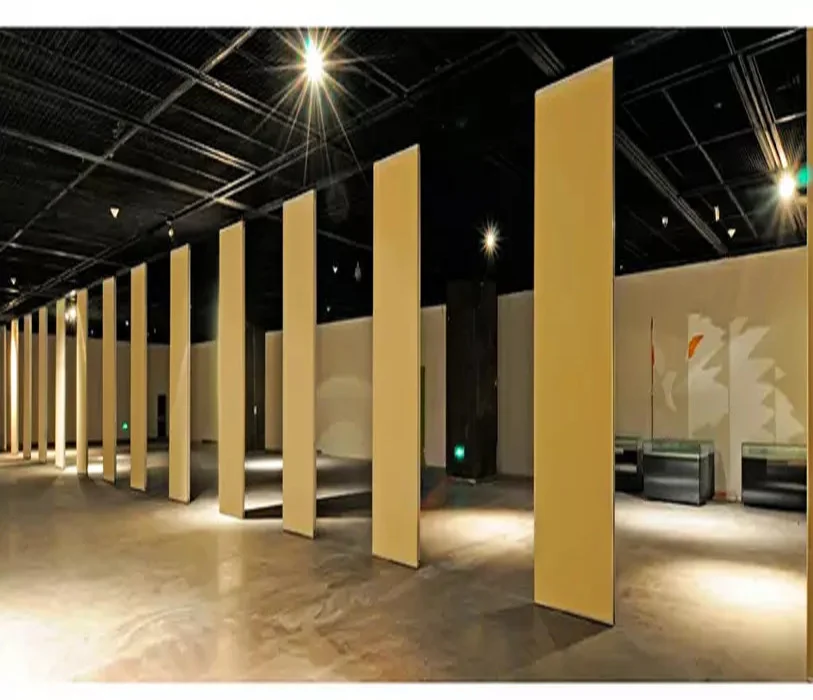
Movable wall panels are individually movable, suspended from a top track, cross the opening without a floor track and park at a planned stacking position. That simple description hides a large coordination surface. The top track must follow a continuous connected overhead route. Straight, turning and stacking routes are reviewed from the layout. The suitability of each route and parking arrangement depends on the approved layout, circulation, ceiling interfaces and operating sequence.
A general deviation register often mixes commercial, programme and design changes. When those three are separated, a small drawing revision can become a site surprise.
What Belongs in the Register
Coordination scope: tender deviation register.
Start by defining the register columns before the first entry is made. A useful register records the deviation, its source, the affected drawing or specification clause, the current status and the evidence needed to close it. The table below is a starting structure; adapt it to the project’s document control system.

| Field | Purpose | Evidence boundary |
|---|---|---|
| Deviation ID | Unique reference for tracking | Project document control |
| Source | RFI, site observation, drawing revision or meeting minute | Record the exact source document |
| Affected scope | Track route, parking, opening or interface | Confirm against current drawings |
| Status | Open, under review, closed or superseded | Do not close without named evidence |
| Required confirmation | Support, acoustic or dimensional review | Project-specific sign-off only |
Do not use the register to record performance conclusions that have not been confirmed for the project.
A Step-by-Step Process for Running the Register
Checklist focus: tender deviation register.
- Baseline the tender scope. Capture the tender drawings, specification clauses and any clarifications that define the track route, parking position and opening size.
- Log every post-tender change. Record the date, source and description as soon as it appears. Do not wait for a formal instruction if the change affects track scope.
- Classify the deviation.
- Request the missing evidence.
- Review with the responsible parties. The architect, contractor, owner and partition supplier each hold part of the picture. The register should show who must respond.
- Close with a named reference. A deviation is closed only when the revised drawing, approved submittal or written confirmation is attached.
- Report at intervals. The exact overhead route and support arrangement must be confirmed by the responsible project team from coordinated drawings.
Drawing Review Points That Drive Track Deviations
Review focus: tender deviation register.
Route continuity and turning points
Every proposed movement path requires a continuous connected overhead route. If a post-tender change breaks that continuity, the deviation register should flag it immediately.
Parking position and stacking area
Parking style is customized to the customer layout and project requirements and may support compact stacking when the coordinated design permits it. A change to the parking position can affect adjacent doors, ceiling features or circulation. Record the revised parking layout and confirm it against the current architectural plan.
Support interface and ceiling zone
The top track is supported by the structure above.
Evidence Boundaries and What Not to Infer
A deviation register is only as reliable as its evidence discipline. Visible references can support layout discussion but do not verify hidden construction or performance.
If a statement cannot be traced to a maintained product fact or a project-specific confirmation, keep it out of the register or mark it clearly as an open question.
Pass-door requirements and project documentation can be discussed with the supplier, but the register should record the confirmed requirement rather than an assumption. When a deviation affects the opening, note whether a pass door is involved and what documentation is needed to close the item.
Coordination Roles and Meeting Rhythm
Assign a register owner, usually the contractor or the project engineer, and a reviewer for each discipline. The architect confirms layout intent. The owner or operator confirms how the space must function. The partition supplier confirms what can be offered within the maintained product facts.
Review the register in the same rhythm as the main coordination meeting. A short standing agenda item is more effective than a separate meeting. The goal is to surface track-scope deviations while they are still drawing changes, not after the ceiling is closed.

Frequently Asked Questions
What is a post-tender deviation register for partition track scope?
It records the source, status and evidence needed to close each item.
Who should own the register?
Each entry should name the party responsible for the next action.
Does every drawing revision need a register entry?
Only revisions that affect track scope need an entry. If a revision changes the route, parking, opening or support interface, it should be logged even if the commercial impact is not yet known.
Can the register confirm acoustic performance?
No. The register can record that a review is required, but it should not invent a performance result.
How do we handle a change to the parking position?
Record the revised parking layout, confirm it against the current architectural plan and check that the stacking route remains connected to the overhead track. Parking style is customized to the layout and project requirements.
What should be attached when closing a deviation?
Attach the revised drawing, approved submittal or written confirmation that resolves the item. A closed entry without a named reference is difficult to defend later.
Conclusion and Next Steps
A post-tender deviation register for partition track scope works when it is specific, evidence-bounded and reviewed regularly. Keep the register focused on route continuity, parking, opening and support interfaces. Record what has changed, who owns the response and what project-specific confirmation is still required. Do not let the register become a place for unsupported performance claims.
To discuss pass-door requirements, project documentation or the layout review process for your movable wall scope, contact the EBUNGE team. You can also review the movable walls product page and the resources section for further planning context.