
Partition Track Servicing Peak Season Planning
Quick project answer
Review focus: peak season.
Partition track servicing peak season planning is the discipline of fitting inspection and maintenance access into a calendar that cannot easily absorb disruption. For hotels, schools, offices and conference venues, the busiest weeks are exactly when flexible rooms must work reliably. The answer is not to postpone attention until a quiet month, but to build a servicing rhythm that respects both operational demand and the physical realities of a top-hung system.
This guide sets out a planning framework for contractors, architects, facility teams and owners. The exact route, junction arrangement, continuous overhead path and parking position must be confirmed from the coordinated project drawings.
Start With the Confirmed System Logic
Project review term: peak season.
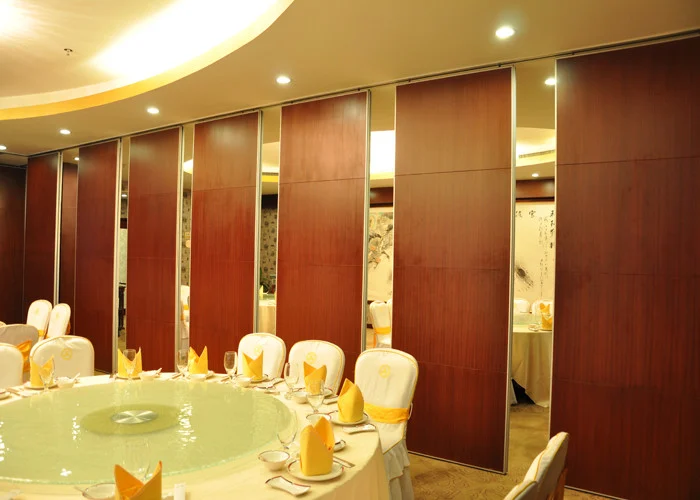
EBUNGE movable wall panels are individually movable and suspended from a top track. They cross the opening without a floor track and park at a planned stacking position. That single fact shapes every servicing conversation: the overhead route carries the movement, so the route and its support are the first things to understand.
Straight, turning and stacking routes are reviewed from the layout. A servicing plan should therefore begin with the approved layout drawing, not with a generic checklist. If the layout changes, the route review changes with it.
Map the Facility Calendar Before the Track
Coordination scope: peak season.
Peak season planning fails when it is treated as a maintenance question alone. It is a scheduling question first. Gather the venue’s confirmed high-demand periods, blackout dates and room-reconfiguration patterns, then compare them with the movement routes the layout defines.
Build a simple demand picture
List each space that uses movable partitions, the months it is heavily booked, and the weeks when reconfiguration happens most often. This is planning information, not a performance measure, and it helps teams decide when access is realistic.
Identify access constraints early
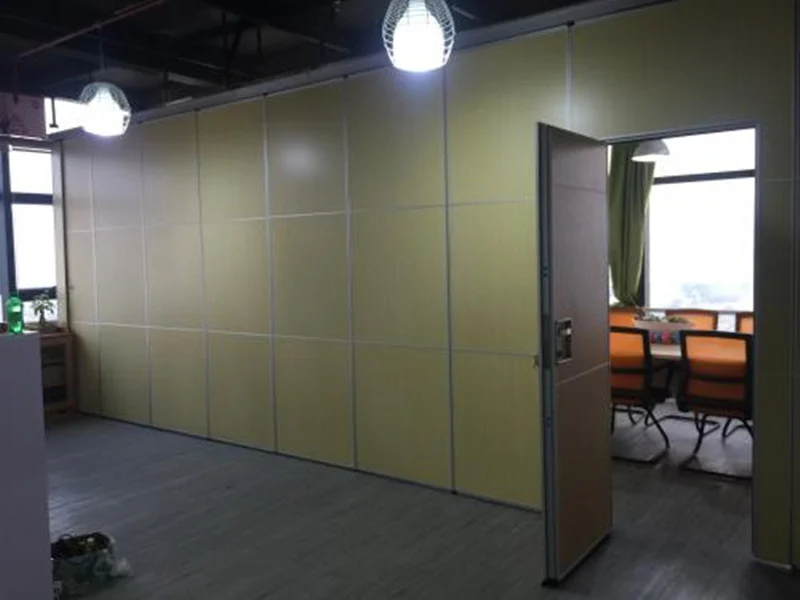
Access to the top track, the stacking position and the route may depend on ceiling zones, adjacent rooms or shared circulation. Confirm these constraints with the project team rather than assuming them from a photograph or a finish sample.
A Decision Checklist for Servicing Windows
Checklist focus: peak season.
- Operational fit: Does the proposed window avoid confirmed peak bookings and blackout dates?
- Route continuity: Has the full straight, turning and stacking route been reviewed against the current layout?
- Support review: Has the project-specific support and fixing condition been confirmed by the responsible party?
- Access method: Is safe access to the overhead track and stacking area agreed in writing?
- Documentation: Are drawings, finish schedules and any acoustic requirements available for the servicing team?
- Sign-off: Who confirms completion, and what evidence will they record?
Evidence note: this checklist organises planning questions. It does not certify structural capacity, acoustic performance or maintenance outcomes. Those require project-specific confirmation.
Coordinate the Route Review With the Layout
Because panels travel on a continuous overhead route, any servicing plan should trace the same path the panels follow. A route that turns or stacks in a particular way is a design decision recorded in the layout, and the servicing team needs that drawing to understand where attention is required.
Do not infer hidden structure, load paths or fixing details from a visible track line. Those belong to the project’s engineering documentation. The suitability of each route and parking arrangement depends on the approved layout, circulation, ceiling interfaces and operating sequence.
Keep finish and route decisions separate
Confirmed finish options include laminate, melamine, fabric, leather, glass and other approved surfaces. Keep these decisions in separate columns of the project record.
Use a Numbered Process for the Peak Season
- Collect the calendar. Record confirmed peak periods, blackout dates and room-use patterns.
- Assemble the drawings. Gather the approved layout, route and stacking information.
- Define the scope. Agree what servicing activity is proposed and what is explicitly out of scope.
- Confirm access and support. Obtain written confirmation from the parties responsible for access and support conditions.
- Schedule outside demand peaks. Place the window where operational disruption is lowest, allowing contingency.
- Record the outcome. Document what was observed, what was done and what remains open.
This sequence keeps the plan auditable. It also prevents a servicing visit from becoming an informal inspection that produces conclusions nobody has evidence for.
Handle Acoustic Expectations Carefully
If a project has acoustic requirements, confirm them against the project-specific documentation. Seals and acoustic detailing can be discussed generically, but their materials, configuration and measured outcomes must come from the project record, not from this article.
Ask before assuming
Where a venue expects acoustic separation between adjacent rooms, the planning team should confirm the relevant specification and any supporting documentation with the supplier and the project’s acoustic adviser. If evidence is not available, state that clearly rather than filling the gap.
Documentation and Handover Discipline
Good documentation is the difference between a plan and a guess. Keep the layout drawing, finish schedule, pass-door requirements and any agreed servicing scope in one controlled location. Pass-door requirements and project documentation can be discussed with the supplier as part of project planning.
At handover, record the route as built, the stacking position and any agreed access arrangements. Avoid promising service life or financial returns; neither can be established from a planning article. Instead, describe what was confirmed, by whom, and on what date.
Frequently Asked Questions
When should partition track servicing be scheduled?
Schedule it around confirmed low-demand periods and blackout dates, after the route and access conditions have been reviewed. The right window depends on the facility calendar and the project layout.
Do movable partitions need a floor track?
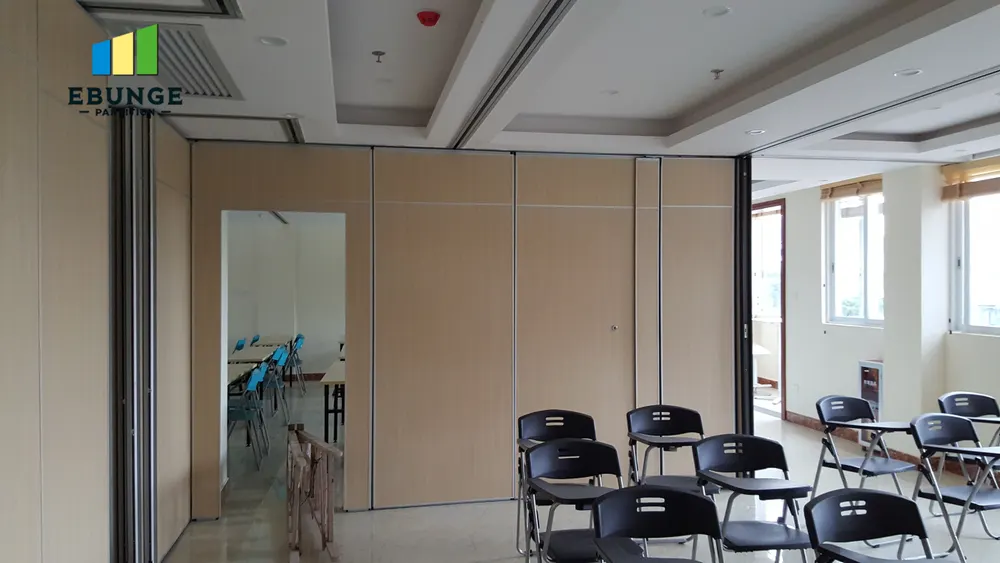
EBUNGE movable wall panels are top-hung and cross the opening without a floor track.
Can servicing be planned from a photograph?
No. Use the approved layout and project documentation.
Does the finish affect the servicing plan?
Finish options such as laminate, melamine, fabric, leather and glass are appearance choices.
What should be confirmed before a peak-season window is booked?
Confirm access, support review, scope, documentation and sign-off responsibility. Where any item is unresolved, record it as an open item rather than assuming an outcome.
Can acoustic performance be guaranteed after servicing?
No guarantee should be made.
Conclusion and Next Step
Build the calendar around that route, confirm support and access in writing, and keep acoustic and finish questions in their own evidence tracks.
To discuss your layout, pass-door requirements or project documentation, contact the EBUNGE team. You can also review the movable walls product range and browse planning resources before your next coordination meeting.