
Quick project answer
Review focus: track fixing method statement.
A partition tender track fixing method statement specification conflict appears when a bidder’s proposed track fixing approach does not match the written specification or the coordinated drawings. The conflict may be technical, documentary or both. This article gives project teams a review framework that stays inside confirmed product facts and visible evidence limits.
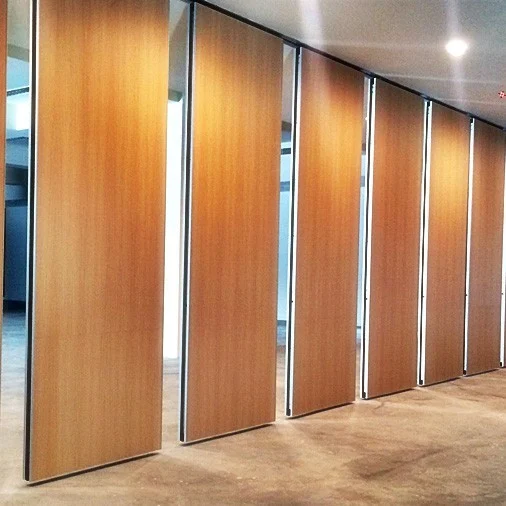
EBUNGE movable partition panels are individually movable, suspended from a top track, cross the opening without a floor track, and park at a planned stacking position. Straight, turning and stacking routes are reviewed from the layout. Those maintained facts are the starting point for any method statement review.
Why Track Fixing Conflicts Appear in Tender Returns
Project review term: track fixing method statement.
The suitability of each route and parking arrangement depends on the approved layout, circulation, ceiling interfaces and operating sequence. A bidder may describe a fixing method that suits their standard detail but does not align with the specification’s stated support assumptions, ceiling zone or route geometry. The conflict is often visible only when the method statement is read against the layout.
Procurement teams should treat the method statement as a claim set. Each claim needs a matching drawing, a stated assumption or a project-specific confirmation. Without that link, the return is incomplete rather than automatically wrong.
Common conflict signals
- The method statement describes a route that does not match the straight, turning or stacking paths shown on the layout.
- The exact overhead route and support arrangement must be confirmed by the responsible project team from coordinated drawings.
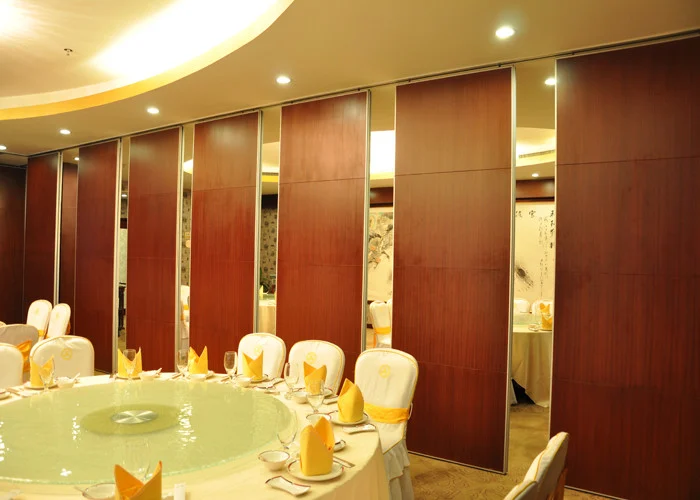
- The bidder references a finish or panel type without linking it to the approved finish options: laminate, melamine, fabric, leather, glass and other approved surfaces.
- The document omits pass-door requirements or project documentation that the specification requires.
Separate Product Facts From Bidder Assumptions
Coordination scope: track fixing method statement.
Confirmed EBUNGE facts are narrow and useful. Panels are top-hung, individually movable and cross the opening without a floor track. Parking is planned at a stacking position. Finish options are confirmed as laminate, melamine, fabric, leather, glass and other approved surfaces. Pass-door requirements and project documentation can be discussed.
Everything else in a method statement is a bidder assumption until the project team confirms it. Support conditions, ceiling interface, route continuity and dimensional fit are project-specific. They require drawing review, not inference from a photograph or a generic detail.
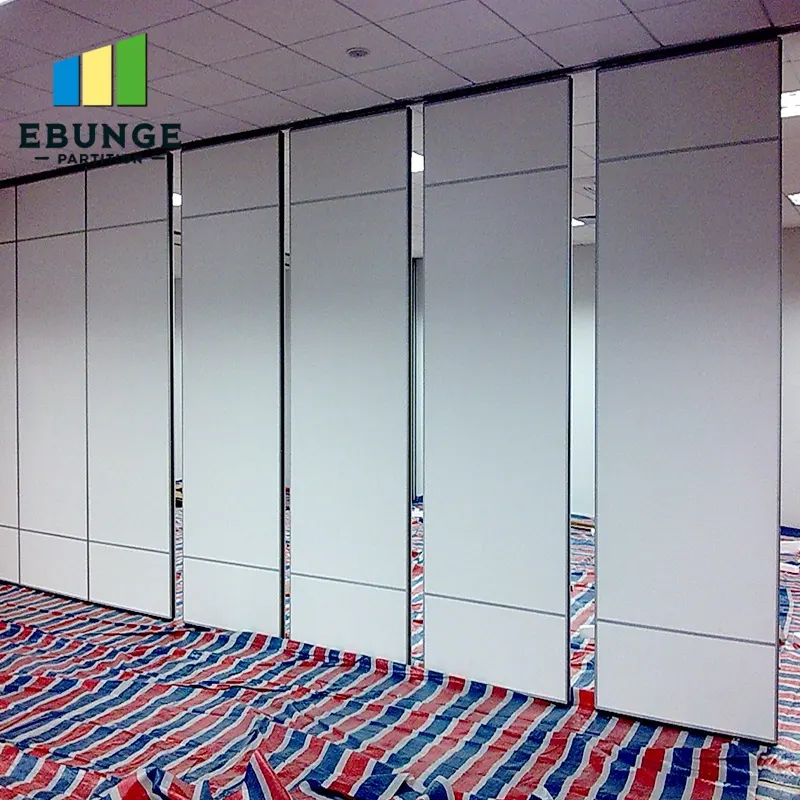
Evidence note: a visible finish, drawing shape or product photograph does not prove acoustic performance, structural capacity, cleaning compatibility or a application reference. Treat those as separate confirmation items.
A Review Checklist for Procurement Teams
Checklist focus: track fixing method statement.
Use a short checklist before comparing prices or awarding. The goal is to make the conflict explicit so it can be resolved or priced as a clarification.
- Confirm the specification’s stated track route against the bidder’s described route.
- Check that the method statement covers straight, turning and stacking paths shown on the layout.
- Identify every support or ceiling assumption the bidder has made.
- Verify that finish references match the approved finish options.
- Confirm whether pass-door requirements and project documentation are addressed.
- List any acoustic or dimensional statement that lacks project-specific evidence.
How to Read Acoustic Language Without Overclaiming
Review focus: track fixing method statement.
Seals, junctions and site conditions all affect the outcome.
Visible references can support layout discussion but do not verify hidden construction or performance. Do not accept a generic rating as proof of performance in your building. Confirm acoustic requirements with the project team and the relevant specialists.
Questions that expose weak acoustic claims
- Which project drawing shows the acoustic junction detail?
- Which specification clause does the claim respond to?
- What site condition must be confirmed before the claim can be relied on?
Documentation and Pass-Door Coordination
Pass-door requirements and project documentation can be discussed as part of the tender review. A method statement that ignores them creates a later coordination problem, even if the track fixing detail itself is acceptable.
Ask the bidder to map each document to a specification clause. Where a clause is not addressed, record it as an open item.
Resolving the Conflict Before Award
Resolution is a documentation exercise. The project team should issue a clarification that states the specification requirement, the bidder’s proposed method and the exact point of difference. The bidder then revises the method statement or confirms a project-specific approach.
Do not let a revised method statement introduce new performance claims without matching evidence. Keep the same evidence boundary used in the original review.
Compact comparison: specification vs method statement
| Review point | Specification says | Method statement says | Action |
|---|---|---|---|
| Track route | Straight, turning and stacking paths per layout | Bidder’s described route | Compare against layout |
| Floor interface | No continuous floor track | Any floor fixing reference | Clarify conflict |
| Finish | Approved finish options | Named finish | Confirm approval |
| Pass door | Project requirement | Addressed or omitted | Request documentation |
FAQ: Track Fixing Method Statement Conflicts
What is a partition tender track fixing method statement specification conflict?
It is a mismatch between the track fixing approach described by a bidder and the requirements stated in the tender specification or coordinated drawings. It can involve route geometry, support assumptions, finish references or documentation.
Does a method statement conflict mean the bidder is wrong?
Not necessarily. It means the return needs clarification. The bidder may have used a standard detail that does not match this project, or the specification may need a project-specific confirmation.
Can EBUNGE panels cross an untracked gap?
No. Every proposed movement path requires a continuous connected overhead route and project-specific support review. Panels are top-hung and cross the opening without a floor track, but the overhead route must be continuous and coordinated.
How should acoustic claims be handled in the review?
Ask for the project-specific basis and confirm acoustic requirements with the project team. Do not rely on a generic rating as proof of performance.
What should be confirmed before award?
Confirm project-specific support, acoustic and dimensional requirements. Also confirm the track route, finish approval, pass-door requirements and project documentation. Record any unresolved item as an open clarification.
Where can project teams find more guidance?
Review the movable partition wall product context and the resources page, then contact EBUNGE to discuss pass-door requirements and project documentation.
Conclusion and Next Step
Compare the bidder’s claims against the specification, the layout and the confirmed product facts. Keep acoustic, support and dimensional statements project-specific, and do not infer performance from a drawing or finish.
For project-specific support, acoustic and dimensional requirements, contact EBUNGE with your layout and specification so the review can proceed on a confirmed basis.