
Quick answer: partition tender risk register
Review focus: partition tender risk register.
Track interface risk rarely appears as a line item in early tender documents, yet it often decides whether a movable partition scope proceeds smoothly. For teams building a partition tender risk register track interface weighting model, the goal is not to predict failure but to assign review effort where drawings, support conditions and responsibilities remain unconfirmed. This article offers an evidence-bounded framework: what to check, what to document and what to leave open until project-specific confirmation.
Why Track Interface Deserves Explicit Weighting
Project review term: partition tender risk register.
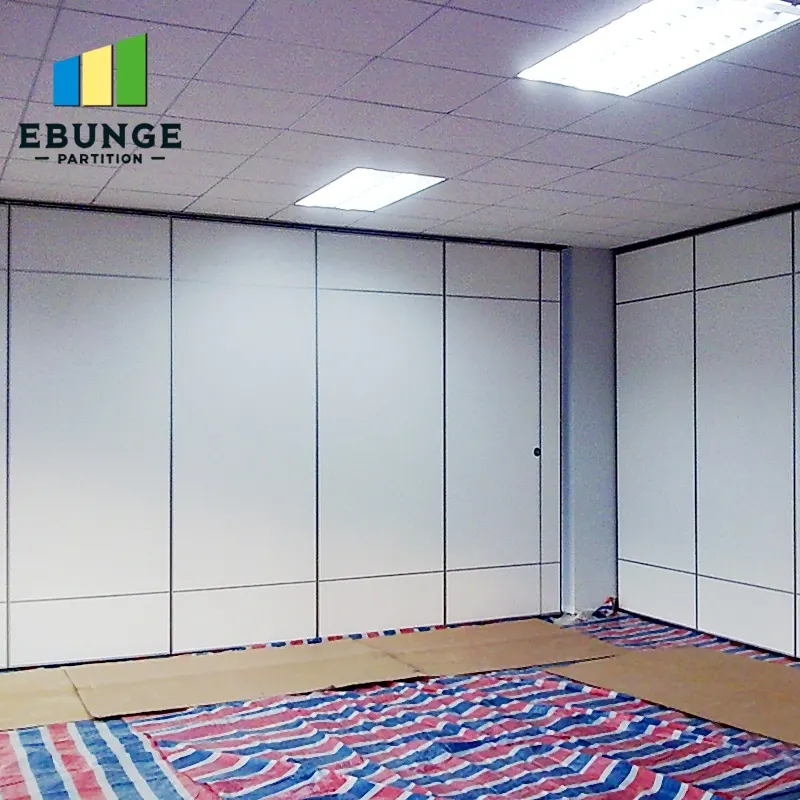
Movable wall panels are individually movable, suspended from a top track, and cross the opening without a floor track. They park at a planned stacking position. The exact route, junction arrangement, continuous overhead path and parking position must be confirmed from the coordinated project drawings.
When that chain is treated as a minor accessory item, tender risk registers tend to underweight it. A more useful approach is to score track interface risk separately from panel finish or delivery scheduling, because its open questions usually require drawing review rather than commercial negotiation.
A Weighting Framework You Can Apply Before Tender Close
Coordination scope: partition tender risk register.
Weighting is a judgment exercise, not a formula. The aim is to make the register show where unresolved interface questions could change scope, sequence or responsibility. Consider three dimensions: evidence maturity, interface complexity and responsibility clarity.
Dimension 1: Evidence Maturity
The suitability of each route and parking arrangement depends on the approved layout, circulation, ceiling interfaces and operating sequence. If the route is shown only as a line on an architectural plan, evidence maturity is low. Low maturity does not mean the project is unbuildable; it means the register should flag a confirmation action before the track interface is treated as settled.
Dimension 2: Interface Complexity
The register can note complexity without asserting engineering outcomes.
Dimension 3: Responsibility Clarity
Who confirms the supporting structure? Who reviews the parking zone? Who signs off the final route? If these answers are absent from the tender documents, the risk item should carry a higher weight until responsibilities are assigned in writing.
Drawing Review Prompts for the Track Interface
Checklist focus: partition tender risk register.
Use the following prompts during tender review. They are designed to surface questions, not to replace project-specific engineering review.
- Is the overhead route shown as continuous across the full opening and into the parking position?
- Does the drawing indicate how the track relates to the supporting structure, even schematically?
- Are turning points or direction changes identified, or is the route drawn as a single straight line?
- Is the planned stacking position clear of conflicting ceiling services or structural elements?
- Does the tender package state who confirms support and dimensional requirements?
- Are pass-door requirements noted where the layout includes them?
Where answers are missing, record the gap as an open item rather than filling it with an assumption.
What Belongs in the Risk Register Entry
Review focus: partition tender risk register.
A useful entry separates confirmed facts from open questions. Confirmed facts might include the approved finish direction, such as laminate, melamine, fabric, leather, glass or another approved surface, and the general parking concept. Open questions might include support confirmation, exact dimensional coordination and acoustic expectations.
If acoustic separation matters to the project, the register should note that project-specific acoustic requirements need confirmation with matching evidence.
Scoring Example: A Compact Comparison Table
The table below shows how a team might translate the three dimensions into a simple weighting note. It is an illustrative structure, not a standard or a guarantee.
| Scenario | Evidence maturity | Interface complexity | Suggested register action |
|---|---|---|---|
| Straight route, support drawing provided | Higher | Lower | Confirm dimensions and responsibilities |
| Straight route, no support drawing | Lower | Lower | Request support confirmation before award |
| Turning route with stacking zone | Variable | Higher | Review route, parking and ceiling coordination |
| Pass-door included in layout | Variable | Moderate | Confirm pass-door requirements in documentation |
Documentation and Coordination Boundaries
Track interface risk often sits between trades. The tender risk register should make that boundary visible rather than implying one party owns every answer.
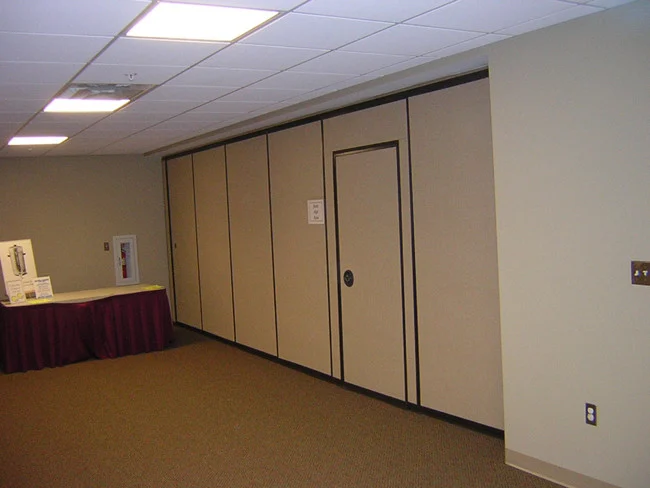
Project documentation can be discussed with the supplier, including pass-door requirements and layout-specific questions. However, no register entry should convert a discussion into a performance claim. Where the evidence is not yet available, the correct register language is a confirmation action, not a conclusion.
Common Weighting Mistakes to Avoid
One mistake is treating the track as a minor accessory because it is visually small.
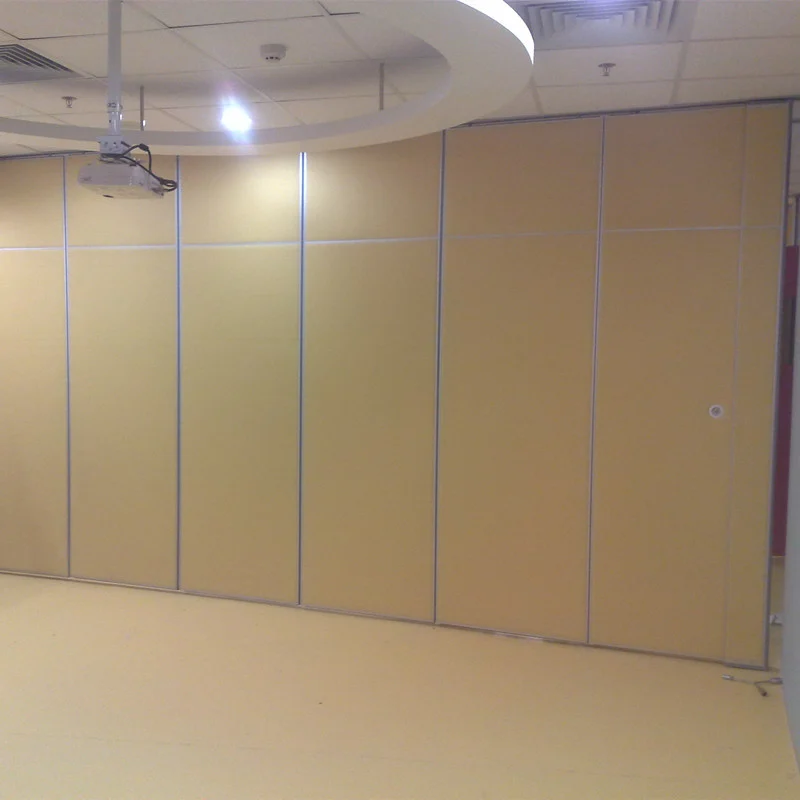
A fourth mistake is leaving the parking position out of the review. Parking style is customized to the customer layout and project requirements, and it may support compact stacking when the coordinated design permits it. That makes parking a layout question, not an afterthought.
FAQ: Track Interface Weighting in Tender Reviews
What does track interface weighting mean in a partition tender risk register?
It means giving the overhead track, support interface and movement route their own review weight instead of folding them into a general partition line item. The exact overhead route and support arrangement must be confirmed by the responsible project team from coordinated drawings.
Can I assign a fixed score to track interface risk?
A fixed score is rarely useful across different projects.
Does a straight route always carry lower risk than a turning route?
Not automatically. A straight route with no support drawing may carry more open questions than a turning route with a coordinated layout. The register should reflect the evidence, not just the geometry.
How should acoustic expectations appear in the register?
Note that project-specific acoustic requirements need confirmation with matching evidence. Visible references can support layout discussion but do not verify hidden construction or performance.
What should I do if the parking position is not shown?
Record it as an open item. Parking style is customized to the customer layout and project requirements, so the register should request a coordinated parking position before the route is treated as complete.
Where can I discuss project documentation?
Pass-door requirements and project documentation can be discussed through the contact page. Product context is available on the movable walls page, and further planning material is available in the resources section.
Conclusion: Keep the Register Evidence-Bounded
Weighting track interface risk is less about prediction and more about disciplined review. Give the overhead route, support interface and parking position their own register entries. Separate confirmed facts from open questions. Use drawing review prompts to drive confirmation actions, and avoid converting a finish selection or a schematic line into a performance claim.
To discuss documentation and layout questions, contact EBUNGE.