
Quick answer: bid clarification response consistency check
Review focus: bid clarification response consistency check.
A partition tender bid clarification response consistency check is the structured comparison of every bidder’s written answers against the same tender questions, the same drawing set and the same stated scope. It is not a scoring exercise and it is not a substitute for technical review. Its purpose is to reveal where responses diverge, where an answer quietly changes the scope, and where a claim cannot be verified from the documents provided. For overseas project teams, this check protects the integrity of the comparison before any commercial or technical evaluation begins.
Movable partition procurement involves many interface points: the overhead route, the parking position, the finish selection, the pass-door arrangement and the documentation package. When bidders answer clarification questions at different times and in different formats, the resulting responses can look comparable while actually describing different scopes. A disciplined consistency check brings those differences into the open.
Why Response Consistency Matters More Than Response Length
Project review term: bid clarification response consistency check.
A long clarification response is not automatically a complete one. Consistency means each bidder has answered the same question with the same level of specificity, using the same definitions and referencing the same project conditions. When one bidder answers a question about the overhead route with a general statement and another answers with a drawing reference, the two responses are not equivalent for evaluation purposes.
The check also protects against scope drift. A bidder may answer a question correctly but add a qualification elsewhere that changes the assumed scope. Cross-referencing answers against each other and against the tender documents is the only reliable way to catch this.
Build a Clarification Register Before You Compare
Coordination scope: bid clarification response consistency check.
Start by listing every clarification question issued and every response received. A simple register prevents the comparison from becoming an unstructured reading exercise.
What the register should capture
- Question identifier and the exact wording issued to all bidders.
- Bidder name and the date the response was received.
- Whether the response is complete, partial or refers to another document.
- Any qualification, assumption or exclusion stated in the response.
- The drawing or document revision the response relies on.
Keep the question set identical
If a question was sent to one bidder and not another, the comparison is already uneven. Record any such gaps and decide whether to reissue the question to all bidders before proceeding.
A Step-by-Step Consistency Check Process
Checklist focus: bid clarification response consistency check.

- Freeze the comparison set. Confirm which response revision is being evaluated and note the date. Later revisions should be treated as a separate comparison round.
- Map each answer to the original question. Confirm the bidder addressed the question asked, not a related but different point.
- Check terminology. Confirm terms such as overhead route, parking position and finish are used consistently across responses.
- Compare scope statements. Identify where one response includes an item and another excludes it, even if both sound positive.
- Trace drawing references. Confirm every referenced drawing exists, is current and covers the area described.
- Flag unverifiable claims. Mark any statement that cannot be checked against the tender documents or maintained product information.
- Summarise divergences. Produce a short list of points requiring a further round of clarification.
What to Compare Across Bidders
Review focus: bid clarification response consistency check.
Not every line of a response needs the same scrutiny. Focus on the items that affect how the partition system will be configured and coordinated.
| Comparison area | What to look for | Evidence limit |
|---|---|---|
| Overhead route and support | Whether the response describes a continuous connected overhead route for the proposed layout | Support and structural requirements need project-specific review |
| Parking and stacking | Whether the stated parking position matches the layout and available space | Parking style is customized to the layout and project requirements |
| Finish selection | Whether the finish named matches the approved finish options for the project | Finish choice does not by itself confirm acoustic or fire performance |
| Pass-door requirements | Whether the response addresses the pass-door arrangement described in the tender | Pass-door requirements can be discussed and confirmed per project |
| Documentation | Whether the response lists the documents the bidder will provide | Project documentation can be discussed and confirmed per project |
Handling Acoustic and Performance Language Carefully
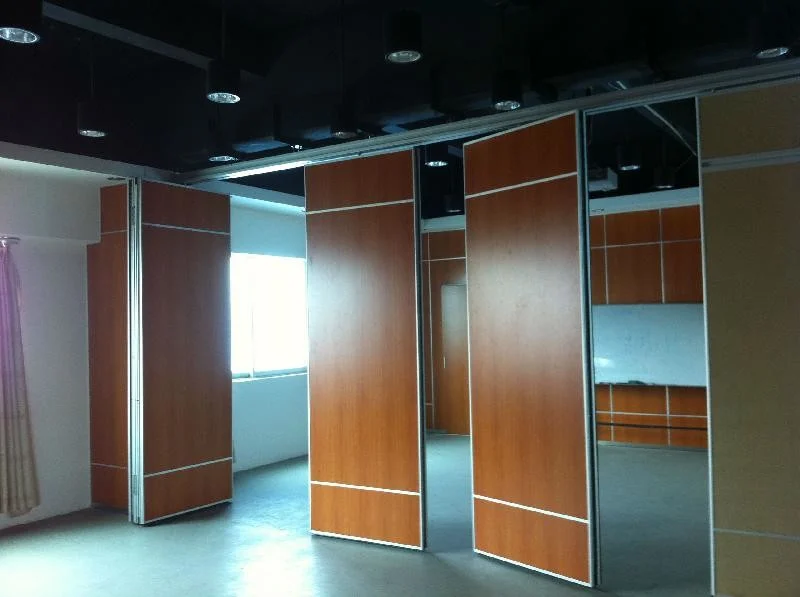
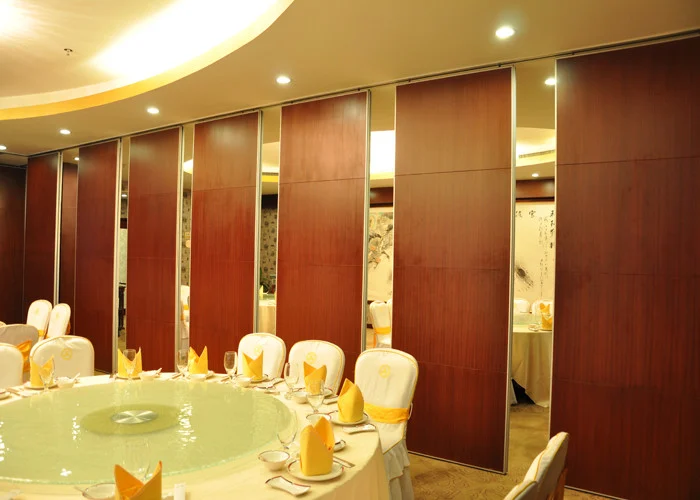
The suitability of each route and parking arrangement depends on the approved layout, circulation, ceiling interfaces and operating sequence.
Visible references can support layout discussion but do not verify hidden construction or performance. If the tender requires acoustic confirmation, the response should state the basis clearly, and the project team should confirm the requirement against project-specific evidence. Where the basis is unclear, mark it for clarification rather than assuming equivalence between bidders.
Common Inconsistencies and How to Resolve Them
Different assumptions about the opening
One bidder may assume the full opening is covered by panels, while another assumes a fixed section. This changes the panel count and the parking arrangement. Resolve by restating the opening dimensions and the intended use in the next clarification round.
Mixed drawing revisions
Responses referencing different drawing revisions cannot be compared directly. Confirm the current revision and ask all bidders to respond against it.
Qualified answers
A response that says a requirement is possible subject to site review is not the same as a confirmed scope. Record the qualification and decide whether it is acceptable for the comparison stage.
Documenting the Outcome
The output of the check should be a short, factual record: which questions were answered consistently, which diverged, and which require a further round. This record supports the evaluation team without replacing technical or commercial review. It also creates a clear audit trail if the tender later moves to negotiation.
Keep the record tied to the tender documents and the maintained product information. Avoid adding conclusions that the evidence does not support.
Frequently Asked Questions
What is a partition tender bid clarification response consistency check?
It is a structured comparison of bidder clarification answers against the same questions, drawings and scope, used to identify divergences before evaluation.
Does a consistency check replace technical review?
No. It supports technical and commercial review by making differences visible. Engineering, acoustic and dimensional requirements still need project-specific confirmation.
How should acoustic ratings be compared across bidders?
Confirm the basis of any rating and whether it applies to the proposed configuration.
What if bidders reference different drawing revisions?
Pause the comparison, confirm the current revision, and ask all bidders to respond against the same set before continuing.
Can pass-door requirements be clarified during the tender?
Yes. Pass-door requirements and project documentation can be discussed and confirmed as part of the clarification process.
When should the check be repeated?
Repeat it after each clarification round, treating later responses as a new comparison set so earlier and later answers are not mixed.
Conclusion and Next Steps
A consistent clarification record makes tender evaluation more transparent and reduces the risk of comparing unequal scopes. Start with a register, compare answers against the same questions and drawings, flag anything unverifiable, and confirm support, acoustic and dimensional requirements for the specific project before award.
To discuss movable partition configuration, finishes, pass-door arrangements or project documentation, contact the EBUNGE team. You can also review the movable wall product range and browse the project resources for further planning context.