
Quick project answer
Review focus: tender addendum log.
When a movable partition package moves through tender, scope rarely stays fixed. A partition tender addendum log scope shifts is the controlled record that shows what changed, when it changed, and which drawing or clarification triggered the change. Without that record, contractors, architects and owners can end up pricing different versions of the same opening. This article sets out a structure for logging addenda when partition scope shifts, using only maintained product facts and clearly marked confirmation boundaries.
Why a Dedicated Addendum Log Matters for Partition Packages
Project review term: tender addendum log.
Movable wall panels are individually movable, suspended from a top track, cross the opening without a floor track, and park at a planned stacking position. That operating logic means scope changes often touch more than one drawing: the opening width, the parking zone, the finish schedule and the route review can all move together.
A general tender addendum register may capture the document number but miss the partition-specific consequence. A dedicated log keeps the commercial, technical and coordination threads visible in one place.
Core Fields Every Partition Addendum Entry Should Carry
Coordination scope: tender addendum log.
Each entry should be identifiable without opening the addendum itself. Panel handling and the operating sequence must be confirmed for the selected layout and project conditions.
- Addendum number and issue date.
- Originating query, instruction or drawing revision.
- Affected partition line, opening or stacking zone reference.
- Scope category: layout, finish, route, parking, pass-door or documentation.
- Status: open, priced, accepted or superseded.
- Linked drawing numbers and revision codes.
- Responsible party and required response date.
Keep the field names stable across the project. Renaming columns mid-tender creates avoidable confusion when different teams export the log.
How to Classify Scope Shifts Without Overstating Impact
Checklist focus: tender addendum log.

Layout and route changes
Straight, turning and stacking routes are reviewed from the layout. If a route changes, the log should reference the revised layout and note that the route requires project-specific review. The suitability of each route and parking arrangement depends on the approved layout, circulation, ceiling interfaces and operating sequence.
Finish and surface changes
Confirmed finish options include laminate, melamine, fabric, leather, glass and other approved surfaces. A finish substitution should be logged with the surface name and the drawing or schedule it affects. A finish change does not by itself confirm acoustic, fire or durability performance.
Pass-door and access changes
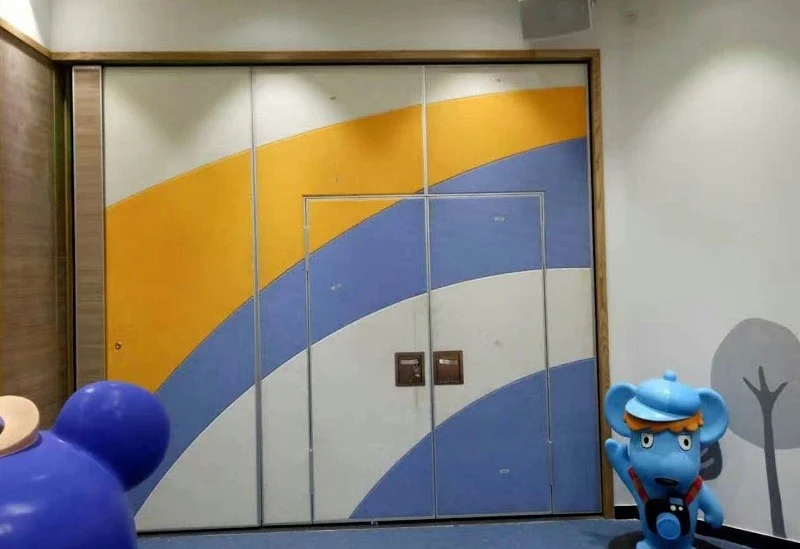
Pass-door requirements and project documentation can be discussed. Log any pass-door request as a scope item and link it to the relevant opening, rather than treating it as a minor note.
A Numbered Process for Maintaining the Log
- Capture the trigger: record the query, instruction or revised drawing that prompted the change.
- Assign a unique addendum number and date it.
- Map the change to the affected partition line, opening or stacking zone.
- Classify the scope category and set a status.
- Attach or reference the current drawing revision.
- Route the entry to the responsible reviewer for pricing or technical comment.
- Close the loop by marking superseded entries and confirming the current baseline.
This sequence keeps the log usable as both a live coordination tool and a tender history.
Evidence Boundaries When Describing Partition Scope
If an addendum touches acoustic requirements, log the requirement and route it for confirmation rather than stating a performance outcome.
Evidence note: do not derive hidden acoustic, fire, durability, load, maintenance or commercial performance from a visible shape, finish, photograph or drawing. Confirm project-specific support, acoustic and dimensional requirements with the responsible technical party.
This boundary protects the tender from optimistic assumptions that later become disputes.
Coordination Checkpoints for Procurement and Tender Review
A short weekly scan can catch duplicated entries and stale drawing references.
| Checkpoint | What to verify | Output |
|---|---|---|
| Pre-addendum | Trigger is documented and linked to a drawing revision | New log entry |
| Mid-review | Scope category and status are current | Updated status |
| Pre-submission | Superseded entries are closed and baseline is clear | Clean tender baseline |
Use the same checkpoint rhythm for every addendum so reviewers know what to expect.
Common Pitfalls That Weaken a Partition Addendum Log
One frequent problem is mixing drawing revisions in a single entry without stating which revision is current. Another is logging a finish change without noting the affected opening. A third is leaving route or parking changes as verbal notes.
Keep entries short but complete. If a change is unclear, log it as open and assign a reviewer rather than guessing at the intent.
FAQ: Partition Tender Addendum Log Scope Shifts
What is a partition tender addendum log?
It is a controlled record of changes issued during tender that affect the movable partition scope, including layout, finish, route, parking, pass-door and documentation items.
When should a scope shift be logged?
Log it as soon as the trigger is identified, whether that is a query, an instruction or a revised drawing. Early logging keeps the tender baseline visible.
Can a finish change be logged without acoustic evidence?
Yes. Log the finish change and route any acoustic requirement for project-specific confirmation.
How should route or parking changes be recorded?
Reference the revised layout and note that straight, turning and stacking routes are reviewed from the layout. Confirm project-specific support and dimensional requirements separately.
Does the log replace drawing review?
No. The log tracks changes; drawing review confirms the technical baseline. Both are needed for a clear tender submission.
Who should maintain the log?
Assign one owner, often the procurement or tender coordinator, with technical reviewers contributing entries for their scope categories.
Conclusion and Next Step
A well-structured addendum log keeps partition scope shifts visible, traceable and reviewable.
To discuss pass-door requirements, project documentation or movable wall configuration for your layout, contact EBUNGE. You can also review movable walls and browse resources for further planning context.