
Quick answer: partition interface query cut
Review focus: partition interface query cut.
The architect partition interface query cut-off before tender is the date after which unresolved interface questions stop being informal and start carrying commercial risk. For overseas project teams, the cut-off is not a single deadline; it is a coordination gate that separates what is already documented from what still requires project-specific confirmation. Movable partitions are top-hung, move without a continuous floor running track along the partition line, and park at a planned stacking position. Those maintained facts are a useful starting point, but they do not answer every interface question a tender package will raise.
This article offers an evidence-bounded framework for setting that cut-off. The suitability of each route and parking arrangement depends on the approved layout, circulation, ceiling interfaces and operating sequence. Instead, it helps architects, contractors and owners decide which queries must be closed before tender and which can be carried forward with a clearly stated confirmation boundary.
Why a Query Cut-Off Belongs in the Tender Programme
Project review term: partition interface query cut.
A tender is a pricing and risk-transfer event. If partition interface queries remain open, bidders may price assumptions rather than the design. That can produce inconsistent returns, qualifications or post-award variations. A cut-off gives every bidder the same information set and a clear route for exceptions.
The cut-off should sit late enough to capture coordinated design decisions but early enough for bidders to review them. It is not a ban on questions. It is a controlled point where remaining questions are logged, owned and either answered or explicitly deferred.
What the cut-off is not
It is not a substitute for project-specific support, acoustic or dimensional confirmation. It is also not a promise that every interface will be resolved. Some items, such as final stacking geometry or finish approval, may legitimately remain subject to post-tender confirmation.
Separate Maintained Product Facts from Project-Specific Evidence
Coordination scope: partition interface query cut.
Before setting a cut-off, classify every statement in the tender package. Maintained product facts describe how the system works in general: panels are individually movable, suspended from a top track, cross the opening without a floor track, and park at a planned stacking position. Straight, turning and stacking routes are reviewed from the layout. Confirmed finish options include laminate, melamine, fabric, leather, glass and other approved surfaces.
Project-specific evidence is different. It covers the actual support conditions, route geometry, dimensional coordination, acoustic requirements and finish approvals for this building. Those items require matching evidence and cannot be inferred from a generic product description or a photograph.
Evidence note
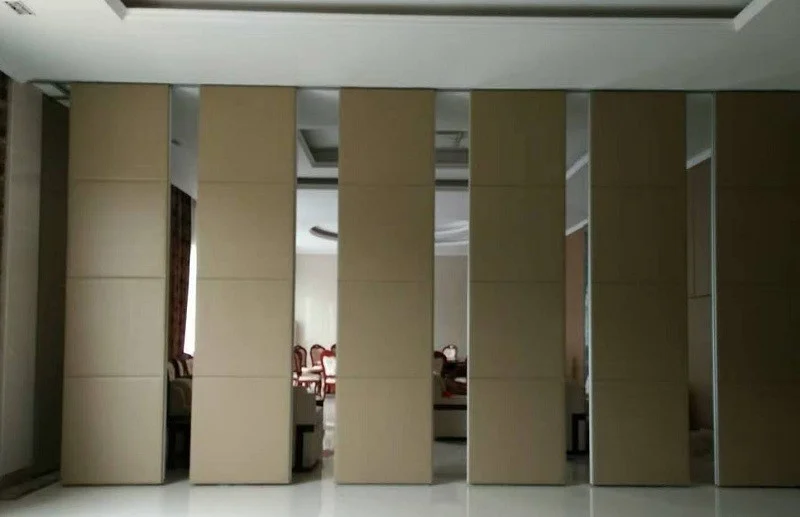
Do not derive hidden acoustic, fire, durability, load, maintenance, certification or commercial performance from a visible shape, finish, photograph or drawing. Comparative, absolute and causal statements require corresponding evidence; otherwise state the exact project-specific confirmation boundary.
Build the Interface Query Register
Checklist focus: partition interface query cut.
A query register turns scattered comments into a managed list. Each entry should identify the interface, the responsible party, the evidence required and the status. The register should be reviewed at the cut-off meeting and issued with the tender documents.
- For each interface, state what is already confirmed and what remains project-specific.
- Assign an owner for each open query and a required response date.
- Mark whether the query must close before tender or can be deferred with a stated boundary.
Route review is part of the register
Straight, turning and stacking routes should be reviewed from the layout. A proposed movement path requires a continuous connected overhead route and project-specific support review. The exact route, junction arrangement, continuous overhead path and parking position must be confirmed from the coordinated project drawings. If the layout shows a gap, the query must be resolved or the route must be redesigned before tender.
Set the Cut-Off Date and Decision Rules
The cut-off date should be agreed with the client, contractor and design team. It should appear in the tender programme and in the query register. Decision rules should state who can close a query, what evidence is acceptable and how late changes are handled.
| Query type | Close before tender? | Evidence needed |
|---|---|---|
| Support and head track interface | Yes | Coordinated structural and ceiling drawings |
| Route and stacking geometry | Yes | Layout review with continuous overhead route |
| Finish selection | Usually | Approved finish option and sample reference |
| Acoustic requirement | Project-specific | Stated requirement and matching project evidence |
| Pass-door requirement | Project-specific | Confirmed location and project documentation |
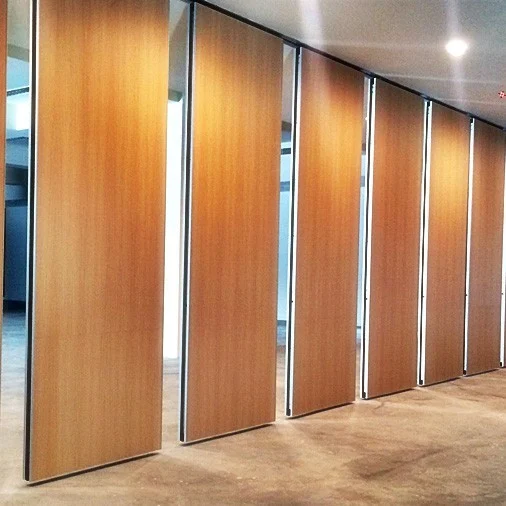
Coordinate Finishes, Pass Doors and Documentation
Finish options include laminate, melamine, fabric, leather, glass and other approved surfaces. The cut-off should confirm which finishes are acceptable for the project and whether any require sample approval.
Pass-door requirements and project documentation can be discussed with the supplier. If a pass door is required, its location and interface should be recorded in the register. Documentation should distinguish between maintained product facts and project-specific confirmations.
Checklist for the cut-off meeting
- Query register issued and reviewed.
- Route and stacking layout checked for continuous overhead support.
- Finish options and approvals recorded.
- Pass-door and documentation requirements noted.
- Open items assigned with owners and dates.
- Deferred items given a written confirmation boundary.
What to Do When Evidence Is Missing
If evidence is missing, do not fill the gap with an assumption. State the boundary clearly: this item requires project-specific confirmation. That approach protects the tender from unsupported performance, engineering or commercial conclusions.
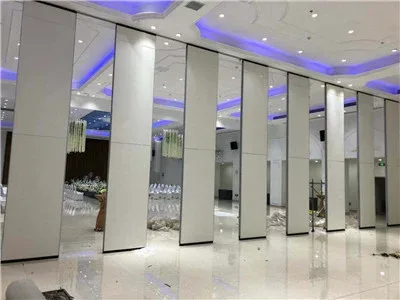
Visible references can support layout discussion but do not verify hidden construction or performance. The tender should say what must be confirmed and by whom. Bidders can then price the confirmed scope and identify any qualifications.
Frequently Asked Questions
What is a partition interface query cut-off before tender?
It is an agreed date after which unresolved interface questions are either closed or formally deferred with a stated confirmation boundary. It helps bidders price the same information set.
Which partition facts are maintained product facts?
Panels are individually movable, top-hung, cross the opening without a floor track, and park at a planned stacking position. Straight, turning and stacking routes are reviewed from the layout. Finish options include laminate, melamine, fabric, leather, glass and other approved surfaces.
Can acoustic performance be confirmed from a generic description?
No.
What should happen if the layout shows an untracked gap?
The route requires a continuous connected overhead route and project-specific support review.
How should pass doors and documentation be handled?
Pass-door requirements and project documentation can be discussed with the supplier. Record the location and interface in the query register and confirm project-specific details before tender where possible.
Does the cut-off remove the need for post-tender confirmation?
No. Some items may remain subject to project-specific support, acoustic and dimensional confirmation. The cut-off simply makes those boundaries visible to all bidders.
Conclusion and Next Steps
Setting a partition interface query cut-off before tender is a coordination discipline. It separates maintained product facts from project-specific evidence, gives bidders a consistent information set and records what still needs confirmation. Architects should agree the date, maintain a query register, review routes and stacking from the layout, and state evidence boundaries clearly.
To discuss pass-door requirements, project documentation or movable wall coordination for your next tender, contact EBUNGE. You can also review movable walls and the resources page for maintained product context. Always confirm project-specific support, acoustic and dimensional requirements with the responsible design team.