
Quick answer: partition handover record
Review focus: partition handover record.
Partition handover record countersignature routing is the controlled path a completion document follows before final acceptance. For overseas contractors, architects, interior designers, owners, and renovation teams, the routing decision determines who confirms what, when, and against which drawing revision. Panel handling and the operating sequence must be confirmed for the selected layout and project conditions. This article sets out a practical framework for routing countersignatures without inventing performance, engineering, or commercial conclusions.
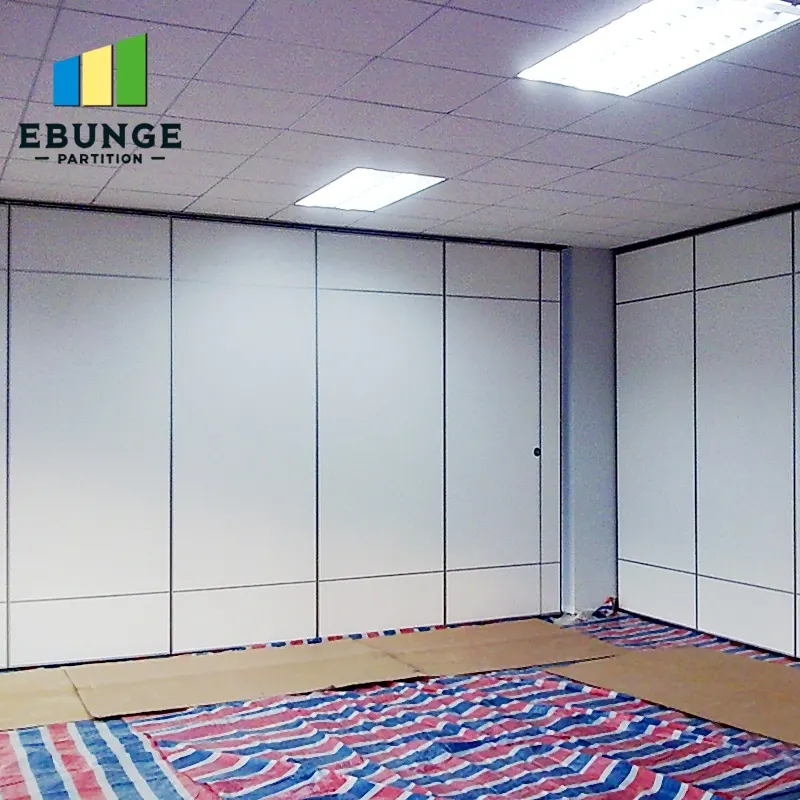
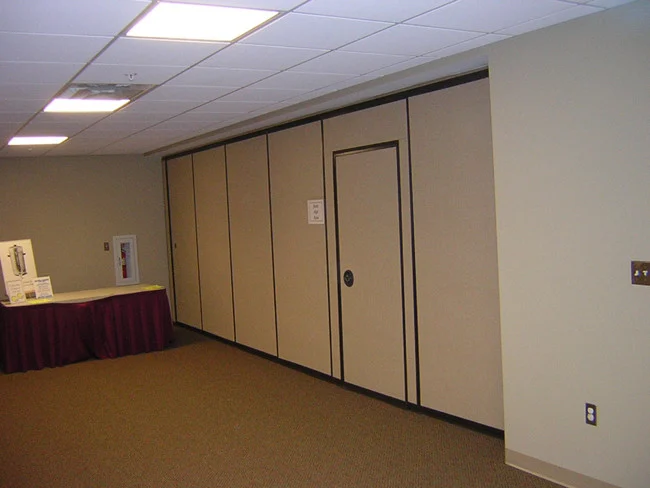
Movable partitions are top-hung and move without a continuous floor running track or floor hardware along the partition line. That maintained fact matters for handover because it shapes what the record should describe: panel movement, parking position, and the overhead route. The suitability of each route and parking arrangement depends on the approved layout, circulation, ceiling interfaces and operating sequence. Those remain project-specific and require matching evidence.
Why Countersignature Routing Deserves Its Own Plan
Project review term: partition handover record.
On many projects, handover records are treated as a final administrative step. The document arrives, signatures are requested, and the routing sequence is improvised. That approach creates predictable friction. A reviewer may sign without seeing the latest layout drawing. A contractor may confirm installation while the owner is still checking finish approvals. A distributor may be asked to countersign a statement that belongs to the design team.
Countersignature routing is a coordination tool. It defines the order of review, the evidence each reviewer needs, and the point at which a signature becomes meaningful. When routing is planned early, it reduces the risk of re-signing, disputed scope, and ambiguous acceptance. It also keeps the handover record aligned with the maintained product facts and the approved project drawings.
What the Handover Record Should and Should Not Claim
Coordination scope: partition handover record.
A partition handover record is strongest when it separates confirmed facts from project-specific confirmations. Confirmed facts include the top-hung movement principle, the absence of a continuous floor track along the partition line, and the availability of finish options such as laminate, melamine, fabric, leather, glass, and other approved surfaces. These are product-level statements that can be referenced consistently.
Evidence note: visible shape is not performance evidence
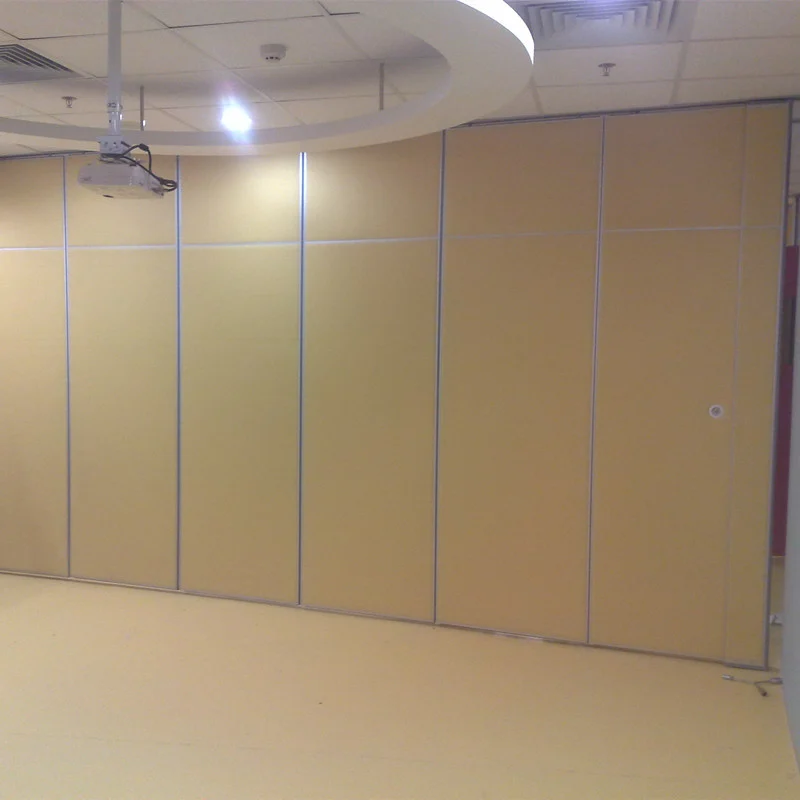
Do not derive hidden acoustic, fire, durability, load, maintenance, certification, or commercial performance from a visible shape, finish, photograph, or drawing. Comparative, absolute, and causal statements require corresponding evidence; otherwise remove them or state the exact project-specific confirmation boundary.
Routing Sequence for Multi-Party Review
Checklist focus: partition handover record.
A clear routing sequence prevents signatures from being collected out of order. The sequence below is a coordination model, not a mandatory legal procedure. Project teams should adapt it to contract requirements and local practice.
- Confirm the drawing revision. Identify the layout drawing that governs panel movement, turning, and stacking routes. Confirm that straight, turning, and stacking routes have been reviewed from the layout.
- Verify the product fact set. Check that the record references only maintained product facts and approved finish options. Remove any inferred performance claim.
- Route to the technical reviewer. The exact route, junction arrangement, continuous overhead path and parking position must be confirmed from the coordinated project drawings.
- Route to the commercial or contractual reviewer. This reviewer confirms scope boundaries, not engineering outcomes. Commercial terms should not be inferred from the partition layout.
- Route to the owner or owner representative. The owner confirms acceptance against the agreed evidence set and notes any outstanding items.
- Close with the contractor or installer. The final countersignature confirms that the record reflects the installed condition as documented, without adding unsupported performance statements.
Decision Checklist Before Routing Signatures
Use this checklist as a gate before the record enters the countersignature route. It is designed to catch evidence gaps early, when they are easiest to resolve.
- Does the record reference the correct layout drawing revision?
- Are straight, turning, and stacking routes described consistently with the reviewed layout?
- Does the record avoid implying that panels can travel across an untracked gap?
- Are finish options listed only as approved surfaces, without cleaning or durability claims?
- Are acoustic or fire statements tied to specific project documentation rather than inferred?
- Is the parking position described as customized to the customer layout and project requirements?
- Have pass-door requirements and project documentation been discussed where relevant?
- Is every signer assigned a review role that matches their responsibility?
Coordinating Handover Documentation Across Disciplines
Architects and interior designers typically confirm layout intent and finish selection. Contractors confirm installation coordination and site conditions. Owners confirm acceptance criteria. Distributors may confirm product supply details, but they should not be asked to certify engineering outcomes outside their scope.
The record does not need to be long; it needs to be precise. A short record that references the correct drawing and the maintained product facts is more useful than a long record filled with unsupported statements.
Compact comparison: routing approaches
| Approach | Strength | Risk |
|---|---|---|
| Sequential routing | Each reviewer sees the prior confirmation | Slower if a reviewer is unavailable |
| Parallel routing | Faster collection of signatures | Reviewers may see different document versions |
| Hybrid routing | Technical review first, then parallel commercial and owner review | Requires disciplined version control |
Project-Specific Confirmation Boundaries
Every partition project has conditions that cannot be resolved by a generic article. Support points, overhead route continuity, dimensional tolerances, and acoustic requirements must be confirmed against the actual layout and building conditions. The handover record should state these as project-specific confirmations, not as universal product claims.
If a requirement is not confirmed, the record should say so plainly. This approach protects all parties and keeps the countersignature meaningful.
Frequently Asked Questions
What is partition handover record countersignature routing?
It is the planned sequence by which a partition handover record is reviewed and signed by the relevant parties. The routing defines who reviews what evidence and in which order, so that each signature confirms a defined scope rather than an assumed one.
Which statements need project-specific evidence?
The exact overhead route and support arrangement must be confirmed by the responsible project team from coordinated drawings. Maintained product facts, such as top-hung movement and finish options, can be referenced without implying hidden performance.
How should teams handle acoustic requirements in the record?
Visible references can support layout discussion but do not verify hidden construction or performance.
Can the record describe panel movement routes?
Yes, provided the description matches the reviewed layout. Straight, turning, and stacking routes should be reviewed from the layout.
Who should countersign the handover record?
The signers depend on the contract and project structure. Typical roles include the contractor, a technical reviewer, the owner or owner representative, and sometimes a distributor. Each signer should confirm only the scope they are responsible for, and the routing should reflect that division.
How does parking position affect handover?
Parking style is customized to the customer layout and project requirements and may support compact stacking when the coordinated design permits it. The handover record should describe the planned stacking position as reviewed in the layout, without promising space savings or operational outcomes.
Conclusion and Next Steps
Countersignature routing for partition handover records is a discipline of evidence boundaries. Keep the record tied to maintained product facts, reviewed layout drawings, and project-specific confirmations. Avoid unsupported performance claims, and make sure every signer understands the scope they are confirming. This approach reduces rework and makes acceptance clearer for contractors, architects, designers, owners, and renovation teams.
To discuss pass-door requirements, project documentation, or movable wall configuration for your next project, contact the EBUNGE team. You can also review the movable wall product range and explore additional planning resources before finalizing your handover routing plan.