
Quick answer: partition changeover windows
Review focus: partition changeover windows.
Planning partition changeover windows facility cleaning schedules is a coordination task, not a performance claim. For contractors, architects, interior designers, owners and renovation teams, the goal is to align when rooms are reconfigured with when cleaning teams need clear access. Movable wall panels are individually movable, suspended from a top track, cross the opening without a floor track, and park at a planned stacking position. Those maintained facts shape the planning conversation, but every project still needs its own drawing review and confirmation of support, acoustic and dimensional requirements.
Start With the Cleaning Schedule, Not the Partition
Project review term: partition changeover windows.
Cleaning schedules usually define when a space must be empty, when floors are cleaned, and when furniture or equipment can be moved. Before discussing panel routes, collect the cleaning windows for each room and the access points cleaners use. This prevents a changeover plan that looks efficient on paper but conflicts with daily or weekly cleaning routines.
Ask the facility team to mark peak cleaning periods, quiet periods and any areas where cleaning equipment must pass. The partition changeover plan should then be tested against those periods. If a cleaning window is fixed, the changeover window may need to sit before or after it, depending on how the room is used.
Information to collect from the facility team
- Daily and weekly cleaning windows for each affected room.
- Access routes used by cleaning teams and equipment.
- Periods when the room must remain available for events or meetings.
- Any known constraints on moving furniture or temporary items.
- Preferred stacking or parking locations when the room is open.
Map the Changeover Route Against the Cleaning Route
Coordination scope: partition changeover windows.
The exact route, junction arrangement, continuous overhead path and parking position must be confirmed from the coordinated project drawings. Every proposed movement path requires a continuous connected overhead route and project-specific support review. That means the changeover route and the cleaning route must be checked together, not separately.
On a drawing, mark the top track route, the opening, and the planned stacking position. Then overlay the cleaning route. If the two routes cross in a way that blocks cleaning access, the changeover window may need to be sequenced differently. This is a layout question, and the answer depends on the actual room geometry.
Straight, turning and stacking routes
Straight, turning and stacking routes are reviewed from the layout. Panel handling and the operating sequence must be confirmed for the selected layout and project conditions. The review should confirm that the overhead route is continuous and that the parking position does not obstruct cleaning access.
Build a Changeover Window Checklist
Checklist focus: partition changeover windows.
Use a checklist to keep the planning evidence-bounded. The checklist below is a coordination tool, not a statement of performance. Each item should be confirmed against project drawings and the facility’s own schedule.
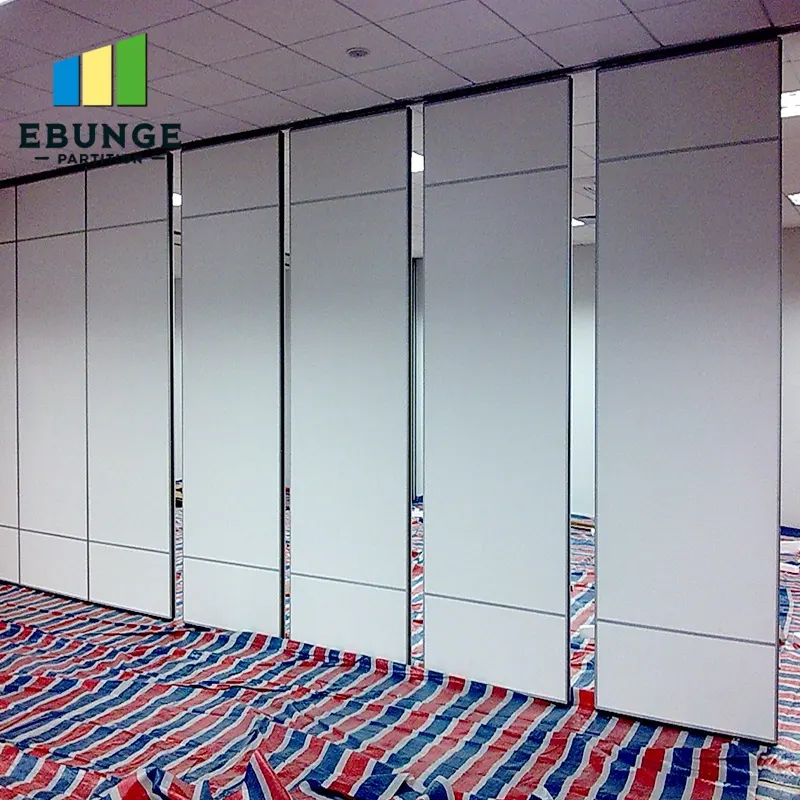
| Checklist item | Why it matters | Confirmation needed |
|---|---|---|
| Cleaning window start and end | Defines when the room must be clear | Facility schedule |
| Changeover start and end | Defines when panels can be moved | Operations plan |
| Overhead route continuity | Panels need a connected top track route | Layout drawing review |
| Stacking position | Panels park at a planned location | Project-specific layout |
| Pass-door needs | Affects access during closed periods | Project discussion |
| Finish and cleaning method | Finish options include laminate, melamine, fabric, leather, glass and other approved surfaces | Project-specific confirmation |
Coordinate Finishes and Cleaning Methods Early
Review focus: partition changeover windows.
Finish choices can influence how a cleaning team approaches a surface, but a generic finish name is not evidence of cleaning compatibility. Confirmed finish options include laminate, melamine, fabric, leather, glass and other approved surfaces. The project team should confirm the cleaning method with the finish supplier and the facility team before the schedule is fixed.
If the cleaning schedule includes wet methods, abrasive tools or specific chemicals, that information belongs in the project discussion. Do not assume that a finish shown in a photograph or drawing will behave in a particular way. The safe approach is to confirm project-specific requirements with the relevant suppliers and the facility’s cleaning lead.
Questions to resolve with the cleaning team

- Which cleaning methods are planned for each finish type?
- Are there periods when the room must be completely clear?
- Can cleaning and changeover happen in the same window, or must they be sequenced?
- Who confirms that the room is ready for the next use?
- What documentation is needed for the operations file?
Use Drawing Reviews to Test the Plan
Project review term: partition changeover windows.
Drawing reviews are where the changeover plan becomes specific. The review should show the top track route, the opening, the stacking position and the cleaning access route. It should also note any pass-door requirements and any project documentation that the facility team needs.
Because straight, turning and stacking routes are reviewed from the layout, the review should not rely on assumptions about how panels will move. If the layout changes, the changeover window may need to change too. This is why the plan should be revisited whenever the room layout or cleaning schedule is updated.
Evidence note
This article explains planning concepts only. It does not confirm acoustic performance, structural capacity, cleaning compatibility, installation time, manpower or cost. STC and Rw are rating concepts used in acoustic discussions; they are not a direct count of decibels and should not be reduced to one. Project-specific support, acoustic and dimensional requirements must be confirmed from the project drawings and relevant documentation.
Align Changeover Windows With Room Booking Patterns
Coordination scope: partition changeover windows.
Cleaning schedules rarely exist in isolation. They interact with room bookings, events and classes. A changeover window that works on a quiet day may fail on a busy day. The planning team should compare the cleaning schedule with the booking pattern and identify where the two conflict.
Where conflicts are frequent, the project team may consider a different stacking position or a different sequence for cleaning and changeover. These are layout and operations decisions. They should be documented so that the facility team can follow the same process consistently.
Simple sequencing options to discuss
- Clean first, then change over, when the room is not needed immediately.
- Change over first, then clean, when the next event requires an open or closed layout.
- Split the window when cleaning and changeover can happen in separate zones.
- Move the changeover to a different day when the cleaning schedule is fixed.
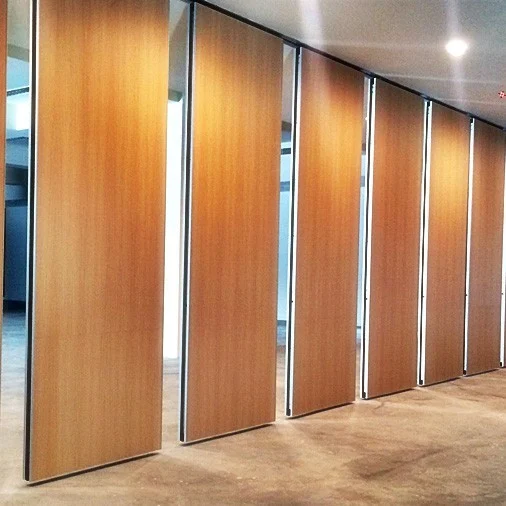
Document the Plan for Handover
A changeover plan is only useful if the people operating the space can follow it. The handover file should include the cleaning schedule, the changeover windows, the approved routes and the stacking position. It should also record who to contact when the schedule changes.
Project documentation can be discussed with the EBUNGE team, but the final plan depends on the project’s own drawings and facility requirements. The plan should be reviewed periodically, especially after a change in cleaning contractor, room use or furniture layout.
Frequently Asked Questions
What is a partition changeover window?
A partition changeover window is the period when a movable partition is reconfigured, such as opening or closing a room. It should be planned around the facility cleaning schedule so that both tasks can be completed without conflict.
Do movable partitions need a floor track?
No. EBUNGE movable wall panels are top-hung, cross the opening without a floor track, and park at a planned stacking position. The overhead route must be continuous and reviewed from the layout.
Can cleaning and changeover happen at the same time?
That depends on the room layout, the cleaning method and the project schedule. Some teams sequence the tasks, while others split the window. The decision should be confirmed with the facility team and documented.
How do finishes affect cleaning planning?
Confirmed finish options include laminate, melamine, fabric, leather, glass and other approved surfaces. Cleaning methods should be confirmed for the specific finish and project, because a generic finish name is not evidence of cleaning compatibility.
What should be included in the drawing review?
The review should show the top track route, the opening, the stacking position, the cleaning access route and any pass-door requirements. Straight, turning and stacking routes are reviewed from the layout.
Does this article confirm acoustic performance?
No. The suitability of each route and parking arrangement depends on the approved layout, circulation, ceiling interfaces and operating sequence.
Conclusion and Next Step
Planning partition changeover windows around facility cleaning schedules is a coordination exercise. Start with the cleaning schedule, map the overhead route, test the plan against the layout, and document the agreed sequence. Keep every claim tied to maintained product facts and project-specific confirmation.
To discuss pass-door requirements, project documentation or a movable wall layout for your facility, contact the EBUNGE team. You can also review the movable wall product page and the resources section before your next coordination meeting.