
Quick project answer
Review focus: operable wall tender priced schedule.
Operable wall tender priced schedule omission detection is the discipline of reading the specification and the bidder’s priced schedule side by side, then asking one blunt question of every scope clause: where is the row that prices this? When the answer is silence, the gap is not a rounding error. It is interface work that someone will eventually perform, and the only open question is who pays for it after award.
This framework is written for overseas contractors, architects, interior designers, owners, renovation teams and building-material buyers who must compare bids on a like-for-like basis. It does not replace legal or commercial advice, and it does not assume any particular product performance. It simply binds every recommendation to maintained product facts, visible evidence limits and project-specific drawing review.
Why Omissions Cluster at Interfaces, Not at Panels
Project review term: operable wall tender priced schedule.
Bidders rarely forget the panel. The panel is the visible object in the room and the easiest line to price. Omissions cluster where the operable wall meets the building: the overhead route, the parking position, the opening edges, the finish transitions and the documentation that proves the design was coordinated.
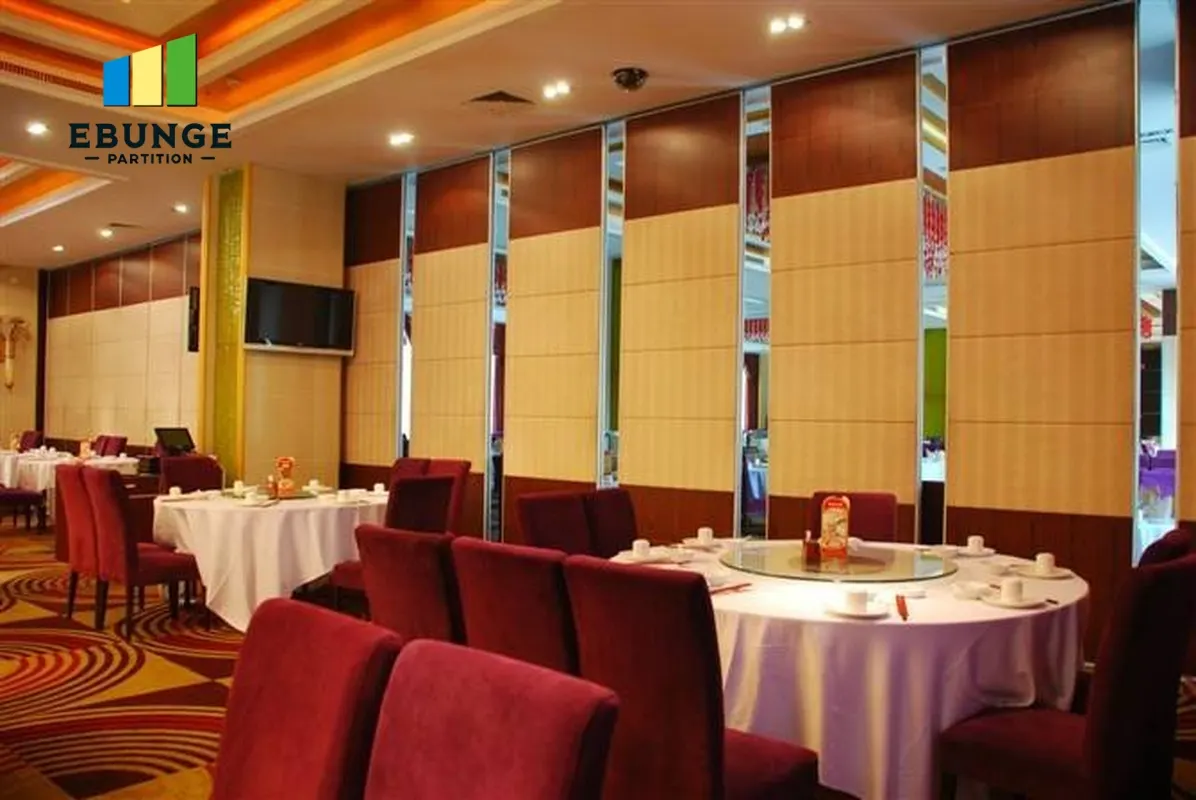
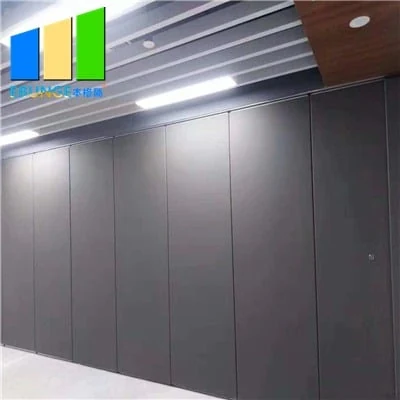
EBUNGE movable wall panels are individually movable, suspended from a top track, cross the opening without a floor track, and park at a planned stacking position. Straight, turning and stacking routes are reviewed from the layout. That sentence alone contains at least four interface obligations that a priced schedule can quietly omit: the continuous overhead route, the turning geometry, the stacking zone and the layout review itself.
The difference between a scope clause and a priced row
A scope clause states an obligation. A priced row states who carries it. The suitability of each route and parking arrangement depends on the approved layout, circulation, ceiling interfaces and operating sequence. Omission detection is therefore not a spelling check; it is a reconciliation between two documents written by different people for different purposes.
A Clause-to-Row Reconciliation Method
Coordination scope: operable wall tender priced schedule.
Work through the following sequence before opening any commercial negotiation. The order matters because each step narrows the next.
- Extract every obligation sentence. Copy each clause that uses words such as supply, install, coordinate, allow, provide, review or confirm. Strip out description and keep only the verb and its object.
- Convert each obligation into a noun phrase. “Coordinate the overhead route” becomes “overhead route coordination”. This makes the obligation comparable to a schedule line.
- Search the priced schedule for that noun phrase and its synonyms. Record whether it appears as a separate row, is bundled inside a larger row, or is absent.
- Mark bundled items as conditional, not resolved. A bundled row may cover the obligation, but only if the bidder confirms it in writing.
- List every absent item on a single omission register. One register per package, shared with the design team.
- Issue clarification questions before award. Ask the bidder to price, exclude or explain each register line.
- Reconcile the returned answers against the drawings. A priced answer that contradicts the layout is still an omission in disguise.
What belongs on the omission register
Typical register lines for an operable wall package include the overhead support condition, the route continuity from opening to parking position, the parking zone and its clearance, the interface with adjacent ceilings and finishes, the finish selection itself, and the project documentation set. Pass-door requirements and project documentation can be discussed with the supplier, but they must appear somewhere in the commercial response.
Reading the Priced Schedule Like a Reviewer
Checklist focus: operable wall tender priced schedule.
Most priced schedules are organised by product, not by obligation. That structure hides omissions because a single product row can absorb several unrelated obligations without naming them.
| Schedule pattern | What it suggests | Reviewer action |
|---|---|---|
| One lump row for the whole package | Interface work may be bundled or excluded | Request a breakdown by obligation |
| Panel rows only, no route or parking rows | Layout-dependent work may be unpriced | Add route and parking lines to the register |
| Finish listed as a single allowance | Finish selection may not be fixed | Confirm which approved surfaces are included |
| Documentation not mentioned | Submittals and coordination may fall outside scope | Ask who produces and who reviews them |
None of these patterns proves bad faith. They prove that the schedule was written at a different level of detail than the specification. The reviewer’s job is to close that distance before signature, not after.

Evidence Limits Every Reviewer Should State
Review focus: operable wall tender priced schedule.
Omission detection depends on documents, and documents have limits. A drawing shows intent, not capacity. A finish sample shows appearance, not compatibility with a particular cleaning regime. A schedule shows price, not scope, unless the rows are detailed enough to say so.
Treat every visible feature as evidence of appearance only. Support conditions, acoustic behaviour, dimensional fit and interface responsibility require project-specific confirmation from the parties who hold that information.
A tender clause that names a rating without defining the configuration, the test basis and the interface conditions is not yet a verifiable requirement.
Questions that expose hidden assumptions
Ask who confirms the overhead support condition. Ask what happens if the layout changes after award. Ask which party reviews the route from opening to parking position. Ask whether the finish selection is fixed or provisional. Ask who owns the coordination drawings. Each answer either closes a register line or opens a new one.
Turning Findings into Pre-Award Clarifications
Project review term: operable wall tender priced schedule.
A register is only useful if it changes the tender outcome. Convert each unresolved line into a written clarification with three acceptable responses: priced, excluded with reason, or confirmed as included within a named row. Anything else is a deferral.
Keep the language neutral. The goal is not to catch a bidder; it is to make the comparison honest. Two bids that look different in total may be identical in scope, or identical in total and wildly different in scope. Only the register tells you which.
For product context on how panels move, park and cross an opening, see the operable partition product page. For broader planning material, the resources library collects guidance that supports this kind of review.
FAQ: Operable Wall Tender Priced Schedule Omission Detection
What is operable wall tender priced schedule omission detection?
It is a review method that compares every scope obligation in the specification against the bidder’s priced schedule, then flags obligations that have no corresponding priced row. The output is an omission register used to raise clarifications before award.
Does a bundled price row always mean the interface work is included?
No. A bundled row may include the work, exclude it, or include it only partially. The reviewer should ask the bidder to confirm in writing which obligations the row covers.
Which items are most often missing from operable wall priced schedules?
Layout-dependent items are the usual candidates: the continuous overhead route, turning and stacking geometry, the parking zone, interface with adjacent finishes, and the documentation set. Project-specific review is required to confirm what applies.
Can omission detection confirm acoustic performance?
No. It can confirm whether an acoustic requirement is stated and whether a priced row responds to it. The actual rating depends on the configuration, the interface conditions and project-specific evidence, which must be confirmed separately.
When should the omission register be started?
As soon as the tender documents are issued. Starting after bids arrive compresses the clarification window and increases the chance that unresolved lines are carried into the contract.
What should happen if a bidder refuses to clarify?
Record the refusal against the register line and treat the item as excluded for comparison purposes. An unpriced obligation does not disappear because it was not discussed.
Conclusion: Reconcile Before You Award
Operable wall tender priced schedule omission detection is not a search for errors. It is a structured comparison between what the specification requires and what the bidder has priced. The method is deliberately simple: extract obligations, convert them to noun phrases, search the schedule, register the gaps, and clarify before award.
Every recommendation in this framework depends on project-specific support, acoustic and dimensional requirements. Confirm those with the parties who hold the design responsibility, and keep the register open until each line is priced, excluded or explained.
To discuss pass-door requirements, project documentation or layout review for a specific tender, contact the EBUNGE team and share the drawings and schedule you are working from.