
Quick answer: tender clarification response consistency audit
Review focus: tender clarification response consistency audit.
An operable wall tender clarification response consistency audit is a structured review of every written answer a bidder gives after the initial submission. The goal is not to catch bidders out. It is to confirm that clarifications still match the drawings, the specification and the maintained product facts the project team is relying on.
Clarification rounds are where small wording changes quietly become scope changes. A response may describe a movement route that no longer matches the layout, or repeat a finish name without confirming it against the approved surface list. This article sets out a repeatable audit method for contractors, architects, owners and procurement teams.
Why Clarification Responses Drift From the Original Bid
Project review term: tender clarification response consistency audit.
Clarification is usually handled under time pressure. Different reviewers answer different questions, and answers are often pasted from earlier correspondence. Over several rounds, the response set can stop describing one coherent offer.
The suitability of each route and parking arrangement depends on the approved layout, circulation, ceiling interfaces and operating sequence. It appears when a bidder answers a narrow question with a broad statement, or when a project team accepts a clarification without checking it against the tender drawings. The audit exists to surface those gaps before they reach the order.
Common sources of inconsistency
- Answers written by someone who has not seen the latest layout revision.
- Finish descriptions that use a generic term instead of the approved surface category.
- Movement and parking descriptions that were not re-checked against the stacking position.
- Acoustic wording that implies a guaranteed result rather than a design target to be confirmed.
Build the Audit Around Confirmed Product Facts
Coordination scope: tender clarification response consistency audit.
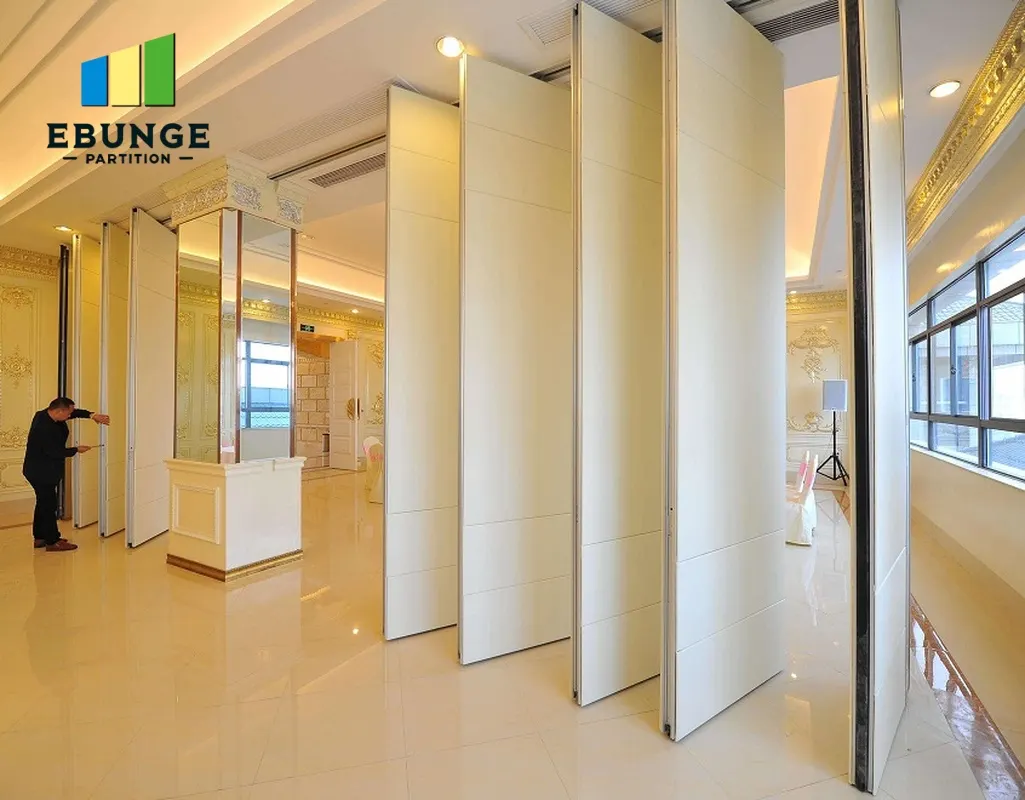
Every clarification should be traceable to a maintained fact or a project-specific confirmation. For operable walls, the maintained facts are narrow and useful: panels are individually movable, suspended from a top track, cross the opening without a floor track, and park at a planned stacking position.
Straight, turning and stacking routes are reviewed from the layout. Confirmed finish options include laminate, melamine, fabric, leather, glass and other approved surfaces. Pass-door requirements and project documentation can be discussed. Anything beyond these statements needs its own evidence.
Evidence note: a clarification response is not evidence of acoustic performance, structural capacity, cleaning compatibility or a application reference. Treat it as a statement to be verified against drawings, schedules and confirmed project requirements.
A Six-Step Clarification Consistency Audit
Checklist focus: tender clarification response consistency audit.
- Freeze the reference set. Collect the tender drawings, specification, finish schedule and the latest clarification log into one controlled folder.
- Number every question and answer. Give each clarification a unique reference so later rounds can be compared without ambiguity.
- Map each answer to a source. Mark whether the answer rests on a maintained product fact, a drawing, a schedule or a project-specific confirmation.
- Flag unsupported statements.
- Re-check movement and parking. Confirm the described route still matches the layout, including turning and stacking positions.
- Issue a consolidated response register. Ask bidders to confirm the register as the single controlling version.
What to Check in Each Response Category
Review focus: tender clarification response consistency audit.
| Response category | Audit question | Evidence boundary |
|---|---|---|
| Movement and parking | Does the described route match the current layout? | Requires drawing review and project-specific support confirmation. |
| Finish and surface | Is the named finish within the approved options? | Finish choice does not by itself confirm acoustic or structural performance. |
| Acoustic wording | Is STC or Rw presented as a design target rather than a promise? | Requires project-specific acoustic confirmation. |
| Pass doors and access | Are pass-door requirements stated and reconciled with the opening? | Requires discussion and project documentation. |
| Documentation | Is the document set complete and version-controlled? | Requires confirmation against the project document register. |
Treat any acoustic statement as a design target that must be confirmed for the project.
Coordinating the Audit Across the Project Team
That owner does not need to answer technical questions, but should control version numbering and distribution.
Architects and interior designers should confirm that finish descriptions match the approved schedule. Contractors should confirm that movement routes and stacking positions remain buildable within the current layout. Owners and renovation teams should confirm that the scope described in the clarification still matches the intended use of the space.
Questions to route back to the bidder
- Which drawing revision does this answer refer to?
- Is this statement a maintained product fact or a project-specific proposal?
- What documentation will be provided to support this statement?
- Does this answer change anything already stated in the original bid?
Documenting the Outcome Without Overclaiming
The audit output should be a short register, not a new specification. Record each clarification, its status, the evidence referenced and any item still open. Avoid converting a bidder statement into a confirmed performance figure simply because it was repeated in a clarification.
Where an item cannot be confirmed at tender stage, say so plainly. A clear open item is more useful than a confident sentence that later cannot be supported.
Frequently Asked Questions
What is an operable wall tender clarification response consistency audit?
It is a structured review that compares every clarification answer from each bidder against the tender drawings, specification and confirmed product facts, so the final offer describes one consistent scope.
Which clarification statements need project-specific evidence?
The exact overhead route and support arrangement must be confirmed by the responsible project team from coordinated drawings. Maintained product facts cover movement, top-hung suspension, clear floor crossing, parking and confirmed finish options.
How should movement and parking routes be checked?
Review straight, turning and stacking routes against the current layout. Confirm that the described path is continuous and that the parking position is coordinated with the room design. Support requirements remain project-specific.
Can a finish choice confirm acoustic performance?
No. Laminate, melamine, fabric, leather, glass and other approved surfaces are finish options.
How many clarification rounds should a project allow?
That depends on the project. What matters is that each round is version-controlled and that the final register is confirmed by the bidder as the controlling response set.
When should the audit stop?
Stop when every open item is either confirmed with evidence or recorded as an open item for resolution before order. Do not close an item by assumption.
Conclusion and Next Step
A consistent clarification record protects the project from scope drift. Keep every answer tied to a drawing, a schedule or a confirmed fact, and mark anything else as open. Review the operable partition system context, browse the planning resources for further guidance, and contact the team to discuss pass-door requirements, documentation and project-specific confirmation.