
Quick answer: operable wall tender clarification response
Review focus: operable wall tender clarification response.
The operable wall tender clarification response ownership handover is the point where an evaluation team stops answering bidder questions and a contract administrator starts administering them. If that transfer is informal, settled scope decisions can be reopened after award. This framework gives procurement reviewers a repeatable way to document what remains unresolved, who owns each item and which decisions still depend on project-specific drawings or support review.
It applies to overseas contractors, architects, interior designers, owners, renovation teams and distributors evaluating movable partition packages. The named venue or room type is an example only; the same method suits any flexible-space application where panels are top-hung, move without a continuous floor track and park at a planned stacking position.
Why a Formal Handover Matters Before Award
Project review term: operable wall tender clarification response.
During evaluation, bidders raise questions about routes, finishes, pass-doors and documentation. Some answers are straightforward. The suitability of each route and parking arrangement depends on the approved layout, circulation, ceiling interfaces and operating sequence.
When those open items are not transferred with clear ownership, the contract administrator may receive a different interpretation than the evaluation team intended. A bidder may treat a verbal clarification as approved scope. A later request for confirmation can then look like a change rather than a continuation of the same question.
A formal handover does not settle every technical point. It records which points are settled, which are still open and which require project-specific confirmation before they can be closed.
What the Evaluation Team Should Capture
Coordination scope: operable wall tender clarification response.
The evaluation team should produce a handover register that separates three categories: closed clarifications, open clarifications and scope-impact decisions. Each entry needs a short description, the bidder reference, the current status and the evidence still required.
Closed clarifications are those answered fully within the tender documents. Open clarifications are those that remain unresolved because they depend on information not yet available. Scope-impact decisions are the evaluation team’s determinations about whether an open item changes the package boundary, the coordination responsibility or the documentation required before award.
Minimum fields for each register entry
- Clarification reference and bidder name.
- Short question summary in neutral language.
- Status: closed, open or pending project-specific review.
- Scope-impact determination: none, coordination only or requires owner decision.
- Evidence required to close the item.
- Named owner on the evaluation side and proposed owner on the administration side.
- Date of last update and next review point.
A Numbered Process for Transferring Ownership
Checklist focus: operable wall tender clarification response.

The transfer should follow a fixed sequence so that no open item is left without an owner. The steps below are administrative; they do not replace technical review by the responsible designer or engineer.
- Freeze the clarification log at the end of evaluation and mark the version date.
- Classify every entry as closed, open or pending project-specific review.
- For each open entry, record the scope-impact determination made by the evaluation team.
- Identify the evidence needed to close the entry, such as coordinated drawings, support confirmation or finish approval.
- Assign a proposed owner within the contract administration team.
- Hold a handover meeting and walk through every open entry.
- Obtain written acknowledgement from the contract administrator.
- Archive the register with the tender file and note where future updates will be recorded.
Scope-Impact Decisions and Their Limits
Review focus: operable wall tender clarification response.
A scope-impact decision is not a technical approval. It is a procurement judgement about whether an unresolved question affects the package boundary, the coordination duty or the information required before award. The evaluation team can record that judgement, but it should not convert an open technical question into an assumed performance outcome.
For example, a bidder may ask whether a proposed route can turn and stack as shown on the layout. The evaluation team can record that the route requires review against the layout and that the answer depends on project-specific support and dimensional coordination. It should not state that the route is feasible without that review.
Similarly, a question about acoustic separation should be handled conceptually. Any acoustic target must be confirmed against the project’s specific requirements and supporting evidence.
Decision categories the register can use
| Category | Meaning | Administration action |
|---|---|---|
| No scope impact | Answer is complete within tender documents. | Close and archive. |
| Coordination only | Answer depends on interface or drawing coordination. | Track until coordinated drawing is available. |
| Owner decision required | Answer changes package boundary or responsibility. | Escalate before award. |
| Project-specific review | Answer depends on support, acoustic or dimensional confirmation. | Keep open with named owner. |
Evidence Boundaries the Contract Administrator Must Inherit
Project review term: operable wall tender clarification response.
The handover should state clearly what the evaluation team did not verify. This prevents the contract administrator from treating an assumption as a confirmed fact.
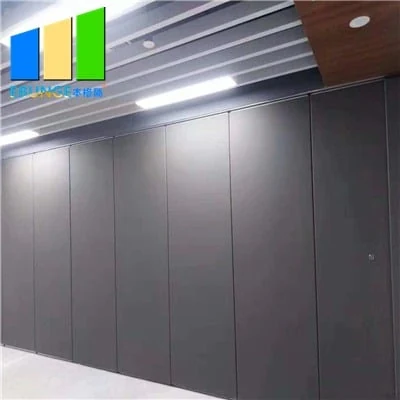
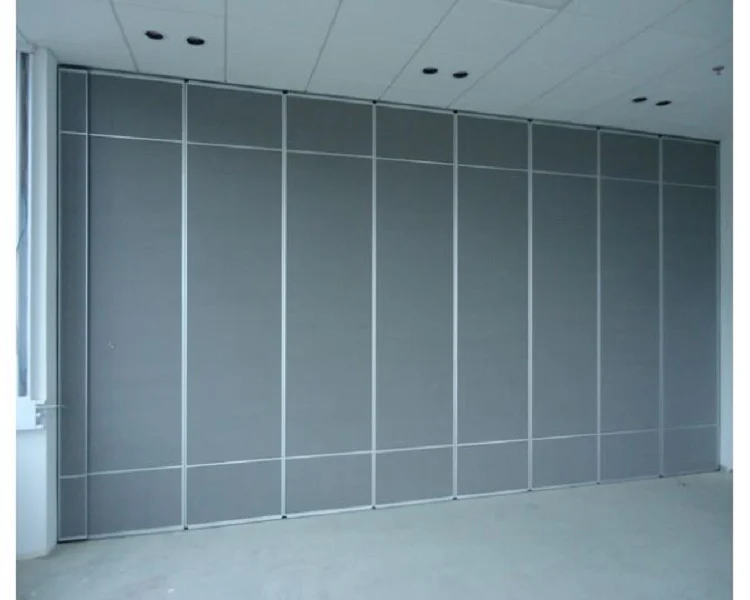
Confirmed product facts include that panels are individually movable, suspended from a top track, cross the opening without a floor track and park at a planned stacking position. Straight, turning and stacking routes are reviewed from the layout. Finish options include laminate, melamine, fabric, leather, glass and other approved surfaces. Pass-door requirements and project documentation can be discussed.
Anything beyond those facts requires project-specific confirmation. The register should flag these as evidence gaps rather than leaving them implied.
Evidence note for reviewers
Do not derive hidden performance from a visible shape, finish or drawing. If a claim is not supported by maintained product facts or project-specific evidence, record it as an open item and name the evidence required to close it.
Common Handover Failures and How to Avoid Them
One frequent failure is a verbal handover. The evaluation team explains the open items in a meeting, but no written register is transferred. Weeks later, the contract administrator cannot reconstruct which items were considered settled.
Another failure is mixing closed and open items in one list without status labels. The contract administrator may treat a closed clarification as still negotiable or an open item as already approved.
A third failure is assigning ownership to a role rather than a named person. Roles change; names create accountability. The register should show both the current owner and the proposed owner after award.
Finally, some teams omit the evidence boundary. They record what was decided but not what remains unverified. That omission invites unsupported assumptions later.
Frequently Asked Questions
What is the operable wall tender clarification response ownership handover?
It is the structured transfer of unresolved bidder clarifications and their scope-impact determinations from the evaluation team to the contract administrator before award. The goal is to keep settled questions settled and open questions visibly owned.
Which clarifications should remain open at handover?
Any clarification that depends on project-specific support, acoustic or dimensional confirmation should remain open. It should have a named owner, a required evidence item and a review point.
Can the evaluation team approve a route or stacking arrangement?
The evaluation team can record that a route requires review against the layout. It should not approve feasibility without project-specific support and dimensional confirmation.
How should acoustic questions be recorded?
Record the project’s acoustic target and the evidence required to assess it.
What should the contract administrator receive?
A dated clarification register, a scope-impact determination for each open item, a list of evidence gaps and written acknowledgement of ownership. The register should also note where future updates will be recorded.
Does this framework apply to any room type?
Yes. The named venue or room type is an example only. The same handover method suits any flexible-space application where movable partitions are being procured.
Conclusion and Next Step
A clean handover protects both the evaluation team and the contract administrator. It keeps unresolved bidder questions visible, records the reasoning behind scope-impact decisions and prevents post-award administration from reopening matters that were already settled.
Before award, confirm the project-specific support, acoustic and dimensional requirements with the responsible designer or engineer. Use the register to separate confirmed facts from evidence gaps, and transfer ownership in writing.
To discuss pass-door requirements, finish options or project documentation for an operable wall package, contact EBUNGE. You can also review the operable partition product page and the resources section for general planning context.