
When planning a school hall, the choice of an operable wall system supplier selection for school halls is a decision that affects daily operations, safety, and long-term costs. School project buyers face unique pressures: strict acoustic requirements for music and assembly, fire safety compliance, and the need for a durable system that can withstand heavy student use. This guide focuses on the practical steps for evaluating suppliers, preparing for quotations, and ensuring your project’s specific needs are met, especially when considering overseas delivery and customization.
Direct answer: For operable wall system supplier selection for school halls, prioritize suppliers who offer custom engineering support, can confirm acoustic and fire safety compliance based on your project’s specific drawings and performance targets, and provide clear documentation for installation and maintenance. Always request a detailed quotation that includes all components, lead times, and total cost of ownership, and verify their track record with similar educational projects.
Operable Wall System Supplier Selection: Why School Halls Need a Different Supplier Approach
Unlike community centers or offices, school halls serve multiple functions: assemblies, examinations, sports, and performing arts. This diversity demands an operable wall system that can adapt quickly while maintaining acoustic separation. A movable partition wall in a school must also be resistant to impact and vandalism, with simple operation for staff. Suppliers who understand these nuances are better equipped to propose the right system, such as a top-hung track system that eliminates floor rails, reducing trip hazards and maintenance.
When you begin your operable wall system supplier selection for school halls, consider how the supplier addresses the following school-specific challenges:
- Acoustic insulation levels that meet the needs of simultaneous activities (e.g., music practice vs. quiet study).
- Fire safety compliance with local building codes, including smoke seals and emergency operation.
- Durability to withstand frequent use and occasional misuse by students.
- Ease of operation for non-technical staff, with minimal training required.
- Maintenance requirements that fit within school budgets and schedules.
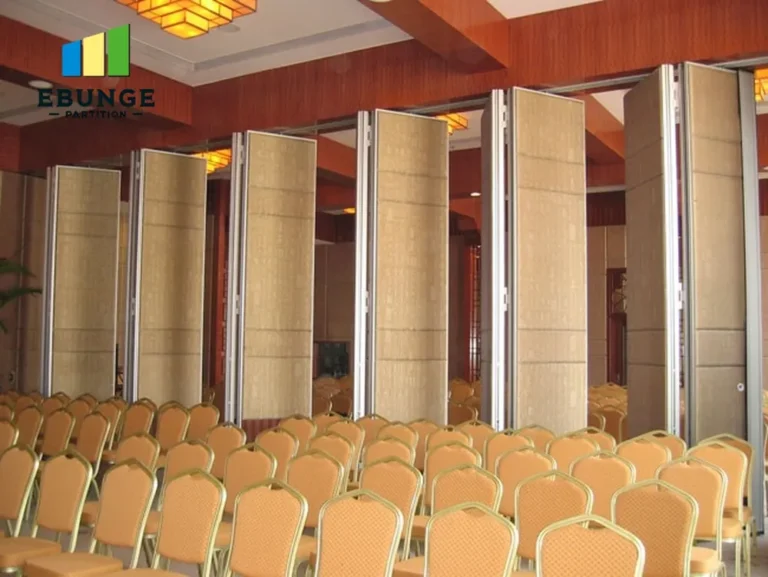
Need help turning the operable wall system supplier selection requirements into a practical project layout?
Preparing Your Technical Requirements Before Contacting Suppliers
To get accurate quotations and avoid costly misunderstandings, prepare a detailed brief before reaching out to suppliers. This brief should include:
- Opening size: Width, height, and depth of the opening (or multiple openings).
- Drawings: Floor plans, elevations, and details of the ceiling structure, as the top-hung track system requires adequate support.
- Acoustic target: Desired sound insulation performance (e.g., STC or Rw rating) based on your activities. Confirm with an acoustic consultant if needed.
- Finish preference: Color, material (e.g., laminate, fabric, or magnetic surface), and any branding considerations.
- Project location: Site conditions, access for delivery, and installation constraints.
- Compliance requirements: Fire ratings, emergency operation, and any local building codes.
Providing this information upfront helps suppliers give more precise proposals and reduces the back-and-forth that can delay your project timeline.
Evaluating Supplier Reliability and Customization Support
Supplier reliability is critical, especially when dealing with overseas manufacturers. Look for suppliers who:
- Have a proven track record with school projects (ask for references and case studies, but verify independently).
- Offer custom design services to adapt their standard products to your specific openings and performance needs.
- Provide clear communication and a dedicated project coordinator.
- Can supply detailed technical drawings (e.g., shop drawings) for approval before manufacturing.
- Have a transparent process for handling customization requests, including lead times and cost implications.
During your operable wall system supplier selection for school halls, ask about their experience with top-hung track systems without floor rails, as this is a common requirement in schools to maintain a clear floor surface for safety and flexibility. A custom movable wall solution may be necessary for non-standard openings or unusual acoustic targets.
Technical Specifications to Verify in Quotations
When you receive quotations, don’t just compare prices. Scrutinize the technical details to ensure they meet your requirements:
| Specification | Questions to Ask |
|---|---|
| Acoustic insulation | What is the exact acoustic rating? Under what test conditions? Does it include perimeter seals? |
| Fire safety | What fire rating does the system have? Are all components (including seals) compliant? How does it operate in an emergency? |
| Durability | What materials are used for panels and hardware? What is the expected lifespan under heavy use? |
| Ease of operation | How many people are needed to operate the wall? Is there a mechanical assist option? How long does it take to open or close? |
| Maintenance | What routine maintenance is required? Are spare parts readily available? Is there a maintenance manual? |
| Installation | What is the estimated installation timeline? Are installation drawings provided? Is installation included or separate? |
| Total cost of ownership | What is the initial cost, plus estimated maintenance, energy (if any), and potential replacement parts over 10 years? |
| Warranty | What does the warranty cover? How long is it? What is the process for claims? |
Make sure the quotation itemizes all components, including tracks, seals, hardware, and any customization. If a supplier is vague on technical details, it may indicate a lack of expertise or hidden costs.
Share the opening, drawings, finish direction, and privacy target for a project-specific review.
Navigating Overseas Delivery and Installation
If you are sourcing from an overseas supplier, consider logistics carefully. Discuss:
- Shipping: Incoterms, port of arrival, and inland freight to your site.
- Packaging: Protection against moisture and damage during transit.
- Customs and duties: Who is responsible for import clearance and costs?
- Installation: Does the supplier provide installation drawings and remote support? Or do they have local partners?
- Lead time: Manufacturing time, shipping time, and buffer for delays.
Ask for a detailed delivery schedule and clarify any potential risks. A reliable supplier will have experience with international projects and can provide guidance on compliance with local building codes.
Checklist for Final Supplier Selection
Use this checklist to compare suppliers objectively:
- □ Supplier has verifiable experience with school projects.
- □ They offer custom design and engineering support.
- □ Acoustic performance is confirmed with test data relevant to your target.
- □ Fire safety compliance is documented and meets local codes.
- □ They provide detailed shop drawings for approval.
- □ Quotation includes all components, taxes, and delivery costs.
- □ Lead time fits your project schedule.
- □ Warranty terms are clear and reasonable.
- □ Maintenance requirements are manageable.
- □ They offer installation guidance or services.
- □ References can be contacted and verify satisfaction.
Remember to confirm exact values from the supplier’s documentation—never assume performance based on generic marketing.
Making the Final Decision and Preparing for Inquiry Conversion
Once you have narrowed down suppliers, schedule a call or meeting to discuss your project in detail. Use this opportunity to gauge their responsiveness and willingness to address your concerns. A supplier who asks clarifying questions about your acoustic target, usage patterns, and building constraints is more likely to deliver a suitable solution.
For your operable wall system supplier selection for school halls, consider the total cost of ownership, not just the initial price. A slightly higher upfront cost may be justified by better durability and lower maintenance. Also, check if the supplier offers after-sales support and spare parts availability.
When you are ready to proceed, ensure the contract includes all agreed specifications, delivery timelines, and warranty terms. Clear documentation protects both parties and helps avoid disputes.

Frequently Asked Questions
What is the typical lead time for a custom operable wall system?
Lead times vary based on complexity and supplier capacity. For a school project, expect at least 6-10 weeks for manufacturing, plus shipping if overseas. Always confirm the exact timeline in writing and include a buffer for unexpected delays.
How do I determine the required acoustic rating for my school hall?
Consider the activities that will occur simultaneously. For example, if a music room is adjacent to a quiet study area, a higher STC or Rw rating is needed. An acoustic consultant can help you set realistic targets based on your specific layout and noise sources.
Can an operable wall system meet fire safety requirements?
Yes, many systems are designed with fire-resistant materials and smoke seals. Ensure the supplier provides documentation of the fire rating and that it complies with your local building codes. Also, ask about emergency operation—how the wall can be quickly opened or closed during a fire alarm.
What maintenance does an operable wall system require?
Routine maintenance typically includes cleaning tracks, checking seals, and lubricating moving parts. Top-hung track systems without floor rails have fewer floor components to maintain. Ask the supplier for a maintenance schedule and whether they offer service contracts.
Can I install the wall myself to save costs?
Installation requires precision to ensure proper operation and acoustic performance. While some suppliers provide installation drawings and guidance, we recommend using a professional installer, especially for complex systems. Incorrect installation can void the warranty and lead to performance issues.
Conclusion
Selecting the right operable wall system supplier for school halls is a multifaceted decision that requires careful planning and evaluation. By preparing detailed technical requirements, asking the right questions, and verifying supplier capabilities, you can ensure a system that meets your acoustic, safety, and durability needs while staying within budget. Remember to focus on total cost of ownership and supplier reliability, especially when considering overseas partners. For more insights on movable partition walls and supplier selection, explore our blogs and Movable Partition Manufacturer category. If you have specific questions, feel free to contact us for guidance. For a deeper dive into movable partition wall solutions, visit our movable partition wall page.
Send the opening size and drawings to discuss a differentiated operable wall system supplier selection solution.