
When specifying movable partitions for a training center, the operable wall system cost factors for training centers extend far beyond the initial quote. As an interior designer, you need to align budget expectations with the technical realities of acoustic performance, installation complexity, and long-term maintenance. This article breaks down the cost drivers that matter most for training environments, helping you prepare accurate budgets and ask the right questions before committing to a supplier.
Direct answer: Operable wall system cost factors for training centers include panel construction, acoustic ratings, track type, installation complexity, finish options, and project-specific requirements like door integration and glazing. To get an accurate quotation, you must provide the opening size, ceiling height, acoustic target (e.g., STC rating), finish preferences, and the project’s location. The total cost of ownership also depends on maintenance, durability, and warranty, so evaluate beyond the upfront price.
Operable Wall System Cost Factors: Why Training Centers Have Unique Cost Drivers
Training centers often require flexible spaces that can be reconfigured quickly for different group sizes and activities. Unlike offices or hotels, these venues may need partitions to withstand frequent movement, heavy use, and specific acoustic requirements for simultaneous sessions. The operable wall system cost factors for training centers are influenced by the need for durability, ease of operation, and compliance with building codes for public assembly spaces.
When you request quotes, ensure the supplier understands the exact usage pattern. For example, a partition that is moved daily will require a more robust track system and panel hardware than one used occasionally. This directly impacts the cost.
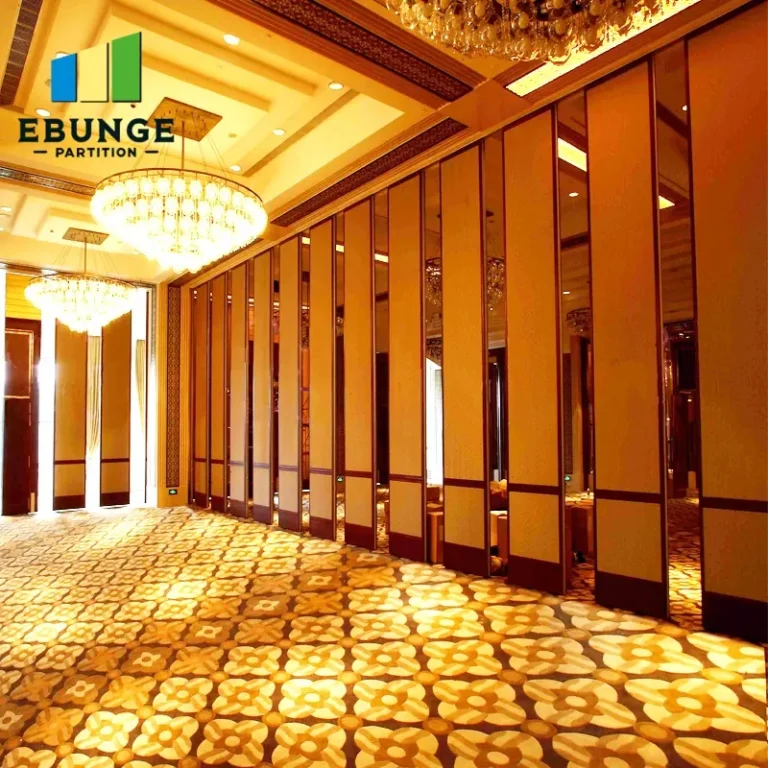
Need help turning the operable wall system cost factors requirements into a practical project layout?
Key Elements That Shape the Quotation
Several components contribute to the final price of a movable partition wall. These are not just material costs but also engineering, fabrication, and installation factors. Here are the primary elements to consider:
- Panel construction: The core material (e.g., honeycomb, particleboard) and surface finish (e.g., laminate, veneer) affect both acoustic performance and price.
- Acoustic performance: Higher STC ratings require thicker panels, additional seals, and more precise manufacturing, increasing cost.
- Track system: A top-hung system without floor rail, as offered by EBUNGE, reduces floor obstructions but may require a stronger overhead structure, impacting installation cost.
- Stacking configuration: How panels park when open (straight, curved, or in pockets) affects the amount of track and hardware needed.
- Finishes and accessories: Custom colors, glazing, door panels, and whiteboard surfaces add to the cost.
- Installation complexity: Ceiling height, structural support, and site accessibility influence labor time and equipment required.
Acoustic Needs: How Sound Control Affects Budget
Training centers often need to isolate sound between rooms to avoid distractions. The acoustic partition solutions you choose must meet the specific STC (Sound Transmission Class) target for your project. The operable wall system cost factors for training centers increase significantly as you move from a 40 STC to a 50 STC rating, due to more complex panel edges, additional seals, and heavier construction.
To get an accurate quote, define the required acoustic performance based on the types of activities. For example, if the center hosts language classes or music training, higher isolation is necessary. Share the acoustic target with the supplier so they can recommend the appropriate system without over- or under-specifying.
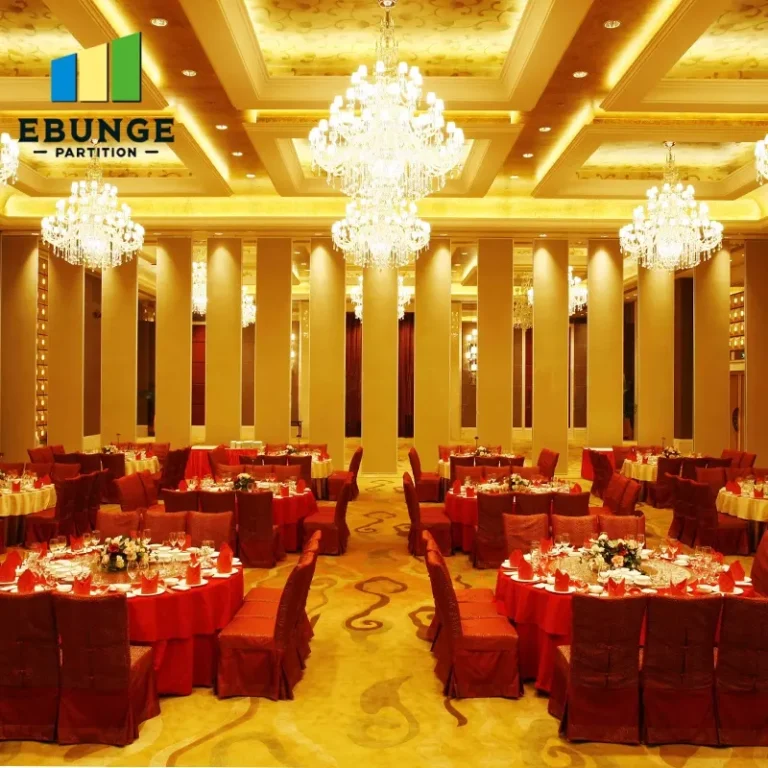
Top-Hung vs. Floor-Rail Systems: Cost Implications
One of the major decisions is the track system. EBUNGE specializes in top-hung systems without a floor rail, which offers several benefits: no floor track to trip over, easier cleaning, and a cleaner aesthetic. However, this design requires the ceiling structure to support the full weight of the panels, which can add to the building’s structural engineering costs. In contrast, floor-rail systems distribute weight to the floor but may require recessed tracks, increasing flooring costs.
When comparing quotes, ensure they include the necessary structural reinforcement. A supplier experienced with top-hung systems can guide you on the required header steel, which is a critical cost factor for your budget.
Installation and Site Preparation
Installation costs can vary widely based on the project’s specifics. Factors such as ceiling height, the presence of sprinklers or HVAC ducts, and the condition of the floor and ceiling surfaces all affect labor time. For training centers, where the space may be in continuous use, you might need to schedule installation during off-hours, which can increase costs.
To get a precise estimate, provide the supplier with detailed drawings and the exact opening dimensions. This allows them to assess the installation complexity and provide a realistic labor quote. Remember to ask about the number of installers required and the expected duration of the project.
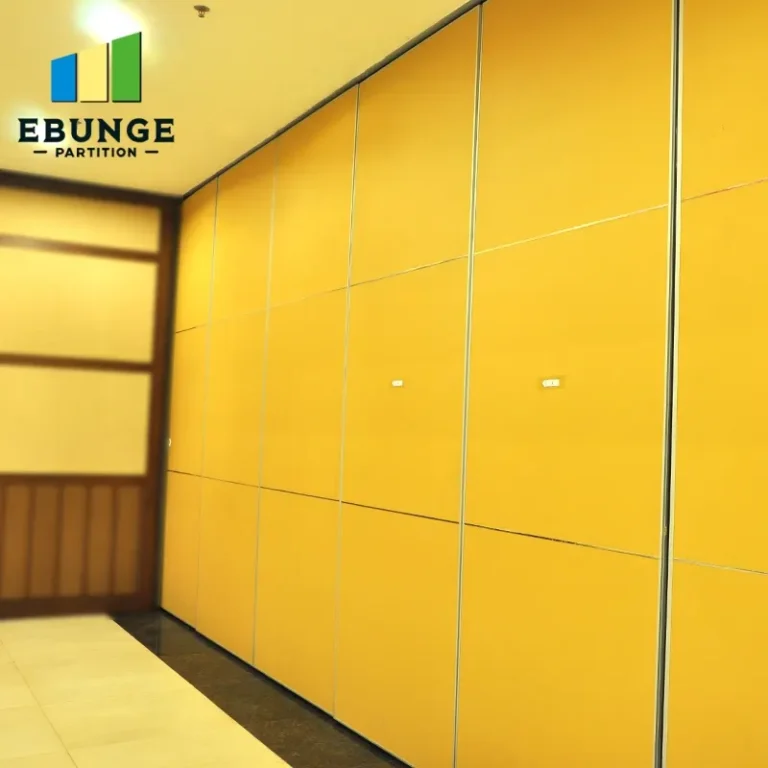
Maintenance and Total Cost of Ownership
The operable wall system cost factors for training centers include ongoing maintenance. A quality movable partition wall should have a long lifespan, but regular inspections and occasional adjustments are necessary. Ask the supplier about the maintenance requirements, such as lubricating tracks, replacing seals, and checking hardware. A system with easily replaceable parts may have a higher initial cost but lower long-term expenses.
Also, consider the warranty offered. While we cannot quote specific terms, a comprehensive warranty can protect your investment. Ensure the warranty covers not only parts but also labor, and understand the conditions that could void it.
Share the opening, drawings, finish direction, and privacy target for a project-specific review.
Compliance and Building Codes
Training centers must comply with local building codes, including fire safety, accessibility, and emergency egress. These requirements can influence the choice of materials and the design of the partition system, affecting cost. For instance, fire-rated panels are more expensive but may be necessary for certain corridors or rooms.
Work with a supplier who understands these regulations and can provide documentation for compliance. This will prevent costly modifications later.
How to Get a Complete Quotation
To ensure you receive an accurate and comparable quote, prepare a detailed brief that includes:
- Exact opening dimensions (width, height, and depth)
- Architectural drawings or floor plans
- Acoustic target (STC rating)
- Finish preferences (color, material, texture)
- Number of panels and stacking direction
- Any special features (doors, glazing, whiteboards)
- Project location and site conditions
Share this information with multiple suppliers to get comparable quotes. A reputable supplier like EBUNGE will guide you through the process, ensuring that all cost factors are transparently addressed.
Practical Checklist for Budgeting and Inquiries
Use this checklist to avoid surprises:
- Determine the required acoustic performance and confirm with a professional.
- Measure the opening accurately and account for any obstructions.
- Decide on the track type (top-hung vs. floor-rail) and assess structural implications.
- Specify finishes and accessories, and understand their cost impact.
- Ask about installation time, required site preparation, and potential disruptions.
- Inquire about maintenance schedules and warranty terms.
- Check compliance with local building codes and fire safety.
- Request a detailed written quotation with a breakdown of costs.
For more insights, you can explore our movable partition wall guide and blog articles on related topics. If you have specific questions, contact our team for expert advice.
Frequently Asked Questions
What is the average cost of an operable wall system for a training center?
How does the acoustic rating affect the price?
Are there ongoing maintenance costs?
Can I install a top-hung system without structural changes?
What information do I need to get a quotation?
Conclusion: Making Informed Decisions
Understanding the operable wall system cost factors for training centers empowers you to make budget-savvy choices. By focusing on your specific requirements and asking the right questions, you can ensure that the partition system you choose delivers value over its lifetime. Remember to consider total cost of ownership, not just the initial price.
For further guidance on cost factors, you can review our movable partition cost articles. And when you’re ready to discuss your project, our team is here to help you navigate the details.
Send the opening size and drawings to discuss a differentiated operable wall system cost factors solution.