
When a trading company without its own factory plans to source an operable partition for a school classroom, the first challenge is not the product itself but the sourcing process. You need a partner who can provide transparent quotations, reliable quality, and installation support—without the risk of dealing with an unknown trader. This FAQ is built around quotation readiness and project decision risk, helping you ask the right questions before committing. For a deeper look at cost factors, see our Movable Partition Cost category, but here we focus on the practical steps to avoid pitfalls.
Direct answer: To get a reliable operable partition quotation for a school classroom, you must provide the opening size (width, height, and depth), acoustic target (e.g., STC/Rw rating), finish preference (e.g., whiteboard, chalkboard, or tackable surface), and architectural drawings (floor plan and elevation). A factory-direct supplier will use these to offer a custom solution, transparent pricing, and installation guidance. Without this information, any quote is incomplete and may lead to project delays or budget overruns.
1. Why Is Quotation Readiness Critical for a Trading Company?
As a trading company, you act as an intermediary between the end client (the school) and the manufacturer. If you request a quote without complete specifications, you risk receiving a vague estimate that later changes, causing renegotiation and potential loss of trust. A detailed RFQ (request for quotation) ensures that the factory can assess the project accurately, including the partition wall system design, track layout, and acoustic performance. This reduces the risk of hidden costs and delivery delays.
Moreover, a factory-direct supplier like EBUNGE can provide a custom movable partition wall tailored to classroom needs, such as soundproofing for adjacent rooms and flexibility for open-plan teaching. By preparing a complete specification package, you demonstrate professionalism to both the factory and your client, making the sourcing process smoother.
Need help turning the operable partition requirements into a practical project layout?
2. What Specifications Does the Factory Need for an Accurate Quote?
To obtain a precise quotation, you must share the following details:
- Opening size: Width, height, and depth of the opening where the partition will be installed. This includes the ceiling height and any obstructions like beams or ducts.
- Acoustic target: The desired sound insulation performance, usually expressed as STC (Sound Transmission Class) or Rw (Weighted Sound Reduction Index). For classrooms, a range of 40-50 STC is common, but confirm with your client.
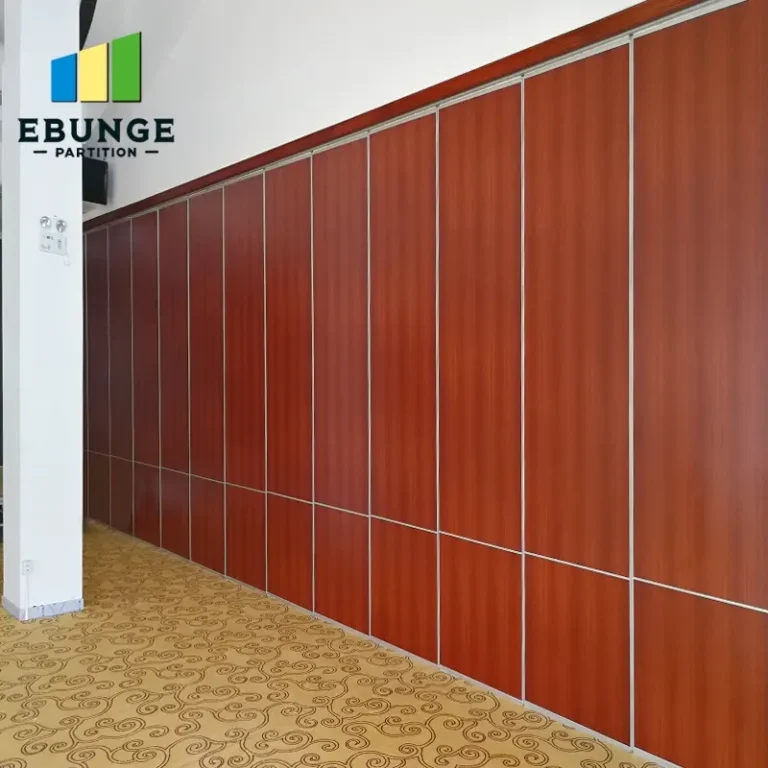
- Finish preference: Surface material for the panels, such as dry-erase whiteboard, magnetic, chalkboard, or fabric. This affects both functionality and cost.
- Drawings: Architectural drawings (floor plan and elevation) showing the exact location, clearance, and any electrical or lighting fixtures that might interfere.
- Operation method: Manual or motorized? Top-hung track without floor rail is standard for flexibility, but operation type impacts price.
Providing these details upfront allows the factory to offer a custom movable partition wall that fits your classroom layout, avoiding costly changes later.
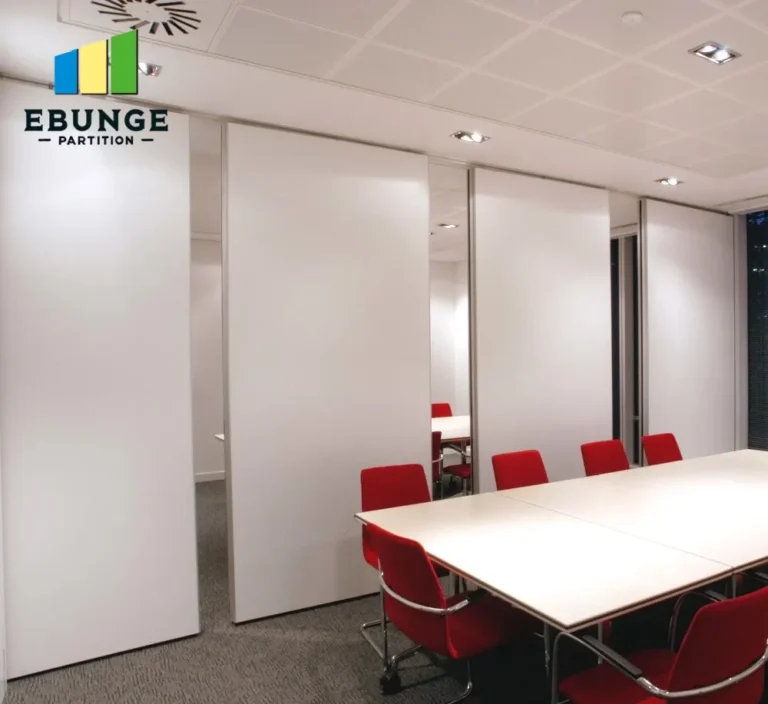
3. How Can You Verify That the Supplier Is a Real Factory?
One of your primary concerns is sourcing from a real factory rather than an unknown trader. Here are practical steps to verify:
- Request a factory audit report or video tour of the production line.
- Ask for a list of existing projects, especially school or institutional installations, and contact those clients for references.
- Check if the supplier has a physical address and manufacturing equipment, and verify via online maps or trade registries.
- Inquire about in-house engineering and R&D capabilities—a real factory can customize the partition system to your drawings.
- Confirm that the supplier offers factory-direct support, including installation guidance and after-sales service.
EBUNGE, for example, is a factory that specializes in movable partition walls, with a focus on top-hung track systems and custom project coordination. By choosing a factory-direct partner, you eliminate intermediaries and gain direct access to technical expertise.
4. What Are the Hidden Costs in Operable Partition Projects?
Beyond the unit price of the partition, there are several cost factors that can surprise a trading company:
- Engineering and design: Customization requires engineering time, which may be included or extra.
- Transportation and logistics: Delivery costs depend on distance, volume, and access to the site.
- Installation: Some factories provide installation, while others only offer guidance. If you use a third-party installer, costs vary.
- Ancillary materials: Track, seals, handles, and storage pockets may be quoted separately.
- Taxes and duties: For international orders, these can be significant.
To avoid budget overruns, ask for a detailed breakdown in the quotation, including all components and services. The EBUNGE team can provide a transparent cost structure based on your specifications.
5. How Does the Partition Wall System Affect Classroom Layout Flexibility?
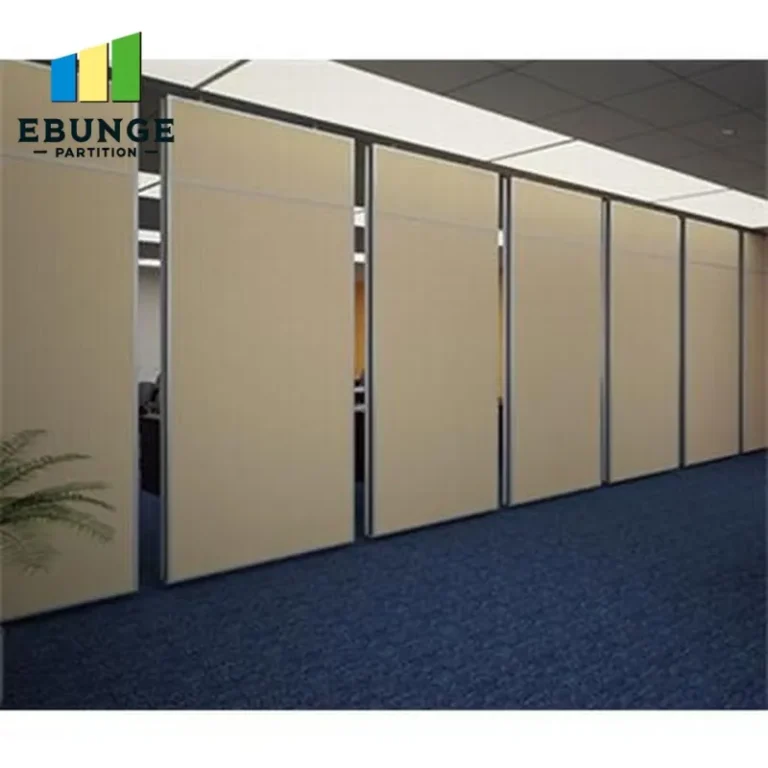
Operable partitions are designed to divide a large space into smaller classrooms or combine them for assemblies. The system’s flexibility depends on the track configuration and panel design. A top-hung track without floor rail allows for easy reconfiguration and does not damage the floor, which is ideal for schools that need to change room layouts frequently. You can also integrate whiteboard or tackable surfaces to maximize functionality.
When planning, consider the stacking area—where panels are stored when not in use—and the turning radius if the partition is curved. Your drawings should show the partition’s path and storage location to ensure compatibility with the classroom layout.
6. What Acoustic Performance Should You Expect?
Acoustic performance is a key concern for classrooms, as noise can disrupt learning. The partition’s sound insulation is measured by STC or Rw ratings. For a typical classroom, a rating of 45-50 is recommended, but this depends on the specific needs (e.g., music rooms may require higher). The factory should provide test reports from accredited labs to verify the rating. However, the actual performance depends on proper installation, including sealing gaps at the top, bottom, and sides.
When requesting a quote, specify the acoustic target and ask for evidence of performance. EBUNGE’s acoustic partitions are designed with double seals and dense cores, but always confirm the exact rating for your project.
7. How Do You Ensure Installation Quality Without Factory Presence?
If the factory does not provide installation, you need to coordinate with a local installer. To ensure quality:
- Ask the factory for detailed installation drawings and instructions.
- Require that the installer has experience with movable partition wall installation.
- Consider having the factory provide remote technical support via video calls.
- Request a pre-installation checklist and inspect the site beforehand.
EBUNGE offers installation guidance as part of its project coordination, ensuring that even if you use a third-party installer, the process is seamless.
Share the opening, drawings, finish direction, and privacy target for a project-specific review.
8. What Warranty and After-Sales Support Should You Look For?
Warranty terms vary, but a reliable factory should offer at least a 1-2 year warranty on parts and workmanship. Clarify what is covered: track, panels, seals, and hardware. Also, ask about spare parts availability and response time for service requests. For a school project, consider a maintenance plan to keep the partition in good condition. Get all warranty terms in writing.
9. How Can You Compare Quotes from Different Suppliers?
To make an informed decision, create a comparison table with the following criteria:
| Criteria | Supplier A | Supplier B |
|---|---|---|
| Price per square meter | €XXX | €XXX |
| Acoustic rating (STC/Rw) | 45 | 40 |
| Lead time (weeks) | 6 | 8 |
| Installation support | Yes | Guidance only |
| Warranty (years) | 2 | 1 |
| Customization options | High | Medium |
This table helps you evaluate value beyond price. Ensure that all quotes are based on the same specifications to make a fair comparison.
10. What Is the Typical Lead Time for a Custom Operable Partition?
Lead time depends on the complexity of the project, factory workload, and shipping. For a standard classroom partition, expect 4-8 weeks from order confirmation to delivery, plus installation time. Custom finishes or large orders may take longer. To avoid delays, plan your project timeline and order early. Confirm the lead time in writing and include penalties for late delivery if necessary.
Conclusion: Make Your Operable Partition Project a Success
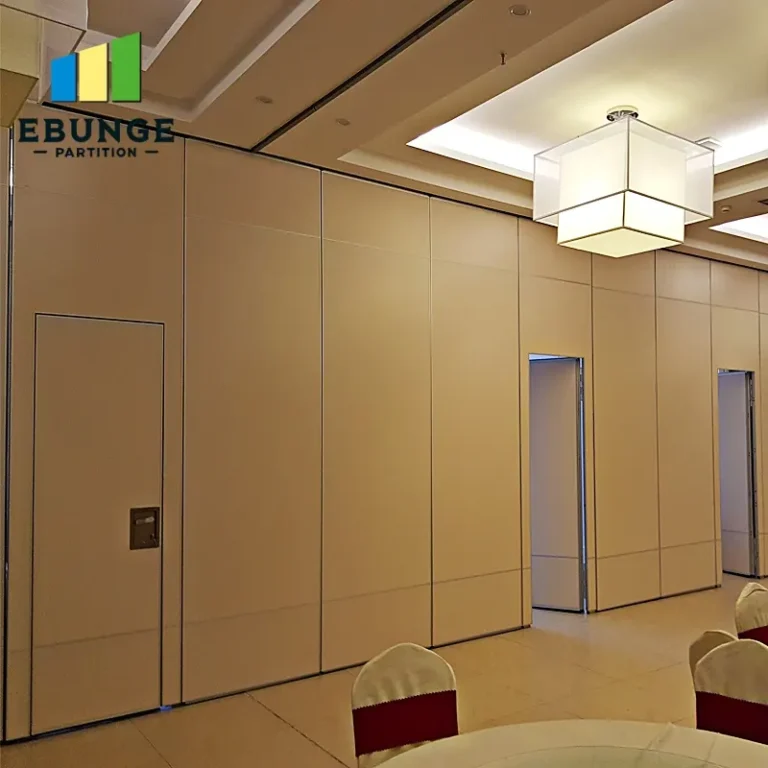
As a trading company, your role is to bridge the gap between the school and the factory. By preparing a detailed specification package, verifying the factory’s credibility, and understanding the cost and installation factors, you can minimize project risks and deliver a high-quality operable partition that meets your client’s needs. Remember to ask for drawings, acoustic targets, and finish preferences to get a precise quotation. For more insights, explore our movable partition wall guide or contact us for project-specific advice.
Frequently Asked Questions
What is the minimum opening size for an operable partition?
Can an operable partition be used as a whiteboard?
How do I know if the acoustic rating is reliable?
What is the difference between top-hung and floor-mounted tracks?
Do you provide installation drawings and guidance?
Checklist for a Successful Operable Partition Project
- Gather all architectural drawings and specifications.
- Define the acoustic target and finish preferences.
- Request quotes from at least two factory-direct suppliers.
- Verify factory credentials and ask for references.
- Compare quotes using a standardized table.
- Confirm lead time and warranty terms in writing.
- Prepare the installation site and coordinate with the installer.
- Review the final installation against the specification.
For more information on cost factors, visit our Movable Partition Cost page. If you have specific questions, contact us for expert advice tailored to your project.
Send the opening size and drawings to discuss a differentiated operable partition solution.