
When a government or public building project requires an office movable partition for a community center, the decision carries long-term consequences. Unlike private offices, public facilities face constant use, strict building codes, and accountability for every taxpayer dollar. Selecting the wrong partition wall system can lead to acoustic complaints, maintenance headaches, and budget overruns. This article focuses on the practical steps to prepare for quotations and minimize project decision risk, ensuring your investment meets immediate needs and future demands.
Direct answer: For a government or public building project, the most reliable approach is to prepare a detailed specification package that includes opening size, acoustic target, finish preference, and architectural drawings, then engage a factory-direct supplier who can provide custom movable partition wall solutions and installation guidance. This ensures accuracy in pricing, compliance with building codes, and long-term maintainability.
Office Movable Partition: Why Community Centers Demand a Different Partition Wall System
Community centers are high-traffic environments where rooms are used for meetings, classes, events, and sometimes emergency shelter. The office movable partition must withstand frequent operation, accidental impacts, and heavy cleaning. Unlike a typical office meeting room, the partition is not just a space divider—it is a structural and acoustic element that must perform reliably for decades. Public projects also require transparent procurement processes, making it essential to specify exact performance criteria and maintenance expectations from the outset.
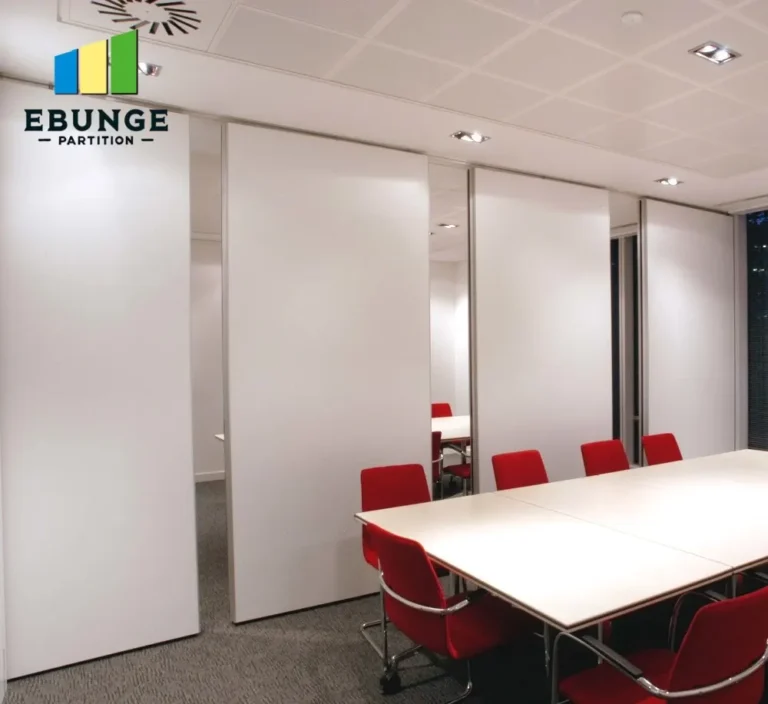
Need help turning the office movable partition requirements into a practical project layout?
Key Buyer Concerns Before Requesting a Quotation
Before contacting any folding partition wall supplier, you need to address the following concerns to avoid costly mistakes:
- Acoustic performance: Does the partition meet the required Sound Transmission Class (STC) rating for your building code? Public spaces often need STC 40-50 or higher, depending on adjacent uses.
- Durability: Will the partition resist dents, scratches, and wear from constant use? Look for robust materials and hardware rated for high-frequency operation.
- Installation disruption: Can the partition be installed without shutting down the entire facility? Discuss phased installation and off-hours work.
- Lifecycle cost: Beyond the initial price, consider maintenance, repair, and replacement costs over 20+ years.
- Warranty and support: What does the warranty cover, and for how long? Is there local support for repairs?
- Customization: Can the partition accommodate unusual ceiling heights, curved tracks, or integrated doors?
Critical Information to Gather Before You Request a Quote
To receive accurate and comparable quotations, you must provide suppliers with a complete specification package. The following items are non-negotiable:
- Opening dimensions: Width, height, and depth of each opening, including tolerances.
- Acoustic target: The required STC rating or specific acoustic performance criteria.
- Finish preference: Laminate, veneer, paint, or fabric panels, with color samples if possible.
- Drawings: Architectural or shop drawings showing the partition location, stacking area, and clearance.
- Operational details: Manual or motorized operation, number of panels, and access requirements.
- Building constraints: Ceiling structure, floor type, and any obstructions like sprinklers or lighting.
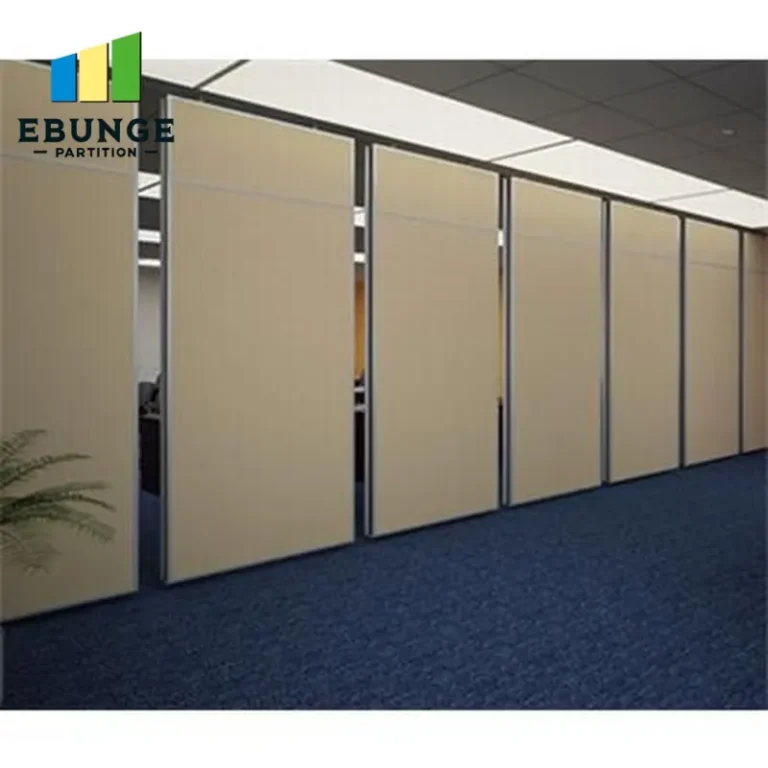
How to Evaluate Suppliers: Beyond the Price Tag
Not all suppliers are equal, especially for public projects. When comparing quotes, consider these factors:
- Factory-direct vs. distributor: Factory-direct suppliers often provide better pricing and direct technical support.
- Experience with public projects: Ask for case studies or references from similar community centers or government buildings.
- Custom capability: Can they engineer a partition wall system for non-standard openings or integrate with existing architecture?
- Documentation: Do they provide detailed drawings, installation manuals, and warranty documents?
- Post-installation support: What is their response time for spare parts and service?
For a deeper comparison of supplier selection criteria, refer to our guide on how to compare partition wall system suppliers.
The Role of Acoustic Performance in Public Buildings
Acoustic privacy is not just a comfort issue—it is often a legal requirement. Meeting rooms, healthcare areas, and classrooms must meet specific STC ratings to ensure confidentiality and reduce distractions. When specifying your office movable partition, clearly state the required STC and ask suppliers for test reports. Beware of generic claims; insist on data from accredited laboratories. Also, consider flanking paths: the partition is only as good as the surrounding walls, ceiling, and floor. A good supplier will advise on sealing and perimeter details.
Durability and Maintenance: Planning for High-Traffic Use
Public facilities demand partitions that can handle daily abuse. Look for features like reinforced panel edges, impact-resistant surfaces, and heavy-duty trolleys. Ask about maintenance requirements: How often should tracks be cleaned? What is the replacement cost for a damaged panel? Choose a partition wall system with a proven track record in similar environments. Also, consider the ease of repairing or replacing components, as downtime in a public building can be disruptive.
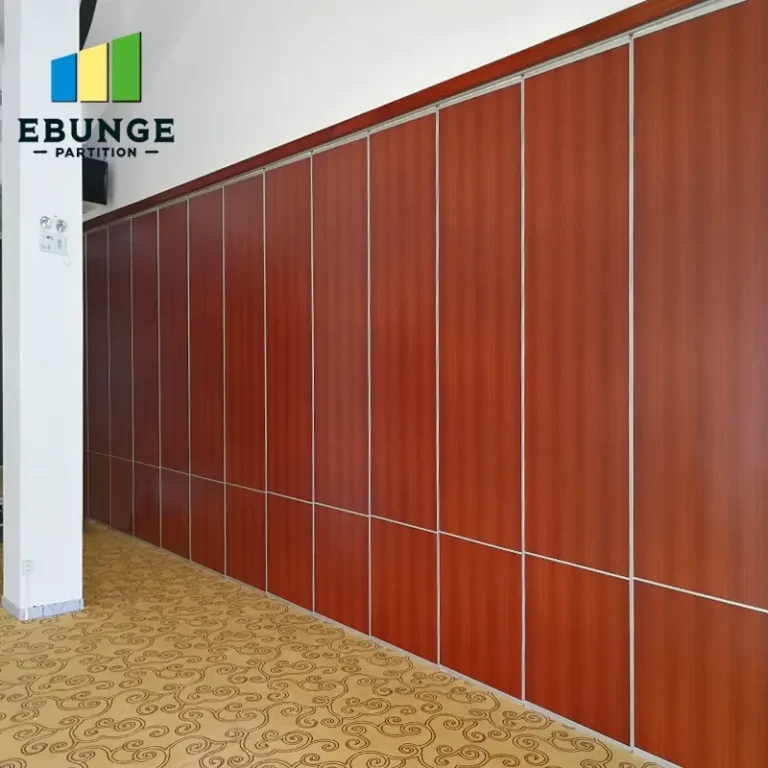
Installation Without Disrupting Operations
Community centers often operate on tight schedules. Discuss installation logistics with your supplier: Can the work be done after hours? How long will the installation take? Will the area need to be closed off? A professional supplier will provide a detailed installation plan, including protection of the site and clean-up. For large projects, phased installation may be possible, allowing you to keep parts of the facility open.
Share the opening, drawings, finish direction, and privacy target for a project-specific review.
Cost-Effectiveness Over Time: Total Cost of Ownership
When budgeting, look beyond the initial quote. Consider the total cost of ownership, including:
- Energy costs (if the partition affects HVAC zones)
- Cleaning and maintenance supplies
- Repair frequency and cost
- Potential replacement after 15-20 years
A slightly higher upfront cost may be justified by lower maintenance and longer lifespan. Compare quotes on a lifecycle basis, not just the purchase price. For more insights on cost factors, visit our Movable Partition Cost category.
Warranty and Support: What to Look For
Public projects require robust warranty terms. Ask for the full warranty document and read the fine print. Key points to check:
- Duration of coverage (typically 5-10 years)
- What is covered: parts, labor, or both?
- Exclusions (e.g., damage from misuse)
- Process for making a claim
- Availability of local service providers
Also, confirm the supplier’s financial stability and longevity. A warranty is only as good as the company behind it.
Customization for Unique Layouts
Community centers often have irregular spaces, such as multi-purpose halls or curved walls. A standard partition may not fit. Ensure your supplier can offer custom movable partition walls, including:
- Non-standard heights (up to 6 meters or more)
- Curved or angled tracks
- Integrated doors and windows
- Special finishes to match interior design
Customization requires detailed drawings and engineering. Work with a supplier who has in-house design capabilities and can provide shop drawings for approval before manufacturing.
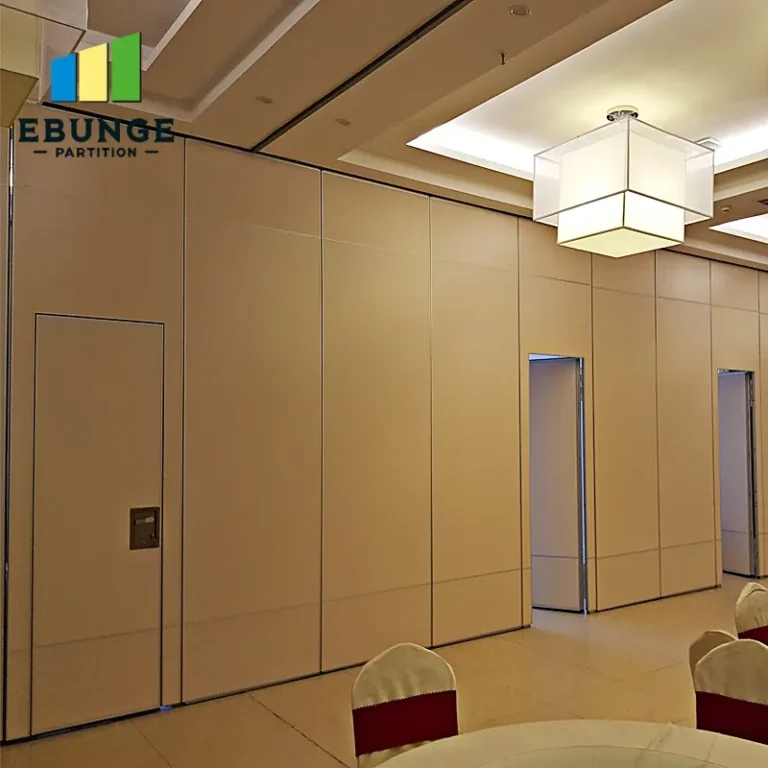
Preparing for Quotation: A Step-by-Step Checklist
To ensure you receive accurate and comparable quotes, follow this checklist:
- Measure all openings precisely and note tolerances.
- Determine the required acoustic rating (STC) based on building codes and usage.
- Select finish materials and colors, or request samples.
- Prepare or obtain architectural drawings showing partition locations and stacking.
- List any special requirements (motorization, integrated doors, etc.).
- Send the same specification package to at least three suppliers.
- Ask each supplier to provide a detailed quote including delivery, installation, and warranty.
- Compare quotes on a total cost of ownership basis.
Common Pitfalls to Avoid in Public Projects
- Under-specifying acoustics: Always verify code requirements and test data.
- Ignoring maintenance access: Ensure tracks and hardware are accessible for cleaning and repair.
- Choosing style over substance: Aesthetic appeal should not compromise durability or acoustic performance.
- Not planning for future changes: Consider if the layout might change; modular partitions offer flexibility.
Conclusion
Selecting an office movable partition for a community center is a significant decision that requires careful planning and thorough evaluation. By preparing a detailed specification package, addressing acoustic and durability concerns, and comparing suppliers on lifecycle costs, you can minimize project risks and ensure a successful outcome. Remember to work with a factory-direct supplier who offers custom solutions and installation guidance. For further assistance, explore our resources on movable partition walls or contact our team for expert advice.
Frequently Asked Questions
What is the typical lifespan of an office movable partition?
The lifespan depends on usage and maintenance. Quality partitions can last 20 years or more with proper care. Always ask the supplier for expected lifecycle data.
Can movable partitions meet building code acoustic requirements?
Yes, if specified correctly. Ensure the partition has a tested STC rating that meets or exceeds your code requirements. Request test reports from the supplier.
How do I know if my ceiling can support a top-hung partition?
Consult a structural engineer. Top-hung partitions require adequate ceiling structure to support the weight. The supplier can provide load specifications.
Are custom finishes available for public buildings?
Yes, most suppliers offer a range of laminates, veneers, and paints. Custom colors and patterns are often possible, but may affect cost and lead time.
What maintenance is required for a movable partition?
Regular cleaning of tracks and panels, periodic lubrication of moving parts, and inspection of seals. The supplier should provide a maintenance manual.
Send the opening size and drawings to discuss a differentiated office movable partition solution.