
Quick answer: wayfinding cue consistency audit
Review focus: wayfinding cue consistency audit.
A movable partition wayfinding cue consistency audit is a post-deployment review that checks whether directional signage, room identifiers and path cues still make sense after panels are moved into a different layout. Because EBUNGE movable wall panels are individually movable, suspended from a top track and cross the opening without a floor track, a room can change shape without any change to the floor. The suitability of each route and parking arrangement depends on the approved layout, circulation, ceiling interfaces and operating sequence. This article sets out a structured, evidence-bounded method for facility and design teams.
Why wayfinding cues drift after reconfiguration
Project review term: wayfinding cue consistency audit.
Wayfinding cues are usually installed against one assumed layout. The exact route, junction arrangement, continuous overhead path and parking position must be confirmed from the coordinated project drawings. The drift is rarely dramatic; it is usually a sign that still faces the right direction but now describes the wrong space.
It focuses on what a visitor can see and follow. The exact overhead route and support arrangement must be confirmed by the responsible project team from coordinated drawings.
Scope the audit around the reconfiguration plan
Coordination scope: wayfinding cue consistency audit.
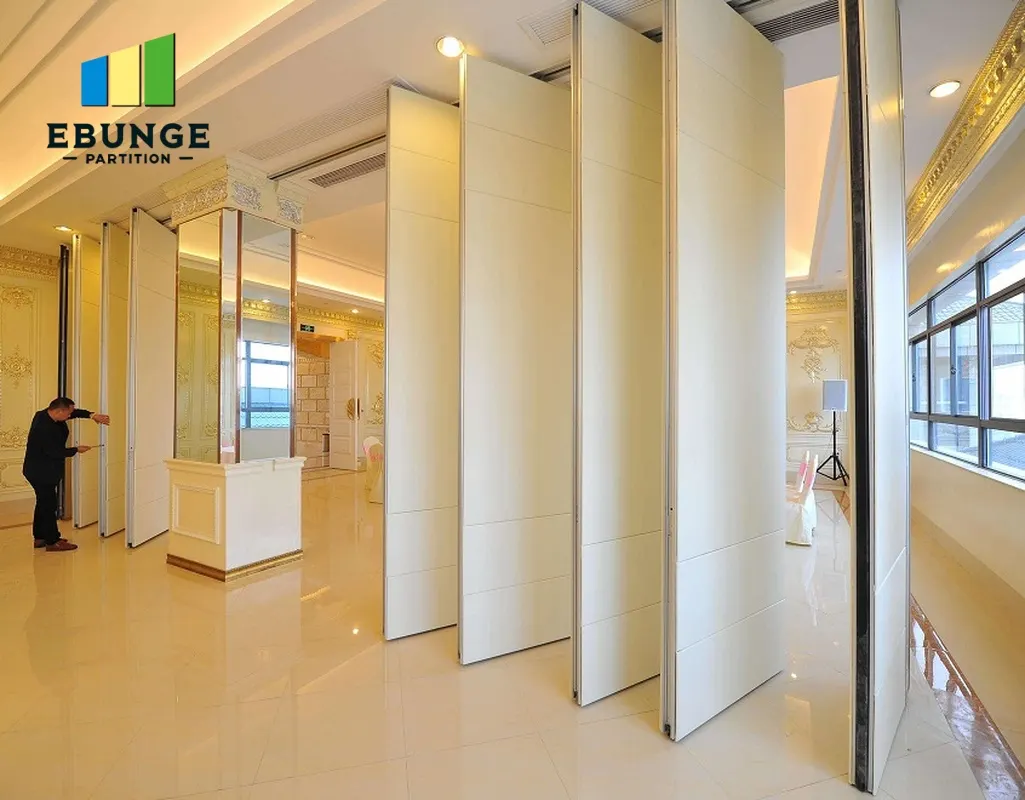
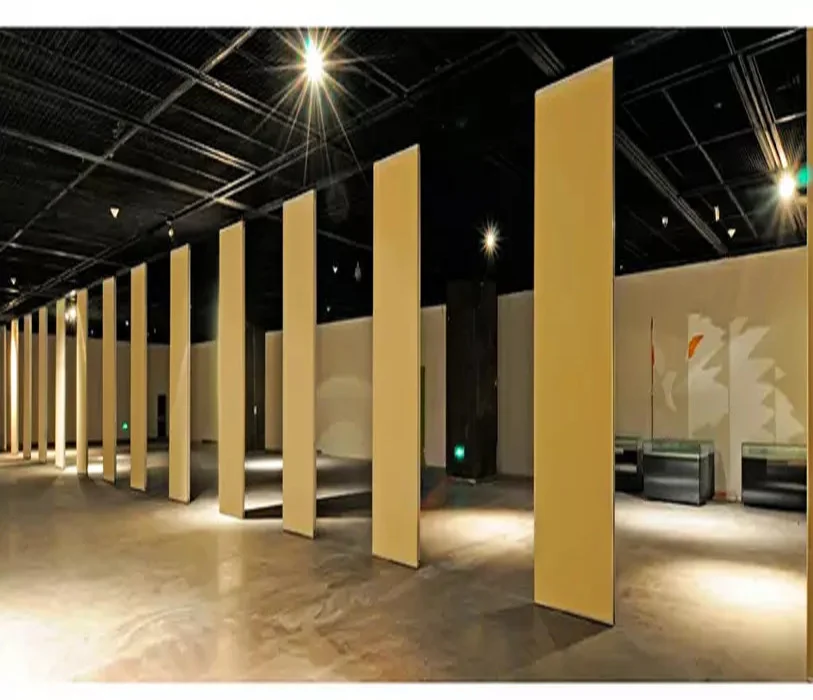
Before walking the floor, gather the layouts that the space is expected to use. Straight, turning and stacking routes should be reviewed from the layout, because a route that works in one arrangement may not work in another. Parking position matters too: panels park at a planned stacking position, and that position can sit inside or beside a circulation path.
Documents to collect
- Current and proposed room-layout drawings, including stacking positions.
- Signage schedule, room identifier list and any directory artwork.
- Accessible-route drawings and any project-specific circulation notes.
- Pass-door requirements and project documentation already agreed with the supplier.
Where a document is missing, record the gap rather than filling it with an assumption. The audit is only as reliable as the drawings behind it.
A six-step audit process
Checklist focus: wayfinding cue consistency audit.
- Freeze the layout set. Agree which configurations will be audited and label each one.
- Walk each configuration. Follow the route a first-time visitor would take from the main entry point.
- Check every cue. Record directional signs, room identifiers, floor-level cues and any directory panels.
- Compare cue to reality. Note where a cue points to a space that is closed, merged or renamed in that configuration.
- Log conflicts. Mark cues that contradict each other, even if each is individually correct in another layout.
- Assign an owner and a review date. Keep the log open until each item is resolved or formally accepted.
This sequence keeps the review repeatable. It also produces a record that can be handed to a signage contractor, a facilities team or a future renovation team.
What to inspect at each cue point
Not every cue carries the same risk. A room identifier on a door is easy to update; a wall-mounted directory that lists a room which no longer exists in that configuration is harder to correct. The table below groups cues by how they behave when the layout changes.
| Cue type | Behaviour when layout changes | Audit action |
|---|---|---|
| Directional sign | May point along a route that is now closed or redirected | Re-walk the route and confirm the destination still exists |
| Room identifier | May name a space that is merged or subdivided | Confirm the name against the current layout set |
| Directory or map | May show a fixed plan that no longer matches | Decide whether it is updated, covered or removed |
| Path cue | May lead toward a partition line or stacking position | Check the route against the reviewed layout |
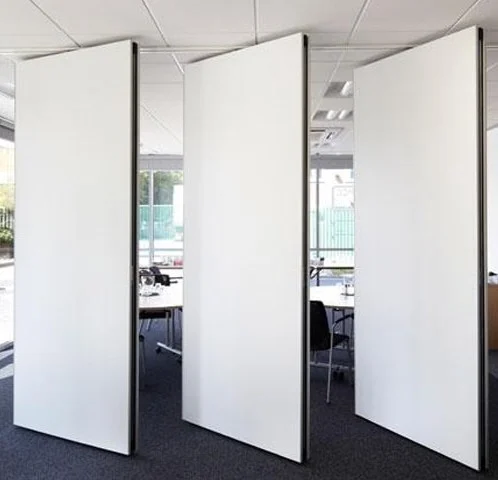
Visible references can support layout discussion but do not verify hidden construction or performance.
Accessibility and circulation coordination
Accessibility and circulation review coordination should happen alongside the wayfinding audit, not after it. A route that is clear in one configuration may pass close to a stacking position in another. The audit should therefore record where panels park and whether that position affects the perceived route.
Questions to put to the project team
- Does the accessible route remain legible in every audited configuration?
- Are pass-door requirements documented for each layout where a door is needed?
- Has the overhead route been reviewed as a continuous connected path for every proposed movement?
- Are support and dimensional requirements confirmed against project-specific drawings?
These are coordination questions, not performance claims. Each answer depends on the specific project and should be confirmed with the responsible parties.
Evidence boundaries for the audit report
An audit report should state what was observed, on which date, in which configuration, and against which drawing. It should not infer acoustic, fire, durability or structural performance from a visible finish, a photograph or a drawing.
Any acoustic expectation for a specific opening must be confirmed against project-specific documentation.
It can only confirm consistency between the cues and the layout set that was reviewed.
Keeping the audit current
Reconfiguration is often routine, which is exactly why cue drift goes unnoticed. A short review after each significant layout change is more practical than a large annual exercise. The review can reuse the same six steps and the same log format.
For product context and planning resources, see the movable walls product page and the resources library. When a project needs pass-door requirements, finish selection or documentation review, the project team can contact EBUNGE to discuss the specific configuration.
Frequently asked questions
What is a movable partition wayfinding cue consistency audit?
It is a structured review that checks whether signage, room identifiers and path cues still match the room layouts created when movable partition panels are repositioned.
How often should the audit be repeated?
Repeat it after any significant reconfiguration, or whenever a room name, route or stacking position changes. The right frequency depends on how often the space is rearranged.
Does the audit require acoustic testing?
No. The audit is about visible cues and circulation. Acoustic expectations are separate and must be confirmed against project-specific documentation.
Can the audit confirm that a route is fully accessible?
It can record what was observed in each configuration. Confirming accessibility for a specific project requires review by the responsible design and compliance professionals.
What should be included in the audit record?
Include the layout set reviewed, the date, the cues inspected, any conflicts found, the assigned owner and the agreed review date.
Who should take part in the review?
Facilities, design and signage representatives are typical participants. The exact team depends on the project and its documentation responsibilities.
Conclusion
A movable partition wayfinding cue consistency audit keeps the visible language of a building aligned with the layouts it actually uses. By working from the reviewed layout set, walking each configuration, logging conflicts and recording evidence boundaries, teams can reduce confusion without making unsupported claims about performance. Confirm support, acoustic and dimensional requirements for each project before finalising any specification.
To discuss a specific layout, pass-door requirement or documentation set, contact the EBUNGE team.