
Quick answer: movable partition wall
Review focus: movable partition wall.
Movable partition wall tender returnable version control is the discipline of knowing, at every point in a bid cycle, which schedule, drawing and specification documents a tenderer is actually pricing. When addenda arrive, the risk is not only that a bidder misses a change; it is that the reviewer compares two bids built on different document sets. This framework helps overseas procurement teams keep one controlled returnable set, flag superseded documents, and route every unresolved item to project-specific confirmation.
Why Returnable Schedules Drift During Addenda
Project review term: movable partition wall.
A movable partition package touches architecture, structure, finishes and services. Returnable schedules often include layout drawings, elevation references, finish schedules, pass-door requirements and interface notes. Each addendum can revise one of these without revising the others.
Drift happens quietly. A bidder may price the original opening while the addendum changes the stacking position. Another may price a revised finish while retaining an old track route. Neither bid is wrong in isolation; they are simply answering different questions.
The reviewer’s job is to restore a single question. That means version control is not administrative housekeeping. It is the mechanism that makes bid comparison meaningful.
A Controlled Document Set for Movable Partition Tenders
Coordination scope: movable partition wall.
Before evaluating any price or technical return, define the controlled set. Every document in it carries an identifier, a revision date and a status. Documents outside the set are reference only.
Core returnable documents
- Returnable schedule with a unique document number and revision.
- Layout drawing showing the opening, the parking position and the intended movement route.
- Finish schedule listing approved surface options such as laminate, melamine, fabric, leather or glass.
- Pass-door requirement statement, if a pass door is required.
- Interface notes covering the overhead support condition and adjacent construction.
Keep this list short enough to be maintained. A long register that nobody updates is less useful than a short one that is checked at every addendum.
Reading Addenda Against the Returnable Schedule
Checklist focus: movable partition wall.
Each addendum should be read as a set of instructions to the controlled document set, not as a standalone message. The reviewer asks three questions: what changed, which returnable document does it touch, and which earlier revision does it supersede.
Numbered review process
- Log the addendum with its issue date and source.
- Map each change to one or more returnable documents.
- Mark the affected documents as superseded and issue replacements.
- Confirm that the movement route remains continuous and connected overhead.
- Reissue the controlled set to all tenderers with a clear revision summary.
- Require each tenderer to confirm the revision they have priced.
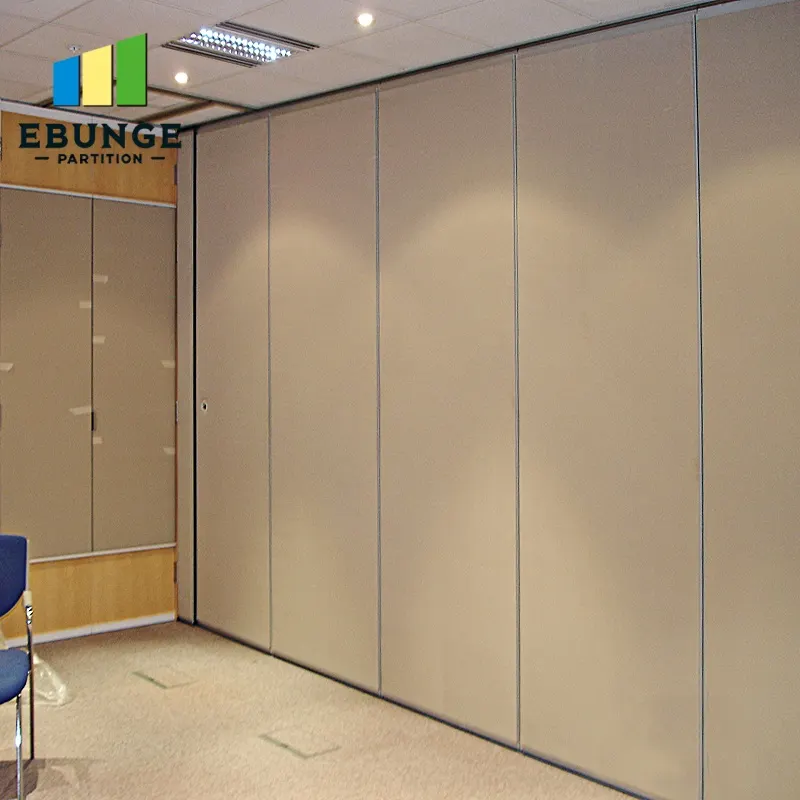
Step four matters because a movable partition is top-hung and moves without a continuous floor track. Straight, turning and stacking routes are reviewed from the layout. If an addendum changes the layout, the route review must be repeated rather than assumed.
Comparison Table: Current, Superseded and Unclear
Use a simple status table in the tender evaluation file. It prevents a superseded drawing from being treated as current during scoring.
| Status | Meaning | Reviewer action |
|---|---|---|
| Current | Latest issued revision in the controlled set | Use for bid comparison |
| Superseded | Replaced by a later addendum | Exclude from scoring; retain for audit |
| Unclear | Addendum wording does not map cleanly | Raise a clarification before comparison |
This table is deliberately small. Its value is that it forces a decision on every document rather than leaving ambiguity to be resolved later.
Evidence Boundaries Reviewers Should State
Procurement documents should not imply performance that has not been confirmed for the project. The suitability of each route and parking arrangement depends on the approved layout, circulation, ceiling interfaces and operating sequence.
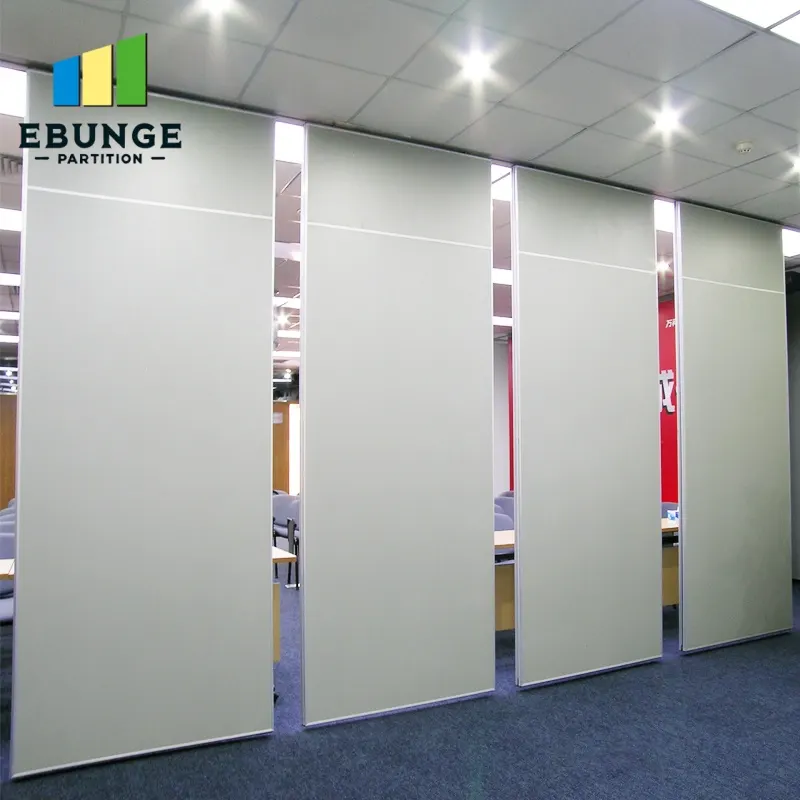
Evidence note: finish options, pass-door requirements and project documentation can be discussed, but acoustic, structural and dimensional requirements must be confirmed against the specific project drawings and supporting information.
Where a tenderer offers a finish such as laminate, melamine, fabric, leather or glass, that offer is a surface selection. Those remain project-specific confirmations.
Similarly, a parking position shown on a drawing indicates a planned stacking location. It does not by itself confirm that the overhead support, route geometry and adjacent construction will accept the arrangement. Reviewers should keep that boundary visible in the evaluation notes.
Clarification Questions That Protect the Comparison
Clarifications should be issued once, in writing, to all tenderers, and the answers should be folded back into the controlled set.
Questions worth asking early
- Which revision of the returnable schedule has been priced?
- Does the proposed route follow the layout as currently issued?
- Are pass-door requirements included or excluded?
- Which finish options are offered, and are they from the approved list?
- What project-specific information is still required before the offer can be finalised?
These questions do not demand performance promises. They establish the basis of each bid so that differences reflect scope, not document confusion.
Common Version-Control Failure Modes
Most failures are procedural rather than technical. A revised layout is issued but the finish schedule is not. A tenderer confirms receipt of an addendum but prices the previous drawing. A reviewer scores a bid against a superseded elevation.
Each failure has the same remedy: a controlled set, a status table and a written confirmation of the revision priced. Where a project involves turning or stacking routes, the layout review should be repeated after any change to the opening or parking position.
Reviewers should also avoid inferring hidden performance from a visible shape, finish or drawing. Visible references can support layout discussion but do not verify hidden construction or performance. Those require matching project evidence.
FAQ: Movable Partition Tender Returnable Version Control
What is movable partition wall tender returnable version control?
It is the practice of maintaining one controlled set of returnable documents, tracking which revisions remain current after addenda, and comparing bids only against that current set.
How do I know which documents are superseded?
Each addendum should be mapped to the returnable documents it changes. Affected documents are marked superseded and replaced with a new revision carrying a clear identifier and date.
Should I compare bids before all clarifications are answered?
No. Unclear items should be clarified first. Comparing bids built on different document sets produces differences that reflect confusion rather than scope.
Does a layout change affect the movement route review?
Yes. Straight, turning and stacking routes are reviewed from the layout. If the opening or parking position changes, the route review should be repeated.
Can finish options be confirmed from the tender documents alone?
Provide the current layout, opening dimensions, ceiling information, intended room use, and relevant project drawings for review. The exact overhead route and support arrangement must be confirmed by the responsible project team from coordinated drawings.
What should the reviewer do when an addendum is ambiguous?
Raise a written clarification to all tenderers, record the answer, and update the controlled set before scoring any bid.
Conclusion and Next Step
Movable partition wall tender returnable version control is a small discipline with a large effect on bid quality. Define the controlled set, map every addendum to it, mark superseded documents clearly, and require each tenderer to confirm the revision priced.
For product context and project documentation discussion, review the movable wall systems and the planning resources. When your team is ready to align a returnable schedule with a specific layout, contact EBUNGE to discuss pass-door requirements, finish options and the documentation needed for your project.