
Quick answer: movable partition wall
Review focus: movable partition wall.
A movable partition wall tender question bank helps project teams ask suppliers the same structured questions, so scope boundaries and interface assumptions are visible before comparison. This guide is for contractors, architects, interior designers, owners, renovation companies, distributors and construction teams preparing a movable partition wall tender question bank for flexible-space packages. The suitability of each route and parking arrangement depends on the approved layout, circulation, ceiling interfaces and operating sequence. Instead, it shows how to separate what a supplier can confirm from what still requires coordinated evidence.
Why a Question Bank Beats a Single Specification Paragraph
Project review term: movable partition wall.
A single specification paragraph often mixes product description, interface responsibility and performance expectation. That makes supplier responses hard to compare. A question bank separates these layers. It asks what is included, what is excluded, what must be confirmed from drawings, and what evidence the supplier can provide.
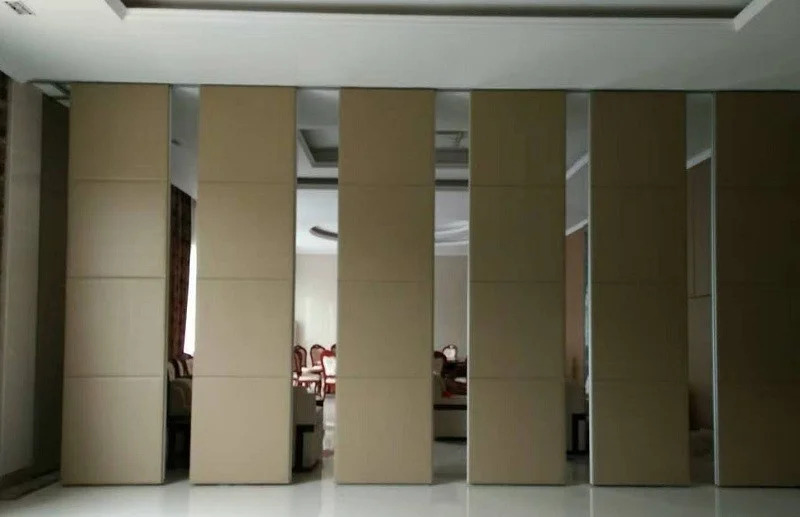
For movable partitions, the maintained product facts are clear: panels are individually movable, suspended from a top track, cross the opening without a floor track, and park at a planned stacking position. Straight, turning and stacking routes are reviewed from the layout. These facts should anchor the question bank, because they define the physical system without inventing performance.
Scope Boundary Questions to Ask Every Supplier
Coordination scope: movable partition wall.
Scope boundaries are where tenders most often drift. A supplier may quote panels while another party assumes track support, finishing, or interface coordination. The question bank should force these assumptions into the open.
- Which items are included in the movable partition package, and which are excluded?
- Who confirms the overhead route, support conditions and structural interface?
- Are pass-door requirements included, and how are they documented?
- Which finish options are proposed: laminate, melamine, fabric, leather, glass or another approved surface?
- What project documentation is expected from the supplier, and what must the project team provide?
These questions do not require a supplier to promise outcomes. They simply map responsibility. When answers differ between bidders, the tender team can issue clarifications before award rather than discovering gaps later.
Interface Assumptions Around Track, Support and Parking
Movable partitions are top-hung and move without a continuous floor running track or floor hardware along the partition line. That fact shapes the interface questions. The overhead route must be continuous and connected for every proposed movement path. A gap in the route is not a travel path.
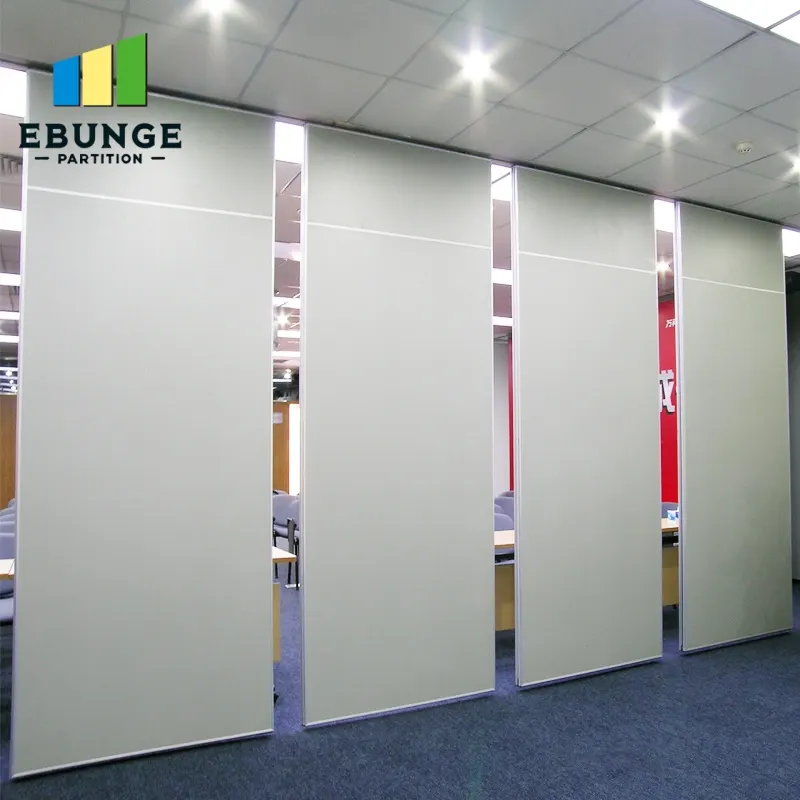
Parking style is customized to the customer layout and project requirements and may support compact stacking when the coordinated design permits it. The question bank should ask how the proposed parking position relates to adjacent walls, columns, services and room use. The exact route, junction arrangement, continuous overhead path and parking position must be confirmed from the coordinated project drawings.
Evidence note
Do not infer acoustic, fire, durability, load or commercial performance from a finish sample, photograph or drawing. Those topics require project-specific confirmation and matching evidence.
Acoustic and Seal Concepts Without Decibel Promises
A higher rating does not automatically mean a room will be quiet, because flanking paths, junctions, seals and site conditions all matter. The question bank should ask how acoustic requirements will be reviewed for the specific opening and adjacent construction.
Seals are part of the acoustic concept, but their materials and performance cannot be assumed from a generic description. Ask the supplier to state what must be confirmed from project drawings and what evidence will be provided. Instead, request a clear boundary: what is included, what is excluded, and what remains subject to project-specific review.
Structuring the Question Bank as a Repeatable Process
A repeatable process keeps tender clarifications consistent across bidders. The following numbered sequence can be adapted to different project stages.
- List the rooms or zones where flexible division, combination or reconfiguration is required.
- Mark the straight, turning and stacking routes on the layout.
- Identify interface items: overhead support, adjacent finishes, pass doors and services.
- Separate questions into scope, interface, finish, documentation and project-specific confirmation.
- Send the same question bank to every supplier and require written responses.
- Compare answers for gaps, assumptions and unresolved items before shortlisting.
This process does not require the project team to design the partition.
Comparing Supplier Responses Without Hidden Assumptions
Supplier responses should be compared on the same basis. A compact comparison table can help the tender team see where answers align and where they diverge.
| Question area | What to look for | Evidence boundary |
|---|---|---|
| Scope | Included and excluded items listed clearly | Confirm against project drawings |
| Interface | Track, support and parking responsibilities named | Requires coordinated layout review |
| Finish | Proposed surface options stated | Do not infer performance from finish |
| Acoustic | STC or Rw discussed as a rating concept | Project-specific acoustic review required |
| Documentation | Drawings, schedules and clarifications identified | Confirm what is issued and when |
The table is not a scoring system. It is a visibility tool. It helps the team see which answers are complete, which are conditional, and which need further clarification.
Documentation and Clarification Flow
Project documentation can be discussed with the supplier, but the tender team should define what is needed. Typical items may include layout drawings, route sketches, finish schedules and interface notes. The question bank should ask who issues each document and how revisions are tracked.
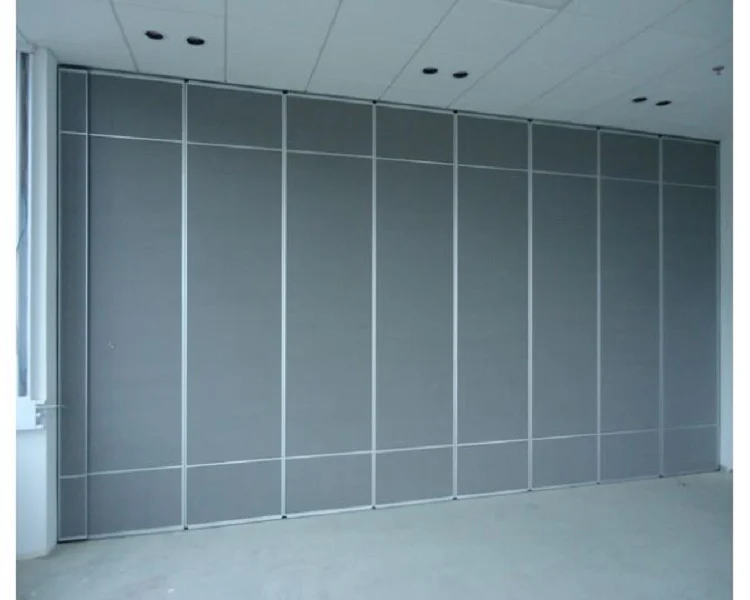
Pass-door requirements should also be clarified early. A pass door may affect panel layout, parking and route planning. The question bank should ask whether pass doors are included, how they are documented, and what project-specific confirmation is required.
Frequently Asked Questions
What is a movable partition wall tender question bank?
It is a structured set of questions used to compare supplier scope, interface assumptions, finish options and documentation before award. It helps project teams avoid comparing incomplete answers.
Does a question bank replace project drawings?
No. It supports drawing review. Straight, turning and stacking routes still need to be reviewed from the layout, and support conditions require project-specific confirmation.
Can a supplier confirm acoustic performance from the question bank alone?
No. Project-specific acoustic review is required.
How should finish options be compared?
Ask which approved surfaces are proposed, such as laminate, melamine, fabric, leather or glass.
What should be asked about parking and stacking?
Ask how the planned stacking position relates to the layout, adjacent walls, columns and services. Parking style is customized to the customer layout and project requirements, and compact stacking depends on coordinated design.
When should clarifications be issued?
Issue them before shortlisting or award, once supplier responses reveal gaps or differing assumptions.
Conclusion and Next Step
A movable partition wall tender question bank is most useful when it separates scope, interface, finish, acoustic and documentation questions. It should bind every answer to maintained product facts and project-specific drawing review.
To discuss pass-door requirements, project documentation or a question bank for your next tender, contact EBUNGE. You can also review movable wall products and browse project resources before issuing clarifications.