
Quick answer: tender evaluation scoring rationale traceability
Review focus: tender evaluation scoring rationale traceability.
Movable partition wall tender evaluation scoring rationale traceability is the discipline of recording, for every bidder and every criterion, exactly why points were awarded or deducted — and proving that the stated reason maps to a published evaluation criterion before award. Without that trace, a defensible recommendation can look arbitrary, and a challenge can succeed on procedure rather than on merit. This framework is written for overseas procurement reviewers, contractors, architects and owners who must compare top-hung, individually movable panel systems that cross an opening without a floor track and park at a planned stacking position. It does not replace legal or probity advice; it organises the evidence you already hold.
Why Traceability Matters More Than the Final Score
Project review term: tender evaluation scoring rationale traceability.
A score is a conclusion. Traceability is the chain that supports it: published criterion, bidder response, evidence reviewed, deduction reason, reviewer identity and date. When that chain is complete, an unsuccessful bidder can be shown the exact clause and the exact gap. When it is incomplete, the same bidder can argue that the deduction was invented after the fact.
For movable partition packages the risk is higher than for simple goods, because the scope mixes layout, movement routes, finishes and documentation. A bidder may lose points on a route that cannot reach the parking position, on a finish that is not among the approved surfaces, or on missing pass-door information. Each of those must point back to a criterion that was published before bids were opened.
Separate criterion from comment
Reviewers often write useful comments that are not criteria. “The stacking arrangement looked awkward” is a comment. “The bidder did not demonstrate a continuous overhead route to the stated parking position” is a criterion-linked finding. Only the second belongs in the scoring rationale.
A Four-Step Recording Process for Each Deduction
Coordination scope: tender evaluation scoring rationale traceability.
- Quote the published criterion. Copy the exact wording and clause number from the tender documents into the evaluation record.
- State the bidder’s response. Summarise what the bidder actually submitted, without interpretation.
- Name the evidence reviewed. List the drawing, schedule, finish sample reference or written answer that was examined.
- Write the deduction reason in one sentence. The sentence must be readable against the quoted criterion without further explanation.
If step four cannot be written in one sentence, the deduction is probably not yet traceable. Return to the evidence before finalising the score.
Mapping Deductions to Movable Partition Criteria
Checklist focus: tender evaluation scoring rationale traceability.
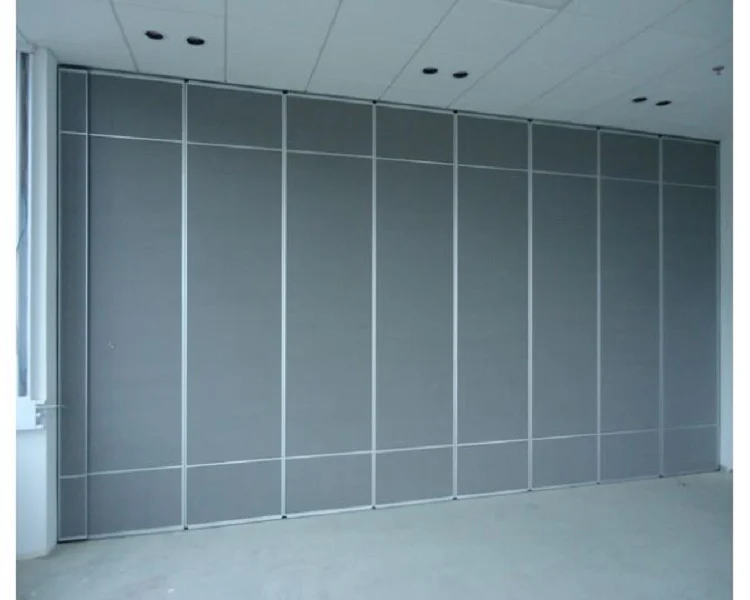
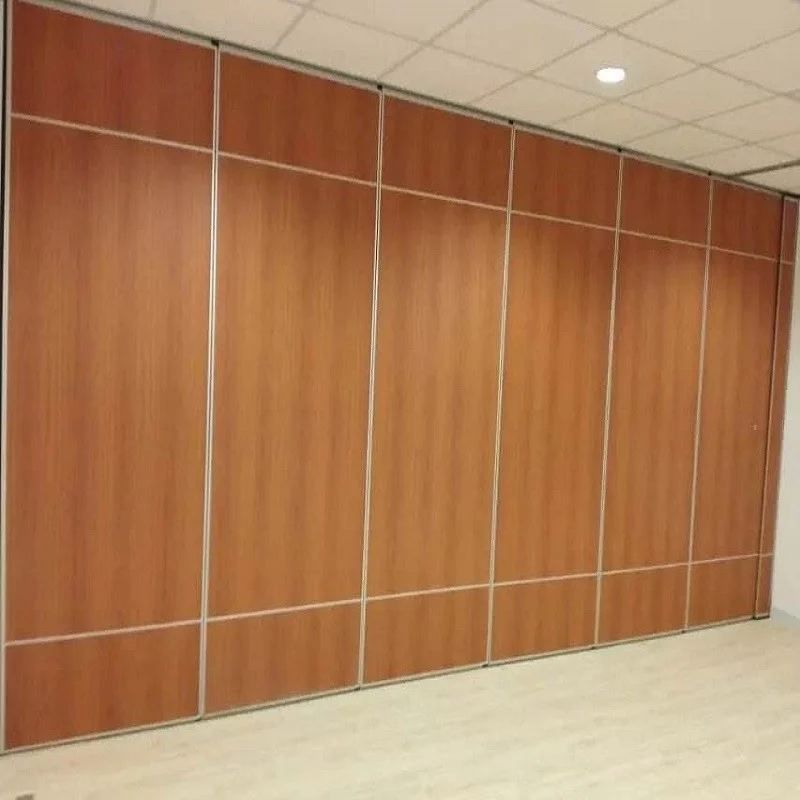
Confirmed product facts give reviewers a stable vocabulary. EBUNGE movable wall panels are individually movable, suspended from a top track, cross the opening without a floor track, and park at a planned stacking position. Straight, turning and stacking routes are reviewed from the layout. Confirmed finish options include laminate, melamine, fabric, leather, glass and other approved surfaces. Pass-door requirements and project documentation can be discussed.
Those facts support criteria about route continuity, parking provision, finish selection and documentation completeness. The exact overhead route and support arrangement must be confirmed by the responsible project team from coordinated drawings.
| Published criterion area | Typical deduction reason | Evidence to cite |
|---|---|---|
| Movement route | Proposed path does not connect continuously to the parking position | Layout drawing and route review notes |
| Finish compliance | Offered surface is not among the approved finish options | Finish schedule and sample reference |
| Pass-door provision | Pass-door requirement not addressed in the bid | Bidder written response |
| Documentation | Required project documentation not submitted | Submission checklist |

Acoustic criteria need careful wording
The suitability of each route and parking arrangement depends on the approved layout, circulation, ceiling interfaces and operating sequence.
Evidence Notes Reviewers Should Attach
Review focus: tender evaluation scoring rationale traceability.
Record only what the submitted document states, and mark any performance question as requiring project-specific confirmation.
Attach the same discipline to route drawings. The exact route, junction arrangement, continuous overhead path and parking position must be confirmed from the coordinated project drawings. That remains a project-specific review item, and the rationale should say so rather than implying approval.
Common Traceability Failures Before Award
Three failures recur. First, criteria are rewritten during evaluation to fit the preferred bidder. Second, deductions are recorded in aggregate — “layout: 6/10” — with no per-bidder reason. Third, reviewers treat a bidder’s silence as a failure without checking whether the criterion required a response.
A fourth failure is subtler: using a competitor’s brochure as the benchmark. The benchmark must be the published criterion, not another bidder’s submission.
Keep a challenge file
For each bidder, keep the quoted criterion, the response, the evidence and the deduction sentence together. If a challenge arrives, the file answers it directly. Panel handling and the operating sequence must be confirmed for the selected layout and project conditions.
Frequently Asked Questions
What does traceability mean in a movable partition tender?
It means every score can be followed back to a published criterion, the bidder’s submitted response and the evidence reviewed, with the deduction reason recorded in writing before award.
Can reviewers adjust criteria after bids are opened?
Adjusting published criteria after opening undermines the evaluation. If clarification is needed, record it as a clarification of the original wording and apply it consistently to all bidders.
How should acoustic criteria be recorded?
Record whether the bidder supplied the project-specific acoustic documentation required by the tender.
What if a bidder omits the parking position?
Check whether the tender required it. If it did, record the omission against that criterion. If it did not, the omission is not a valid deduction.
Do finish samples prove performance?
No. A finish sample shows appearance and surface type only.
When should the rationale be finalised?
Before the award recommendation is signed. Later edits weaken the record and make consistency checks harder to defend.
Conclusion and Next Step
Traceable scoring protects the project as much as the process. Quote the criterion, state the response, name the evidence, write one deduction sentence, and confirm every performance or dimensional question against project-specific documentation. Reviewers who follow that sequence can defend an award and answer a challenge with the same file.
To discuss pass-door requirements, finish options, route review or project documentation for a movable partition package, contact the EBUNGE team. You can also review the movable wall product range and the project resources before finalising your evaluation criteria.