
Quick answer: tender evaluation consensus divergence logging
Review focus: tender evaluation consensus divergence logging.
Movable partition wall tender evaluation consensus divergence logging is the practice of recording, at the moment of scoring, where individual assessors disagreed and how the evaluation panel reconciled those differences into a final composite score. It is not a minutes-taking exercise. It is a defensibility instrument. When a losing bidder asks why its package ranked second, or when an internal auditor samples a high-value award, the divergence log is the document that shows the panel reasoned rather than averaged. This article sets out a reviewer’s framework for capturing that reasoning without overstating what any tender document can prove.
Why Divergence Logging Matters More for Movable Partition Packages
Project review term: tender evaluation consensus divergence logging.
Movable partition wall packages sit at an awkward intersection. They are architectural products, interior finishes, operational equipment and coordination items at the same time. A single tender may be scored on layout fit, finish schedule, stacking arrangement, pass-door provision, documentation completeness and commercial terms. Different assessors naturally weight those dimensions differently.
That divergence is normal. What causes problems is undocumented divergence. If the panel simply publishes a composite score, the reconciliation logic disappears. A later reviewer cannot tell whether a low mark reflected a genuine gap in the submission or an assessor’s personal preference. Divergence logging preserves that distinction.
What the Log Should Capture Before Scoring Begins
Coordination scope: tender evaluation consensus divergence logging.
The log is most useful when its structure is agreed before assessors open the returns. Retrofitting categories after scores are visible invites accusations of reverse-engineering. A practical log records the criterion, the individual raw scores, the direction and size of the gap, the evidence each assessor cited, and the reconciliation decision.
Core fields for each divergence entry
- Criterion reference: the exact tender criterion and weighting from the issued documents.
- Assessor scores: each individual mark, not just the panel average.
- Divergence type: evidence gap, interpretation difference, weighting disagreement or factual dispute.
- Cited evidence: the page, drawing or clause each assessor relied on.
- Reconciliation method: consensus, chair decision, re-scoring after clarification, or referral.
- Residual dissent: any assessor position that was noted but not adopted.
This structure keeps the log factual. It records what was claimed and what was decided, without converting either into a performance conclusion about the product.
Separating Evidence Gaps from Genuine Product Differences

Checklist focus: tender evaluation consensus divergence logging.
Many apparent disagreements are not disagreements about the product at all. One assessor may have read the layout drawings and concluded the stacking position was workable; another may have found no stacking drawing in the return. Both are describing the same submission, but only one is describing a missing document.
The log should force that distinction. An evidence gap is recorded as a documentation finding. A product difference is recorded only where the submission itself contains the relevant information. This prevents a thin submission from being scored as though it demonstrated a capability, and prevents a complete submission from being penalised for an assessor’s unfamiliarity with top-hung systems.
Evidence note: a tender return can show what a bidder submitted. It cannot, by itself, confirm acoustic performance, structural support, dimensional fit or finish compatibility for the project. Those remain project-specific confirmations.
A Numbered Reconciliation Process for the Evaluation Panel
Review focus: tender evaluation consensus divergence logging.
The following sequence keeps reconciliation auditable and repeatable across packages and venues.
- Collect individual score sheets before any panel discussion, so first positions are preserved.
- Flag every criterion where the spread exceeds the threshold agreed in the evaluation plan.
- Ask each assessor to state the evidence behind their mark, without defending the mark itself.
- Classify the divergence using the categories in the log.
- Decide whether clarification from the bidder is permitted under the tender rules.
- Re-score only the affected criterion, and record both the original and revised marks.
- Record the reconciliation method and any residual dissent in the final report.
Step six matters. Re-scoring the whole submission because one criterion was contested obscures the audit trail. Narrow re-scoring keeps the change proportionate to the disagreement.
Handling Layout, Route and Stacking Criteria
Project review term: tender evaluation consensus divergence logging.
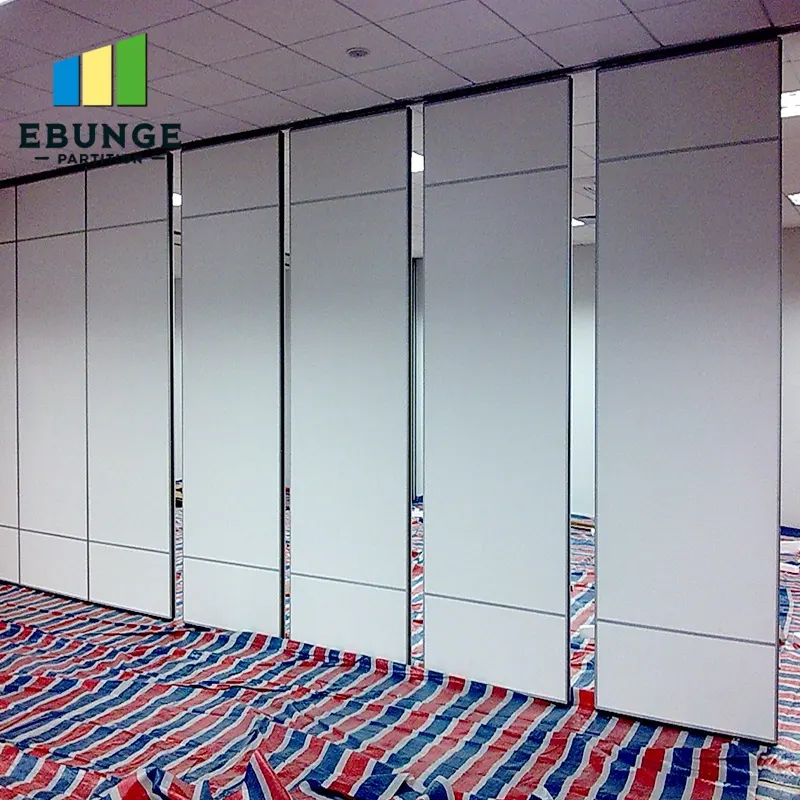
Layout-related criteria generate predictable divergence because they depend on reading drawings rather than reading text. Movable wall panels are individually movable, suspended from a top track, cross the opening without a floor track, and park at a planned stacking position. Straight, turning and stacking routes are reviewed from the layout.
An assessor who cannot see a continuous connected overhead route in the submitted drawings should record that as an evidence gap, not as a product failure. Equally, an assessor who assumes a route works because the room dimensions appear generous is recording an assumption, not a finding. The log should label both accurately.
Questions the panel should resolve before scoring layout criteria
- Does the return include a layout showing the proposed stacking position?
- Is the movement route shown as a continuous connected overhead path?
- Are pass-door requirements identified where the project needs them?
- Are finish selections drawn from the confirmed options: laminate, melamine, fabric, leather, glass and other approved surfaces?
- Is the documentation set complete enough to compare bidders on the same basis?
Where any answer is unclear, the correct log entry is a clarification request or a documented assumption, not a silent score adjustment.
Recording Acoustic and Performance Criteria Without Overreach
Coordination scope: tender evaluation consensus divergence logging.
Acoustic criteria are frequently the most contested and the least well documented. The suitability of each route and parking arrangement depends on the approved layout, circulation, ceiling interfaces and operating sequence.
Assessors should therefore log acoustic divergence as a question about the evidence submitted, not as a conclusion about the installed result. If the tender requires acoustic documentation, the log records whether that documentation was provided and whether it matches the project’s stated requirement. It does not convert a submitted figure into a promise about site performance.
Keeping the Composite Score Defensible After Award
The composite score is the visible output; the divergence log is the supporting reasoning. A defensible award file typically contains the issued criteria, the individual score sheets, the divergence log, the reconciliation record and the final report. Together these allow a later reviewer to reconstruct the decision without interviewing the panel.
Reviewers should also record what the evaluation did not establish. A tender evaluation can compare submissions against stated criteria. It cannot confirm project-specific support, acoustic and dimensional requirements, which remain subject to separate confirmation with the selected supplier and the project team.
Frequently Asked Questions
What is movable partition wall tender evaluation consensus divergence logging?
It is a structured record of where individual assessors scored differently on a movable partition wall package, what evidence each relied on, and how the panel reconciled those differences into the final composite score before award.
Should the divergence log be created before or after scoring?
The structure should be agreed before assessors open the returns. Entries are completed during and after scoring. Creating the categories after scores are visible weakens the audit trail.
How should an assessor treat a missing stacking drawing?
As an evidence gap in the submission, not as a product limitation. The log should record the missing document and any clarification requested under the tender rules.
Can the panel re-score a submission after discussion?
Where the tender rules permit it, re-scoring should be limited to the affected criterion. Both original and revised marks should remain in the record.
Does a submitted acoustic figure confirm site performance?
No. Project-specific acoustic requirements should be confirmed separately with the selected supplier and the project team.
What should the final award file contain?
The issued criteria, individual score sheets, the divergence log, the reconciliation record and the final evaluation report, so the decision can be reconstructed later.
Conclusion and Next Step
Divergence logging does not eliminate disagreement, and it should not try to. Its value is in making disagreement visible, evidence-bound and reconcilable. For movable partition wall packages, where layout, finish, documentation and commercial criteria pull assessors in different directions, a disciplined log is often the difference between a defensible award and an unexplained one.
Reviewers preparing a package can begin by confirming the project’s layout, route, stacking, finish and documentation requirements with the supplier before criteria are finalised. To discuss pass-door requirements, project documentation or finish options for a specific scheme, contact the EBUNGE team. Further buyer guidance is available in the resources section, and maintained product context can be reviewed on the movable walls product page.