
Quick project answer
Review focus: movable partition wall.
A movable partition wall tender clarification log is the single register that records every supplier question, every answer, and every assumption still open before award. Without it, tender teams carry unresolved items into the contract, where they become variations, delays or disputes. This guide sets out a practical structure for overseas contractors, architects, interior designers, owners and renovation teams who need to compare movable partition packages on the same evidence base.
Why a Clarification Log Belongs in the Tender Package
Project review term: movable partition wall.
Drawings and specifications rarely answer every coordination question. A clarification log converts informal email threads into a controlled record. It shows which statements are confirmed product facts, which depend on project-specific review, and which remain assumptions.
The log also protects the evaluation process. When two suppliers quote against the same scope, the log reveals whether they interpreted the opening, the parking position or the finish schedule in the same way. That comparison is more useful than a headline price alone.
Separating Confirmed Facts from Project Assumptions
Coordination scope: movable partition wall.
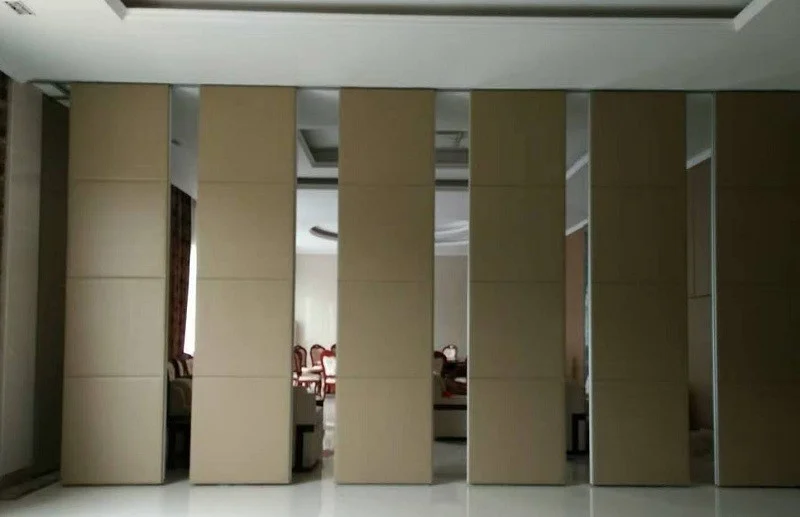
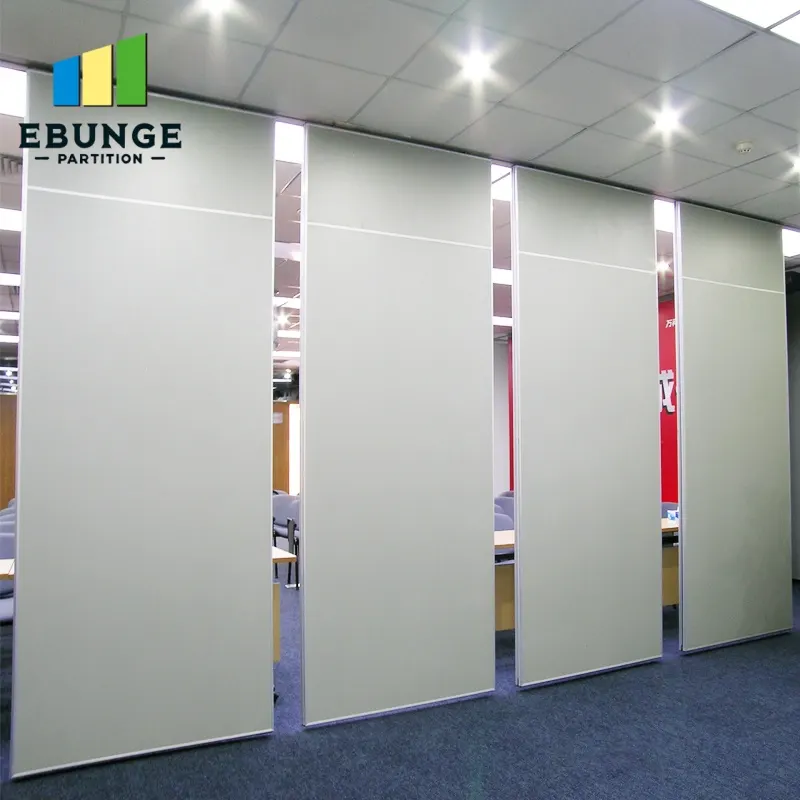
Confirmed EBUNGE facts are narrow and specific: panels are individually movable, suspended from a top track, cross the opening without a floor track, and park at a planned stacking position. Straight, turning and stacking routes are reviewed from the layout. Finish options include laminate, melamine, fabric, leather, glass and other approved surfaces. Pass-door requirements and project documentation can be discussed.
Everything else is an assumption until the project team confirms it against drawings, support conditions and local requirements. The log should label each line accordingly.
An evidence note for evaluators
Do not derive acoustic, fire, durability, load or commercial performance from a visible finish, photograph or drawing. STC and Rw are rating concepts used in acoustic specification; they are not a simple count of decibels and must be confirmed for the specific assembly and project.
Structuring the Log: Fields That Keep Queries Traceable
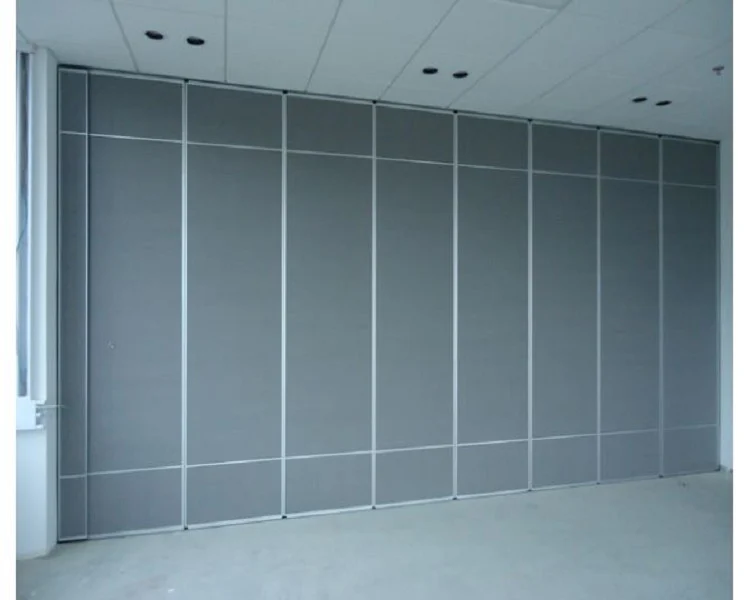
Checklist focus: movable partition wall.
A useful log has consistent fields so that any reviewer can follow an item from question to closure. The exact format can be a spreadsheet or a controlled document, but the fields should not change mid-tender.
Recommended fields
- Item number and date raised
- Drawing or specification reference
- Question as issued to the supplier
- Supplier response and date received
- Status: open, answered, requires project review, or closed
- Owner of the next action
- Linked assumption or risk note
Query Categories for Movable Partition Packages
Grouping questions by category prevents important topics from being buried. The categories below reflect the maintained product facts and the coordination points that commonly need project-specific confirmation.
Layout and movement routes
Ask how the straight, turning and stacking routes have been reviewed from the layout. Confirm that every proposed movement path has a continuous connected overhead route and that support conditions have been reviewed for the project. The exact route, junction arrangement, continuous overhead path and parking position must be confirmed from the coordinated project drawings.
Parking and stacking position
Parking style is customized to the customer layout and project requirements and may support compact stacking when the coordinated design permits it. The log should record the planned stacking position, the space reserved for it, and any interface with adjacent finishes or services.
Finishes and interfaces
Record which approved finish is proposed for each panel face and how it interfaces with surrounding walls, ceilings and door frames. The suitability of each route and parking arrangement depends on the approved layout, circulation, ceiling interfaces and operating sequence.
Pass doors and documentation
Pass-door requirements and project documentation can be discussed. List the required document set, submission dates and review responsibilities so that nothing is assumed to be included by default.
Assumption Tracking Before Award
Assumptions are not failures; untracked assumptions are. Each assumption should state what is believed, what evidence is missing, and who will confirm it.
Decision checklist before award
- Has every movement route been reviewed against the layout?
- Is the parking position coordinated with adjacent trades?
- Are finish selections recorded against approved options?
- Are pass-door and documentation requirements listed?
- Are acoustic and dimensional requirements confirmed for the specific project?
- Are all open assumptions assigned an owner and a due date?
Running the Clarification Process
A short, repeatable process keeps the log current. Issue queries in batches, log responses the same day, and review open items at each tender meeting.
Numbered process
- Collect questions from design, construction and commercial reviewers.
- Issue them to suppliers with drawing references.
- Record responses verbatim and mark the status.
- Flag any response that depends on project-specific review.
- Review open items with the project team.
- Close the log before award and attach it to the contract documents.
Common Pitfalls in Tender Clarification
Teams often treat a supplier response as a confirmed fact when it is actually a project-dependent statement. Others leave assumptions in email threads rather than the log. Both create risk at handover.
Another pitfall is comparing packages on incomplete scopes. The log should make such differences visible.
FAQ: Movable Partition Wall Tender Clarification Log
What is a movable partition wall tender clarification log?
It is a controlled register of questions, answers and assumptions exchanged with suppliers during tender. It records what is confirmed, what requires project-specific review, and what remains open before award.
Which statements can be treated as confirmed product facts?
Confirmed facts include that panels are individually movable, top-hung, cross the opening without a floor track, and park at a planned stacking position. Finish options and the ability to discuss pass doors and documentation are also confirmed.
How should acoustic requirements be recorded?
Record the project acoustic requirement and ask the supplier to confirm it for the specific assembly. Do not accept a generic rating as confirmation for your project.
When should the log be closed?
Close it before award, once every open item has an answer or a documented project-specific confirmation path. Attach the closed log to the contract documents so the agreed basis is traceable.
Who should own the log?
The party coordinating the tender, often the main contractor or the owner’s representative, should own the log. Design and commercial reviewers contribute questions, but one owner keeps the register consistent.
Does a clarification log replace drawing review?
No. The log supports drawing review by recording what has been asked and answered. Layout, support and dimensional requirements still need project-specific confirmation from the drawings.
Conclusion and Next Step
A movable partition wall tender clarification log turns scattered correspondence into a defensible record. Keep confirmed product facts separate from project assumptions, review every movement route from the layout, and close open items before award. Confirm project-specific support, acoustic and dimensional requirements with the project team.
To discuss pass-door requirements, documentation or finish options for your tender, contact EBUNGE. You can also review the movable wall product range and browse project resources before issuing your next query batch.