
Quick answer: tender addendum impact traceability
Review focus: tender addendum impact traceability.
Movable partition wall tender addendum impact traceability is the discipline of following every addendum change from the instruction that issued it to the priced line, interface assumption and bidder query it touches. On flexible-space packages, a single addendum can move a stacking position, alter a finish schedule, or shift who owns the head track interface. Without a trace, those changes surface later as bid comparisons that no longer compare the same scope.
Why Addendum Impact Travels Further Than Expected
Project review term: tender addendum impact traceability.
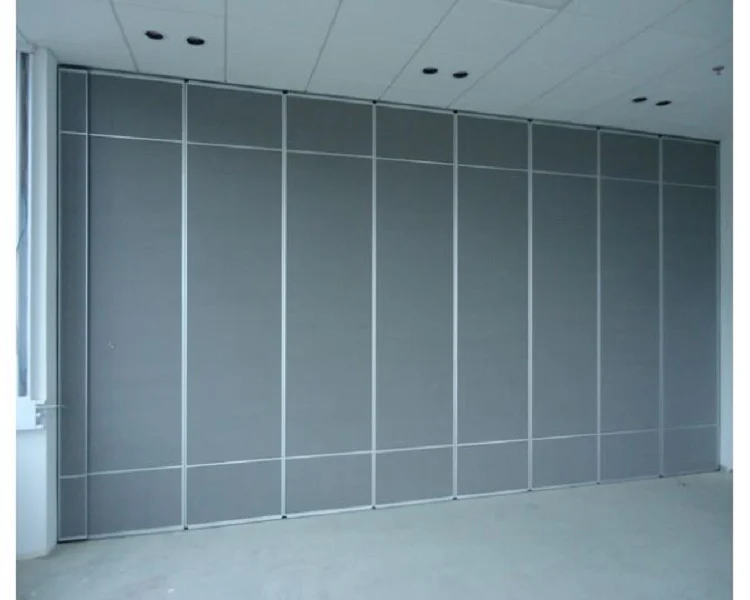
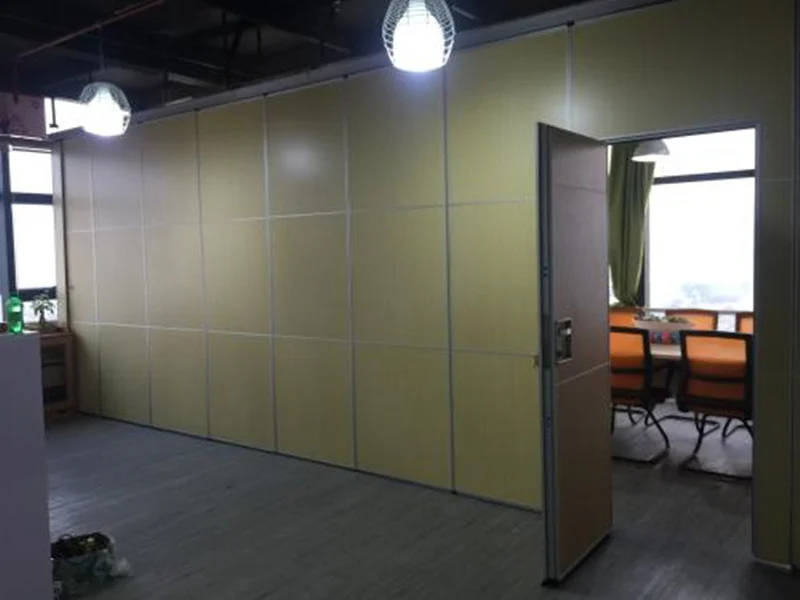
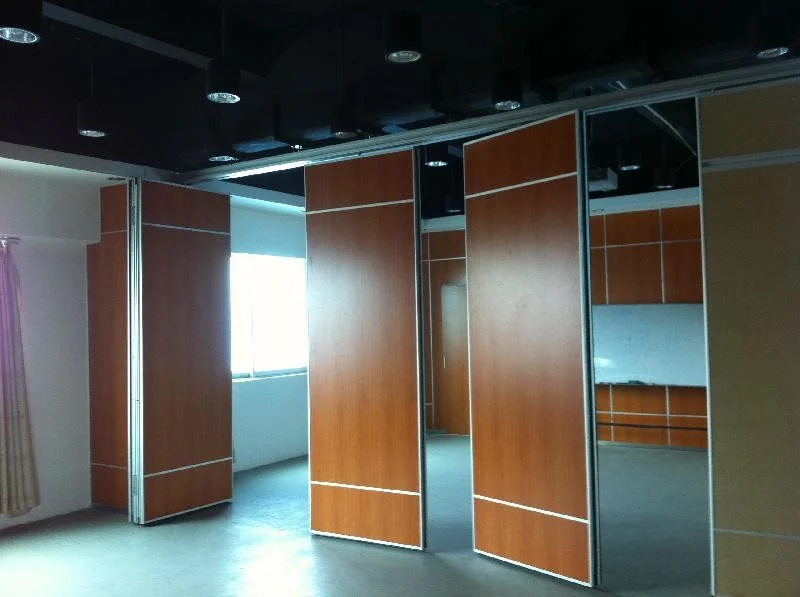
A movable partition package is top-hung: panels are individually movable, suspended from a top track, cross the opening without a floor track, and park at a planned stacking position. That physical logic creates dependencies. The suitability of each route and parking arrangement depends on the approved layout, circulation, ceiling interfaces and operating sequence.
Addenda also touch finishes. Confirmed finish options include laminate, melamine, fabric, leather, glass and other approved surfaces. When a finish is substituted, the reviewer must ask whether the substitution changes the priced schedule only, or also the interface assumptions and the bidder queries already answered.
A Four-Layer Traceability Model
Coordination scope: tender addendum impact traceability.
Treat the addendum as a signal that passes through four layers. Each layer should carry a reference to the layer above it, so a reviewer can walk backward from any priced line to the original instruction.
- Instruction layer: the addendum number, date, clause and the drawing or specification it modifies.
- Scope layer: the affected package elements, such as panel quantities, route geometry, parking arrangement or finish selection.
- Interface layer: the assumptions about support, ceiling coordination, adjacent construction and who provides what.
- Commercial layer: the priced schedule line, the bidder query record and any stated qualification.
If any layer is missing a reference, the trace is broken. A broken trace is not automatically a cost problem, but it is a review problem: the team cannot demonstrate that all bidders priced the same revised scope.
Mapping Scope-Change Propagation Through Priced Schedules
Checklist focus: tender addendum impact traceability.
Priced schedules are where addendum impact becomes visible. The reviewer’s task is to confirm that each affected line was reissued, not merely annotated. A common failure is a schedule that keeps the original line description while the addendum changes the underlying requirement.
Questions to ask of every revised line
- Does the line description still match the current drawing and specification?
- Is the change a substitution, an addition, or a deletion?
- Does the line reference the addendum that caused it?
- Has the bidder confirmed the line without a hidden qualification?
Where a pass-door requirement exists, the reviewer should confirm that the requirement and its documentation are discussed with the supplier rather than assumed from a generic detail. Project documentation can be discussed directly, and that discussion should be recorded in the query log.
Interface Assumptions: The Quiet Source of Scope Drift
Review focus: tender addendum impact traceability.
Interface assumptions are the statements that sit between disciplines. For movable partitions, they often concern the overhead route, the support condition, the ceiling zone and the parking area. The exact route, junction arrangement, continuous overhead path and parking position must be confirmed from the coordinated project drawings.
When an addendum changes a room boundary or a stacking location, the interface assumptions must be rechecked. The exact overhead route and support arrangement must be confirmed by the responsible project team from coordinated drawings. If the answer is unclear, the correct action is to raise a bidder query rather than to infer a resolution.
Bidder Query Records as Traceability Evidence
Bidder queries are not administrative noise. They are the written evidence that a scope point was clarified before pricing. A well-kept query record shows the question, the answer, the addendum it relates to, and the bidders who received the response.
| Query record field | Why it matters for traceability |
|---|---|
| Query reference and date | Links the clarification to a point in time |
| Related addendum or clause | Connects the answer to the instruction that raised it |
| Affected package element | Identifies the scope layer touched by the answer |
| Distribution list | Confirms all bidders priced the same clarified scope |
Where an answer changes a requirement, it should be converted into an addendum rather than left as an informal clarification. Otherwise the priced schedules may diverge while appearing identical.
Acoustic and Dimensional Statements Need Project Confirmation
Seals, junctions and the surrounding construction all influence the outcome, and those details require project-specific confirmation.
Dimensional requirements follow the same rule. Panel heights, route geometry and parking space are coordinated against the actual layout. The reviewer should confirm that the addendum does not introduce a dimensional condition that has not been reviewed. Where the requirement is unclear, the team should confirm project-specific support, acoustic and dimensional requirements before pricing is finalized.
Reviewer’s Checklist Before Accepting a Revised Bid
- Every addendum is logged with a unique reference and date.
- Each affected priced line references the addendum that changed it.
- Interface assumptions are restated where the addendum touches them.
- Bidder queries are closed, distributed and linked to the relevant clause.
- Finish substitutions are checked against the confirmed finish options.
- Pass-door and documentation requirements are discussed and recorded.
- Acoustic and dimensional statements are marked for project-specific confirmation.
This checklist does not replace engineering review. It simply keeps the commercial comparison honest while the technical review continues.
Frequently Asked Questions
What is movable partition wall tender addendum impact traceability?
It is the practice of linking each addendum to the priced schedule lines, interface assumptions and bidder query records it affects, so the revised scope can be reviewed as one connected chain.
Does every addendum change the partition price?
Not necessarily. Some addenda clarify wording without changing scope. The trace exists to show whether a change is commercial, technical or purely editorial, rather than to assume a cost outcome.
How should finish substitutions be handled?
Check the substitution against the confirmed finish options, then confirm whether it affects only the priced line or also the interface assumptions and previously issued query answers.
Can a stacking position change be priced without a layout review?
Stacking and route geometry are reviewed from the layout. A change to the parking position should be checked against the coordinated design before it is treated as a simple line-item adjustment.
What should a bidder query record contain?
At minimum: the query reference, date, related addendum or clause, affected package element, the answer given, and the distribution list confirming which bidders received it.
Are STC or Rw figures a direct decibel count?
No. They are rating concepts used under defined conditions. Site performance depends on the assembly, junctions and surrounding construction, so acoustic requirements need project-specific confirmation.
Conclusion: Trace the Change, Then Compare the Bids
Addendum impact traceability is a review habit, not a single document. When each change is linked from instruction to scope, interface and price, the team can compare revised bids on a like-for-like basis and see where confirmation is still outstanding. For movable partition packages, that means confirming the overhead route, the parking arrangement, the finish selection and any pass-door or documentation requirement against the application reference.
To discuss project documentation, layout review or a specific tender query, contact the EBUNGE team. You can also review the movable wall product range and the planning resources before finalizing your addendum log.