
Quick project answer
Review focus: tender addendum impact mapping.
Movable partition wall tender addendum impact mapping is the discipline of tracing one scope change through every priced line, interface assumption and bidder query record before the bid is closed. In a movable wall package, a single addendum item can touch the top track route, the parking position, the finish schedule and the documentation set. Reviewers who map those links early reduce the risk of comparing bids that no longer describe the same scope.
This framework is deliberately evidence-bounded. It does not assign performance values, prices or engineering conclusions. It shows where to look, what to ask, and which items require project-specific confirmation from the design team.
Why Addenda Rarely Stay Contained in Movable Wall Packages
Project review term: tender addendum impact mapping.
A movable partition package is a connected system. Panels are individually movable, suspended from a top track, cross the opening without a floor track, and park at a planned stacking position. Because the panels, track and parking zone form one route, a change to any one of them can ripple into the others.
Addenda often arrive as short instructions: relocate a stacking bay, change a finish, add a pass-door, or revise a room boundary. Each instruction looks local. In practice, it can alter the priced line items, the interface assumptions with adjacent trades, and the questions bidders need answered before they can price responsibly.
What the addendum actually changes
The exact route, junction arrangement, continuous overhead path and parking position must be confirmed from the coordinated project drawings. The layout review should confirm that every proposed movement path has a continuous connected overhead route and that support conditions are reviewed for the project. If the addendum moves a parking position, the route review is not optional.
A Four-Step Impact Mapping Process for Reviewers
Coordination scope: tender addendum impact mapping.
- Log the change. Record the addendum reference, date, and the exact clause it modifies. Keep the original tender wording beside the revised wording.
- Trace the route. Mark whether the change touches the straight run, a turn, or the stacking position. Note any new interface with structure, ceiling or adjacent finishes.
- Re-price the line items. Identify which priced lines are affected and which remain valid. Do not assume an unchanged line item is unaffected until the route and finish schedule are checked.
- Update the query record. Add the new question to the bidder query log and close it with a written response that all bidders receive.
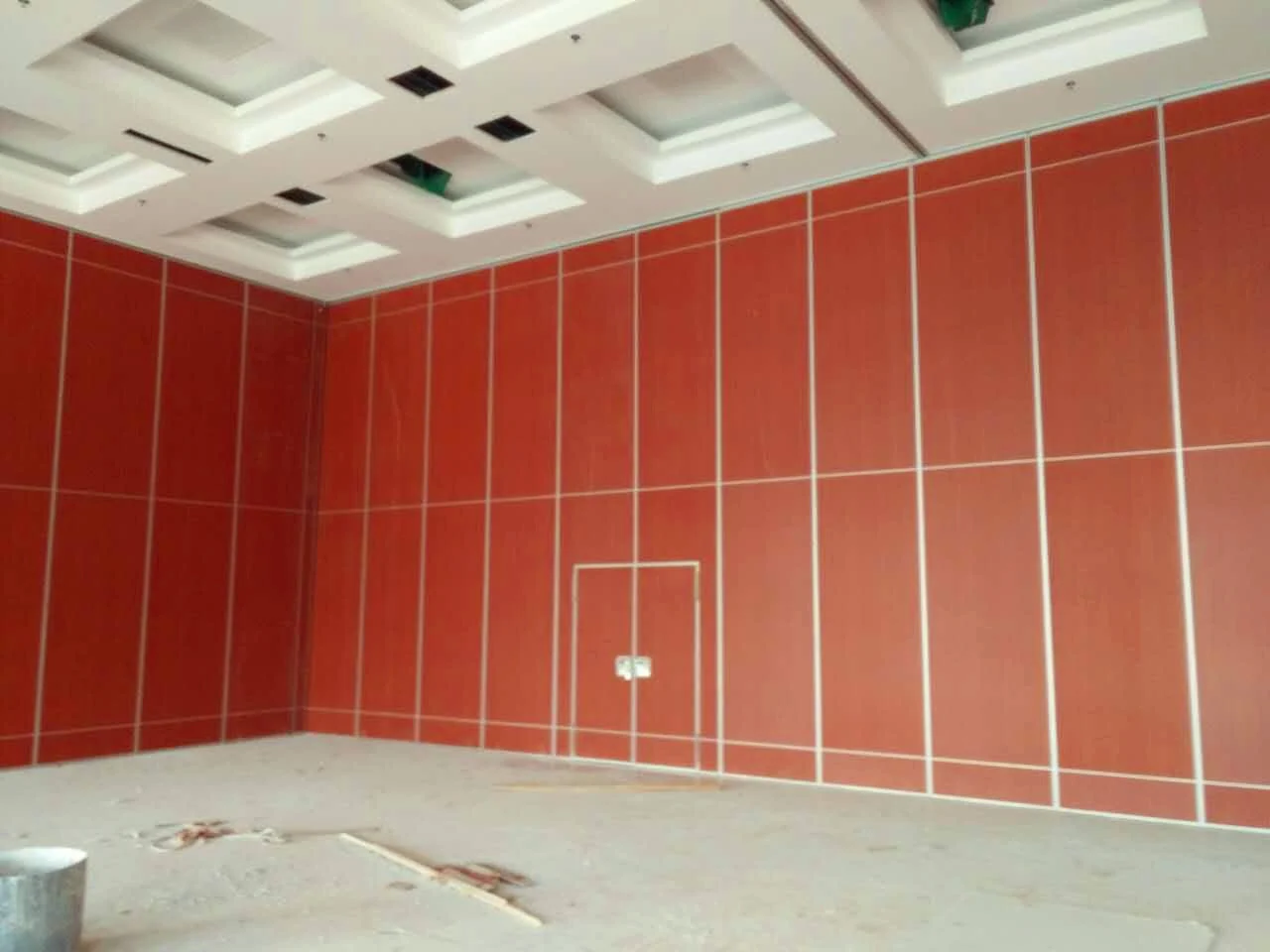
This process keeps the addendum traceable. It also gives the evaluation team a defensible record of why a bid changed between revisions.
Priced Line Items: What to Reconcile After Each Addendum
Checklist focus: tender addendum impact mapping.
Priced line items should be reconciled against the revised scope, not against the original tender.
| Addendum type | Likely affected line | Reviewer action |
|---|---|---|
| Stacking position moved | Route and parking line | Confirm continuous overhead route and support review |
| Finish changed | Finish schedule line | Confirm approved surface and update sample record |
| Pass-door added | Panel configuration line | Confirm pass-door requirement and documentation |
| Room boundary revised | Panel quantity line | Recheck opening width and stacking clearance |
Where a line item cannot be confirmed from the drawings, mark it as an open query rather than a fixed price. This protects both the buyer and the bidder from pricing an assumption that later proves wrong.
Interface Assumptions That Deserve a Second Look
Review focus: tender addendum impact mapping.
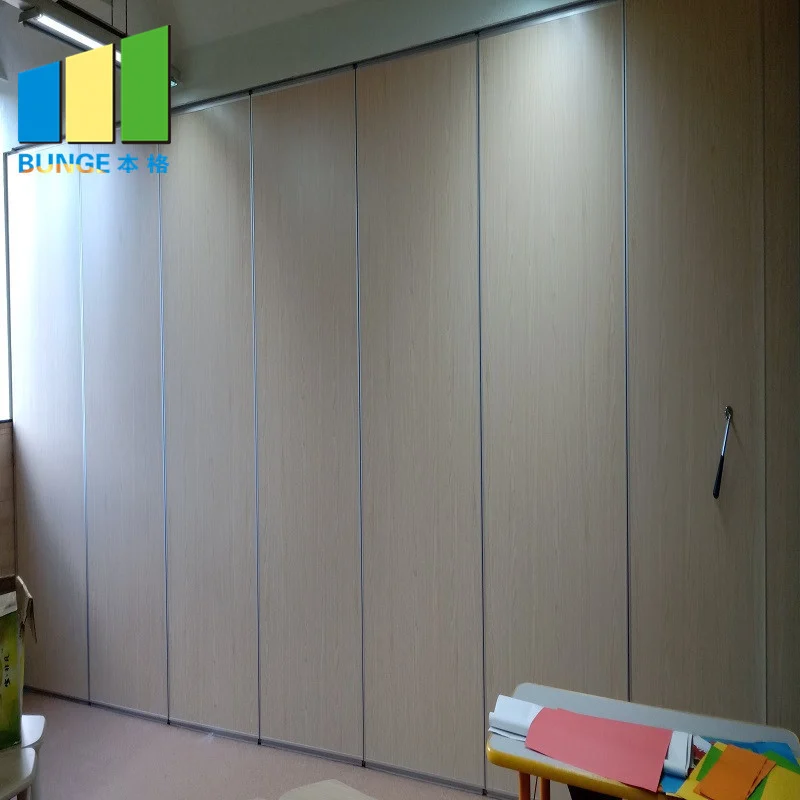
Interface assumptions are the quiet source of addendum drift. The movable wall package meets the ceiling, the structure above, the floor finish, and adjacent partitions. Each interface has a responsible party, and each addendum can shift that responsibility.
Ceiling and structural interface
The exact overhead route and support arrangement must be confirmed by the responsible project team from coordinated drawings. An addendum that changes ceiling height or soffit depth can change the track interface. The suitability of each route and parking arrangement depends on the approved layout, circulation, ceiling interfaces and operating sequence.
Floor and adjacent finish interface
Because panels cross the opening without a floor track, the floor finish runs continuously beneath the partition line. An addendum that changes floor level or finish can affect clearance and parking. Confirm the floor interface with the finishing trade before accepting the revised line item.
Bidder Query Records: Turning Addenda into Comparable Answers
Bidder query records are the audit trail of the tender. When an addendum is issued, every new question should be logged, answered in writing, and distributed to all bidders.
Evidence note: this framework does not assign acoustic, fire, durability or commercial performance. STC and Rw are rating concepts used in project specifications; they are not a direct count of decibels and must be confirmed for the specific assembly and project.
If a bidder answers a query with a qualification, record it as a deviation. Deviations are not automatically disqualifying, but they must be visible in the evaluation matrix so the owner understands what is being compared.
Documentation and Confirmation Boundaries
Project documentation should show the revised layout, the route review, the finish schedule, and the query log. Pass-door requirements and project documentation can be discussed with the supplier, but the final configuration depends on the project drawings and the design team’s confirmation.
Reviewers should also confirm project-specific support, acoustic and dimensional requirements. These are not generic values. They depend on the structure, the ceiling zone, the opening, and the intended use of the space.
FAQ: Tender Addendum Impact Mapping
What is movable partition wall tender addendum impact mapping?
It is the process of tracing each addendum change through the priced line items, interface assumptions and bidder query records of a movable partition wall package so the revised scope stays comparable across bids.
Which addendum changes most often affect the route?
Changes to the stacking position, room boundary or ceiling zone are the most likely to affect the straight, turning or stacking route. Each proposed path needs a continuous connected overhead route and project-specific support review.
Do finish changes affect only the finish line item?
Not always. A finish change may also affect handling assumptions or the parking arrangement if panel dimensions or edge treatment change. Confirm the approved surface and update the sample record.
How should bidder queries be handled after an addendum?
Log every new question, answer it in writing, and distribute the answer to all bidders. Record any qualification as a deviation in the evaluation matrix.
Can acoustic performance be confirmed from the tender drawings alone?
No.
What should be confirmed before pricing a revised line item?
Confirm the route, the support conditions, the finish schedule, the pass-door requirement and the dimensional requirements. If any item is unclear, keep it as an open query rather than a fixed assumption.
Conclusion: Map the Change Before You Compare the Bids
Addendum impact mapping is not extra administration. It is the step that keeps a movable partition wall tender comparable after the scope moves. By tracing each change through routes, line items, interfaces and query records, reviewers can see which bids still describe the same project.
For product context, review the movable wall systems page. For planning resources, see the resources library. To discuss pass-door requirements, documentation or project-specific confirmation, contact the team.