
Quick answer: movable partition wall record dependency
Review focus: movable partition wall record dependency.
Handover rarely fails because a document is missing. It fails because records arrive in the wrong order. A movable partition wall record dependency sequencing map helps project teams order track, stack and panel closeout records by what must be confirmed first, rather than by document type. This planning method is for overseas contractors, architects, interior designers, owners, renovation companies, distributors and construction teams preparing facility acceptance. It does not replace project-specific drawings, support review or acoustic confirmation. Instead, it gives the facility team a logical reading path through the evidence they will actually use.
Why Document-Type Ordering Breaks Down at Acceptance
Project review term: movable partition wall record dependency.
The suitability of each route and parking arrangement depends on the approved layout, circulation, ceiling interfaces and operating sequence. That structure suits the design office, but it does not suit the person receiving an operable wall. Facility teams need to understand how the system moves, where it parks and what closes the opening before they can meaningfully review panel finishes or maintenance information.
When records are ordered by type, the receiver may read a finish schedule before seeing the track route, or review panel elevations before understanding the stacking position. The result is repeated clarification, not because the information is absent, but because the sequence does not match the physical dependencies of a top-hung system.
What the Dependency Sequencing Map Actually Sequences
Coordination scope: movable partition wall record dependency.
A dependency sequencing map is a reading order, not a new document. It groups closeout records into layers where each layer answers a question the next layer depends on. For movable partitions, the physical dependencies follow the system: overhead route, parking position, panel configuration, then finish and operational information.
This map should be reviewed against the approved layout drawings. Straight, turning and stacking routes are reviewed from the layout, so the record sequence should mirror those reviewed routes. Where the layout changes, the sequence may need to be reissued rather than patched.
Layer 1: Track and Overhead Route Records
Checklist focus: movable partition wall record dependency.
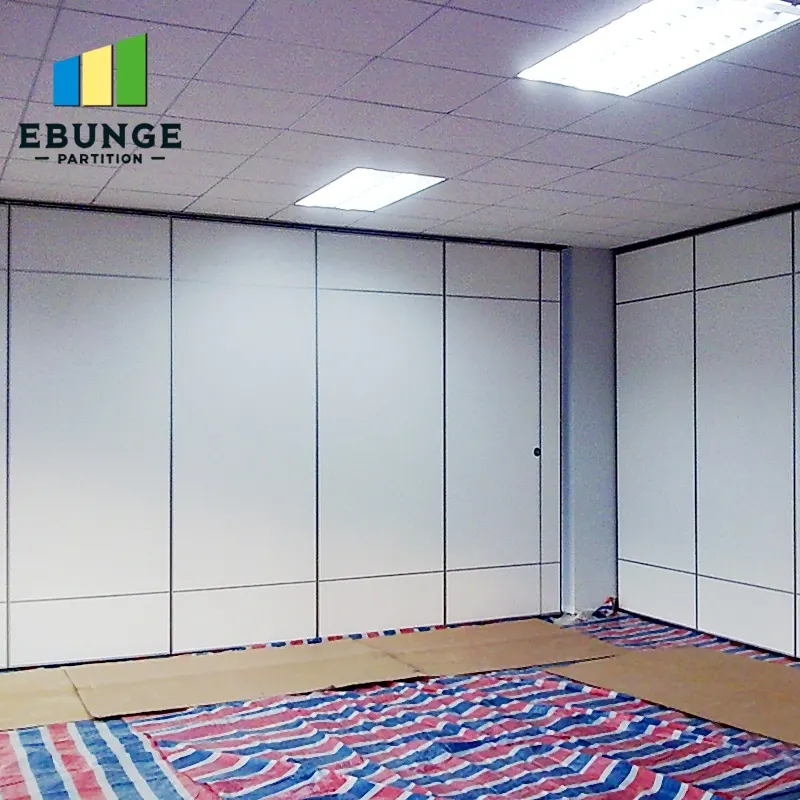
The first layer establishes where the system travels. Because panels are individually movable and suspended from a top track, the overhead route is the foundation of every later record. The exact route, junction arrangement, continuous overhead path and parking position must be confirmed from the coordinated project drawings.
Track records should be read alongside the approved layout to confirm the route, turning points and the relationship to the opening. This article does not provide support calculations, load values or fixing details.
Questions this layer should answer
- Does the overhead route match the approved layout?
- Are turning and junction conditions shown consistently?
- Is the support interface identified for project-specific review?
- Are any deviations recorded with their approval reference?
Layer 2: Stacking and Parking Records
Review focus: movable partition wall record dependency.
Once the route is understood, the receiver can review where panels park. Parking style is customized to the customer layout and project requirements, and may support compact stacking when the coordinated design permits it. The stacking position is a planned location, not an incidental one.
Stack records should connect the parked panel group to the room geometry, adjacent finishes and any clearance shown on the layout. This is also where the facility team begins to understand daily operation: where panels rest, how the opening is cleared and what space remains usable when the wall is open.
Evidence note
Stacking records describe a planned parking position. They do not, by themselves, confirm structural capacity, acoustic performance or clearance for every furniture layout. Confirm project-specific requirements with the responsible design team.
Layer 3: Panel, Pass-Door and Finish Records
With route and parking established, panel records become readable. Panels are individually movable, so panel identification, sequence and any pass-door requirements should be presented in a way that matches the reviewed layout. Pass-door requirements and project documentation can be discussed with the supplier during planning.
Confirmed finish options include laminate, melamine, fabric, leather, glass and other approved surfaces. Those characteristics require separate project-specific confirmation.
Layer 4: Acoustic and Seal Documentation Boundaries
Acoustic records are often the most misunderstood part of a handover package.
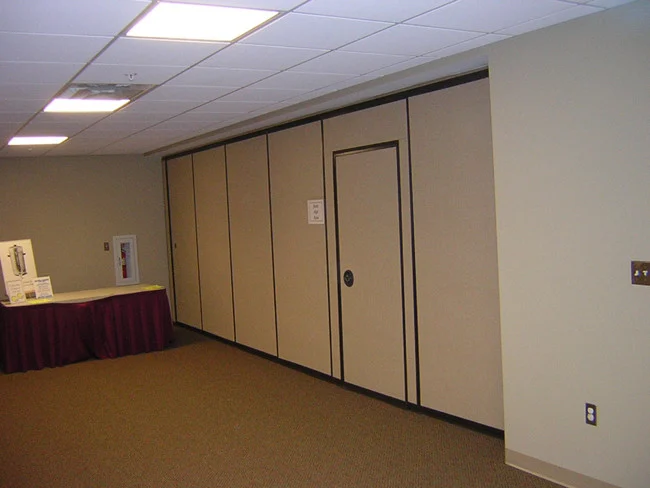
Seals and acoustic concepts can be explained generically, but the actual performance of an installed system depends on the opening, the surrounding construction, the seal condition and the project-specific design. Handover records should state what was specified and what was confirmed, and should direct the facility team to the responsible party for any performance verification.
A Practical Sequencing Checklist for Project Teams
Use this checklist before issuing the closeout package. It is a planning aid, not a substitute for contract requirements or local acceptance procedures.
- Confirm the approved layout revision that the record package references.
- Place track and overhead route records first, with turning and junction conditions.
- Follow with stacking and parking records tied to the same layout revision.
- Add panel identification, pass-door information and approved finish records.
- Include acoustic and seal documentation with clear project-specific boundaries.
- Cross-reference any deviation, substitution or approved change.
- Provide a short reading guide so the facility team knows the intended order.
Common Sequencing Mistakes and How to Avoid Them
One common mistake is issuing finish schedules before the track route is confirmed. Another is treating the stacking position as a detail rather than a dependency. A third is presenting acoustic ratings without the conditions and boundaries that apply to them.
To avoid these, assign one person to own the sequence, not just the documents. That person checks that each layer references the same approved layout and that no record implies a performance or engineering conclusion that has not been confirmed. The goal is a package the facility team can read in order and use during acceptance.
FAQ: Handover Records for Movable Partition Walls
What is a movable partition wall record dependency sequencing map?
It is a planning method that orders closeout records by what must be confirmed first, such as track route, stacking position, panel configuration and finish information, rather than grouping documents only by type.
Why should track records come before panel records?
Because panels are suspended from a top track and move along a continuous connected overhead route.
Do movable partition panels need a floor track?
EBUNGE movable partition panels are top-hung and move without a continuous floor running track or floor hardware along the partition line. The exact overhead route and support arrangement must be confirmed by the responsible project team from coordinated drawings.
Can acoustic ratings be included in handover records?
Actual performance depends on the opening, surrounding construction and project-specific conditions, which should be confirmed by the responsible party.
What finish information should be recorded?
Record the approved finish option for each panel group, such as laminate, melamine, fabric, leather, glass or another approved surface. Do not infer cleaning compatibility or durability from the finish name alone.
Who should own the sequencing map?
A single coordinator should own the sequence and verify that every layer references the same approved layout revision. This reduces clarification during facility acceptance.
Conclusion and Next Step
A movable partition wall record dependency sequencing map turns a pile of closeout documents into a readable handover path. Start with the overhead route, then stacking, then panels and finishes, and keep acoustic and seal documentation within clear project-specific boundaries. Confirm support, acoustic and dimensional requirements with the responsible design team before acceptance.
To discuss pass-door requirements, project documentation or finish options for your layout, contact EBUNGE. You can also review the movable wall product range and browse additional planning resources before finalizing your handover sequence.