
Quick project answer
Review focus: movable partition wall.
A movable partition wall handover register is the controlled list of documents, drawings, confirmations and responsibilities that a project team agrees to exchange before, during and after installation. For overseas B2B teams, the register is not a formality. It is the single place where the client, contractor, architect and supplier can see what has been confirmed, what remains open, and who owns each item. This guide explains how to structure that register and a matching responsibility matrix without inventing performance, cost or engineering conclusions.
Why a Handover Register Matters on Movable Partition Projects
Project review term: movable partition wall.
Movable partitions are top-hung systems. Panels move individually, cross the opening without a floor track, and park at a planned stacking position. Straight, turning and stacking routes are reviewed from the layout. That means handover depends on layout decisions, support coordination and finish approvals, not only on the panels themselves.
A register gives every party a shared reference. It also protects the project from assumptions. If a document is not listed, reviewed and signed off, it should not be treated as confirmed. This is especially important when teams work across time zones, languages and different construction standards.
Core Sections of a Movable Partition Wall Handover Register
Coordination scope: movable partition wall.
A useful register is organized by evidence type, not by department. Each line should state the document name, the responsible party, the required status and the review date. The following sections are a practical starting point.
- Layout and route drawings: plans showing the opening, turning points, stacking position and any pass-door requirement.
- The exact route, junction arrangement, continuous overhead path and parking position must be confirmed from the coordinated project drawings.
- Finish approvals: confirmed finish options such as laminate, melamine, fabric, leather, glass or other approved surfaces.
- Acoustic documentation: any project-specific acoustic requirement and the evidence agreed to demonstrate it.
- Delivery and access records: agreed routes, lifting interfaces and site access constraints.
- Inspection and sign-off sheets: records of visual checks, operation checks and outstanding items.
Do not add performance values to the register unless they are supported by project-specific evidence. A register should record what is confirmed, not what is hoped for.
Building the Responsibility Matrix
Checklist focus: movable partition wall.
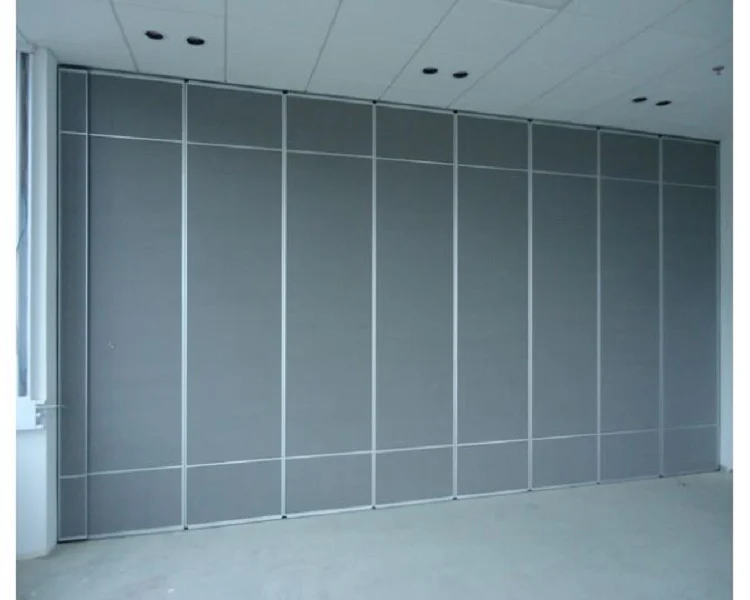
The responsibility matrix sits beside the register. It answers one question for every document: who produces it, who reviews it, and who approves it. A simple matrix prevents the common failure where everyone assumes someone else has checked the support route or the finish sample.
| Document or decision | Producer | Reviewer | Approver |
|---|---|---|---|
| Opening and route layout | Architect or designer | Contractor and supplier | Owner or client representative |
| Support interface confirmation | Structural or site engineer | Contractor | Project manager |
| Finish selection | Interior designer | Owner or client | Project manager |
| Pass-door requirement | Architect or contractor | Supplier | Owner or client representative |
| Acoustic requirement statement | Acoustic consultant or client | Supplier | Project manager |
| Handover inspection record | Contractor | Supplier | Owner or client representative |

Adapt the roles to the actual contract. The matrix is a coordination tool, not a substitute for project-specific engineering or legal review.
Evidence Boundaries Every Team Should State Clearly
Handover documents often drift into unsupported claims. The suitability of each route and parking arrangement depends on the approved layout, circulation, ceiling interfaces and operating sequence. A generic application example does not prove that a system suits a particular room.
Write the boundary into the register.
Evidence note: every comparative, absolute or causal statement in the handover pack should either cite matching project evidence or be rewritten as a confirmation item.
Step-by-Step Handover Process for Overseas Teams
- Agree the register structure and responsibility matrix before fabrication begins.
- Collect layout drawings showing straight, turning and stacking routes.
- Confirm the parking position and whether a pass-door is required.
- Record finish selections and approved samples.
- State acoustic and support requirements as project-specific confirmation items.
- Review the register at each project milestone and close open items.
- Complete a visual and operational inspection before final sign-off.
- Archive the signed register with the project record set.
This sequence keeps the register alive.
Common Coordination Gaps and How to Close Them
Most handover disputes trace back to a small number of gaps. The finish may be selected after the panel order is placed. The pass-door requirement may appear late in the programme.
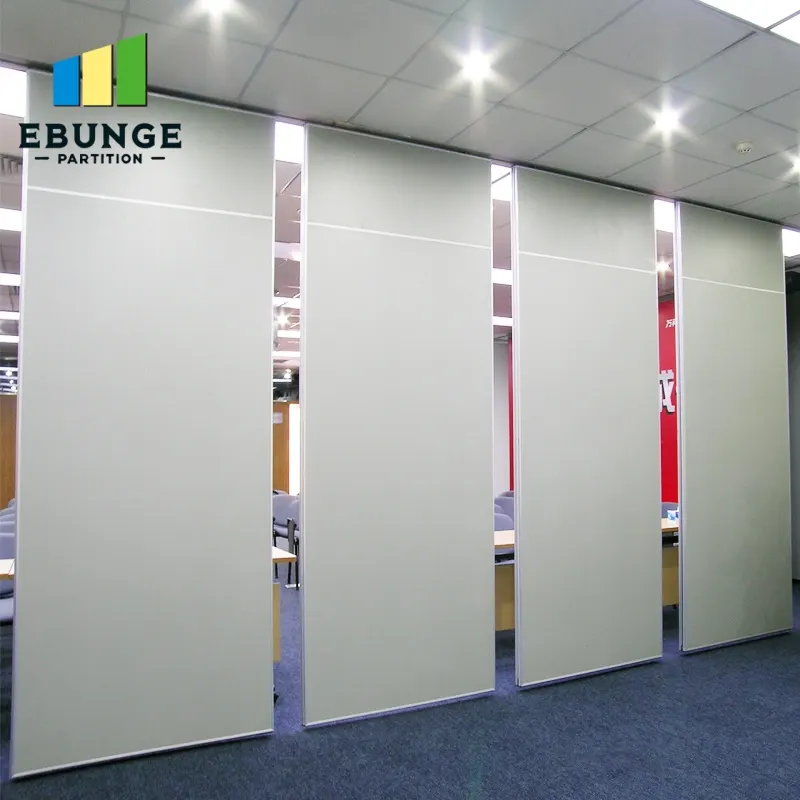
Use the register to surface these gaps early. Assign a named person to each open item and set a review date. When a decision changes, update the register rather than relying on email threads. For product context, see the movable wall systems page and the project resources section.
Frequently Asked Questions
What is a movable partition wall handover register?
It is a controlled list of documents, drawings, confirmations and sign-offs exchanged during a movable partition project. It records what has been agreed and what remains open.
Who should own the handover register?
The project manager or contract administrator usually owns the register, while each responsible party produces and reviews their own documents. The responsibility matrix should name every role.
Does the register need acoustic test data?
Only if the project has a specific acoustic requirement and matching evidence is available. Otherwise, record the requirement as a project-specific confirmation item and avoid unsupported claims.
How are finish options recorded?
List the confirmed finish option, such as laminate, melamine, fabric, leather, glass or another approved surface, together with the approved sample reference and the date of approval.
What should be checked before final sign-off?
Check that the layout, parking position, pass-door requirement, finish approvals, support confirmations and inspection records are complete. Confirm that all open items are closed or formally accepted.
Can the register be used across different countries?
Yes, provided the document names, roles and confirmation boundaries are clear. Translate key terms where needed and confirm project-specific requirements with the local team.
Conclusion and Next Steps
Pair it with a responsibility matrix that names who produces, reviews and approves each item. Keep performance, support and dimensional statements tied to project-specific confirmation rather than assumption.
To discuss pass-door requirements, project documentation or layout review for your next flexible-space project, contact the EBUNGE team.