
Choosing the right movable partition wall finish options for hotel ballrooms is a pivotal decision for any office renovation company undertaking a commercial project. The finish not only defines the aesthetic character of the space but also influences durability, maintenance, and how well the operable wall system integrates with the overall design. This article provides a practical, buyer-focused guide to navigating the many finish possibilities, ensuring your quotation is accurate and your client’s vision is realized without costly surprises.
Direct answer: For hotel ballrooms, the most suitable movable partition wall finish options are high-pressure laminate (HPL), veneer, fabric, and paint-grade surfaces, each offering distinct benefits. HPL excels in durability and low maintenance, veneer provides a premium wood aesthetic, fabric enhances acoustics, and paint-grade allows for maximum customization. The best choice depends on your project’s specific acoustic targets, aesthetic goals, and maintenance budget. Always confirm exact specifications with your supplier and request samples before finalizing your decision.
Movable Partition Wall Finish Options: Understanding the Role of Finishes in Operable Wall Systems
In an operable wall system, the finish is more than a cosmetic layer; it directly impacts acoustic performance, fire safety, and long-term durability. The finish must work in tandem with the acoustic partition solutions to meet the stringent requirements of a hotel banquet hall. For instance, fabric finishes can enhance sound absorption, while rigid surfaces like HPL may reflect sound, affecting the overall acoustic environment. Therefore, your finish choice should be guided by the acoustic target specified in the project drawings.
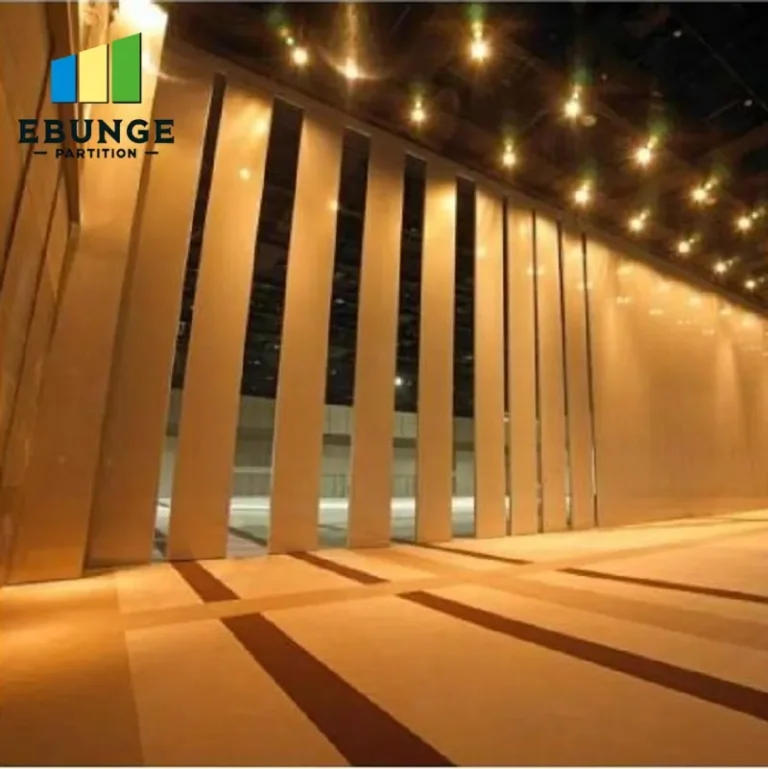
Need help turning the movable partition wall finish options requirements into a practical project layout?
Key Finish Options for Hotel Ballrooms
When evaluating movable partition wall finish options for hotel ballrooms, you will typically encounter these primary categories:
High-Pressure Laminate (HPL)
HPL is a popular choice for high-traffic commercial spaces due to its exceptional scratch and impact resistance. It is available in a vast array of colors, patterns, and textures, including wood grains and solid colors. For a hotel ballroom, HPL offers easy cleaning and long-term durability, making it a cost-effective solution over the life of the partition. However, it may not provide the same level of acoustic absorption as softer finishes.
Veneer Finishes
Natural wood veneer adds a touch of elegance and warmth, ideal for upscale hotel ballrooms. Veneer can be stained to match existing woodwork, creating a seamless integration. It requires more careful maintenance than HPL, as it is susceptible to moisture and scratches. When using veneer, ensure the substrate and adhesive are compatible with the movable partition wall’s structural requirements.
Fabric Finishes
Fabric-wrapped panels are excellent for acoustic control, as the fabric absorbs sound waves, reducing echo and improving speech intelligibility. They are available in a wide range of colors and textures, offering design flexibility. However, fabric can stain and may require professional cleaning. For hotel ballrooms, consider using a high-performance fabric that is both aesthetically pleasing and durable.
Paint-Grade Surfaces
Paint-grade finishes offer the ultimate customization, allowing you to match any color scheme. They are typically applied over a smooth substrate, such as MDF or plywood. While cost-effective initially, paint finishes are less durable than HPL or veneer and may require frequent touch-ups in high-usage areas. They also provide limited acoustic benefits unless combined with additional sound-dampening materials.
Acoustic Performance and Finish Selection
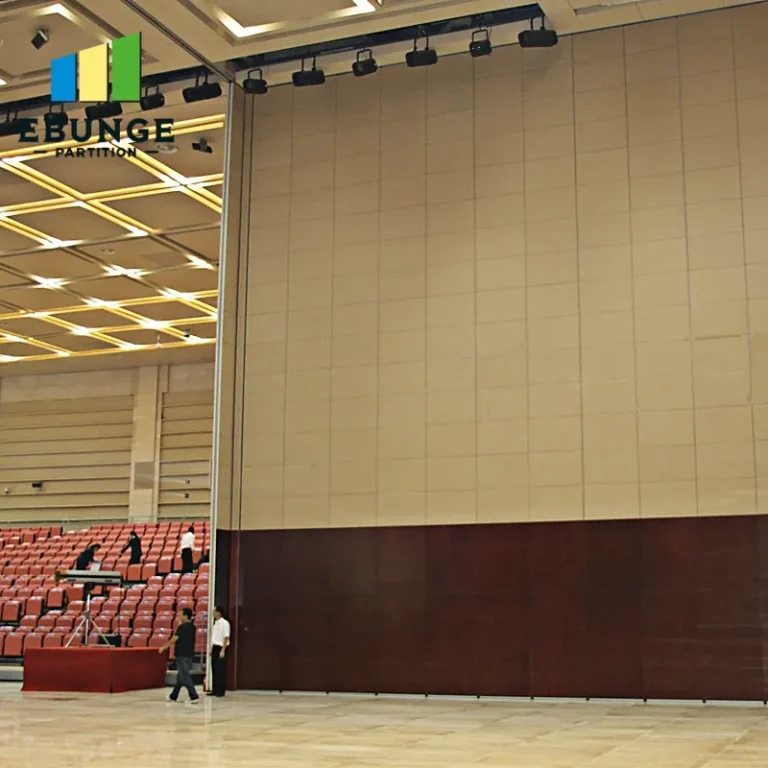
The acoustic performance of a movable partition wall is measured by its Sound Transmission Class (STC) rating, which indicates how well the wall reduces sound transmission. The finish plays a role in this: soft materials like fabric can improve the overall STC by absorbing sound, while hard surfaces may reflect it. When specifying acoustic partition solutions, always verify that the finish does not compromise the required STC rating. For hotel ballrooms, where events may require simultaneous activities, achieving the specified acoustic target is critical.
Durability and Maintenance Considerations
Hotel ballrooms are high-traffic areas, so the finish must withstand frequent use and cleaning. HPL is the most durable option, resisting scratches and stains with minimal maintenance. Veneer requires more care, including periodic polishing and protection from moisture. Fabric finishes may need regular vacuuming and occasional professional cleaning. Paint-grade surfaces are the least durable and may need repainting over time. Consider the long-term maintenance costs when evaluating the overall budget.
Fire Safety and Compliance
All finishes must comply with local fire safety regulations. Most reputable manufacturers provide fire-rated panels, but the finish can affect the fire rating. For example, some fabric finishes are treated with fire retardants, while others are not. Always request the fire test certificate for the specific finish you are considering and ensure it meets the project’s requirements. The finish should also be compatible with the wall’s overall fire rating, as specified in the architectural drawings.
Ease of Operation and Maintenance
The finish can impact the ease of operating the movable partition wall. For instance, fabric finishes may be more susceptible to damage from frequent handling, while HPL is more robust. The top-hung track system, which is standard in EBUNGE partitions, allows for smooth operation without floor rails, but the finish should not hinder the movement. Ensure that the finish is applied evenly and does not create any protrusions that could affect the seal or the operation.
Customization Options for Your Project
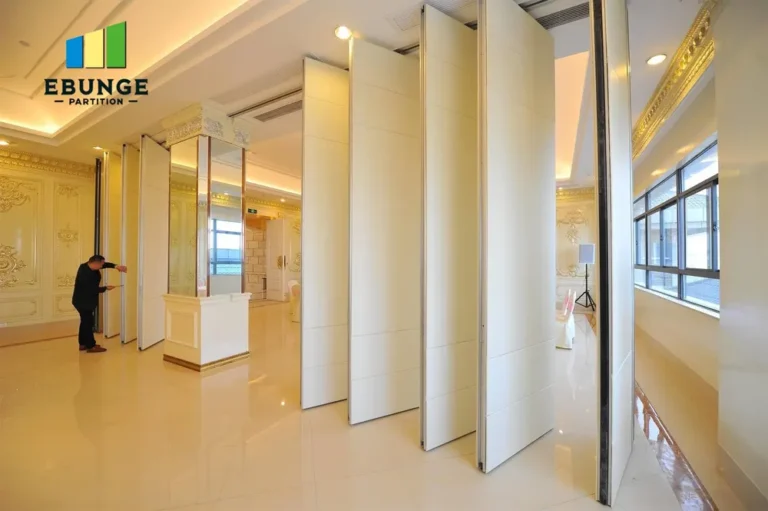
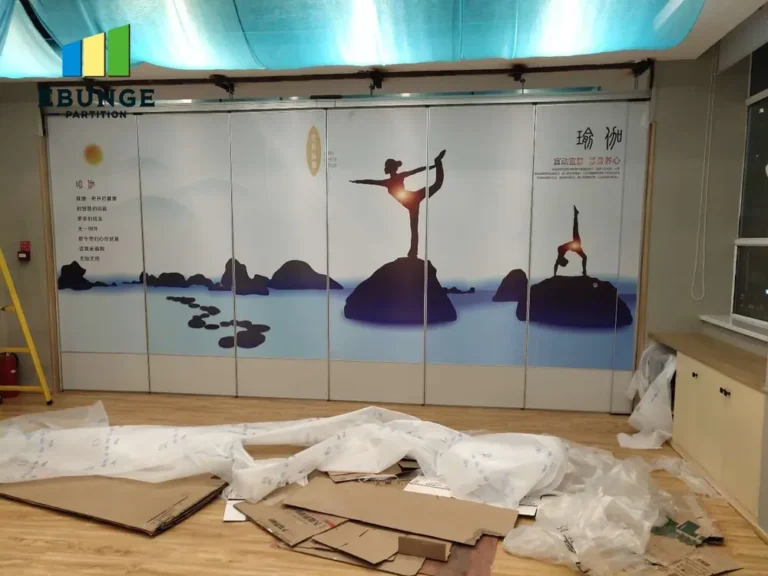
Beyond standard finishes, many manufacturers offer custom options, such as digital printing, custom colors, or mixed materials. For a hotel ballroom, you might want to incorporate the hotel’s branding or create a unique visual impact. However, customization can increase lead times and costs. When requesting a quotation, provide detailed specifications of the desired finish, including color codes, material types, and any special features.
Share the opening, drawings, finish direction, and privacy target for a project-specific review.
Installation Time and Project Coordination
The finish choice can influence installation time. For example, paint-grade surfaces may require on-site finishing, which can extend the project timeline. Factory-applied finishes, such as HPL or veneer, are ready to install upon delivery, reducing on-site work. Coordinate with your supplier to understand the installation implications and plan accordingly. The top-hung track system simplifies installation, but the finish must be carefully handled to avoid damage.
Cost vs. Budget: Getting the Best Value
Finish selection significantly impacts the overall cost of the movable partition wall. HPL is generally cost-effective, while veneer and custom finishes are more expensive. Fabric finishes vary widely depending on the material quality. To stay within budget, prioritize the finishes that meet your acoustic and aesthetic requirements without overspending. Obtain detailed quotations that break down the cost of each finish option, and compare them against your project budget.
Warranty and Support
Before finalizing your finish choice, review the warranty offered by the manufacturer. Some finishes may have different warranty periods. Ensure that the warranty covers not only the partition mechanism but also the finish, especially if it is prone to wear. A good warranty provides peace of mind and protects your investment. Always ask for the warranty terms in writing and confirm what is covered.
Practical Checklist for Specifying Finishes
To ensure you cover all bases, use this checklist when discussing movable partition wall finish options with your client and supplier:
- Confirm the acoustic target (STC rating) required for the ballroom.
- Evaluate the aesthetic requirements: color, texture, and material.
- Assess durability needs based on expected usage and maintenance capability.
- Check fire safety compliance for the chosen finish.
- Consider ease of operation and potential damage from frequent use.
- Review customization options and their impact on lead time and cost.
- Coordinate installation timeline with the finish type.
- Compare costs across finish options and align with budget.
- Verify warranty coverage for both the partition and the finish.
Comparison Table: Finish Options at a Glance
| Finish Type | Durability | Acoustic Contribution | Maintenance | Cost |
|---|---|---|---|---|
| HPL | High | Low (reflective) | Low | Medium |
| Veneer | Medium | Medium | Medium | High |
| Fabric | Medium | High (absorptive) | High | Medium-High |
| Paint-Grade | Low | Low | High | Low |
Conclusion: Making an Informed Decision
Selecting the right movable partition wall finish options for hotel ballrooms requires a careful balance of aesthetics, acoustics, durability, and budget. By understanding the properties of each finish and how they interact with the operable wall system, you can make a decision that meets your client’s needs and ensures a successful project. Always confirm exact specifications with your supplier, request samples, and review all technical data before proceeding.
Frequently Asked Questions
What is the most durable finish for a movable partition wall in a hotel ballroom?
High-pressure laminate (HPL) is generally the most durable, as it resists scratches, impacts, and stains, making it ideal for high-traffic areas.
Can fabric finishes improve the acoustic performance of a movable partition?
Yes, fabric finishes can enhance sound absorption, which may improve the overall STC rating of the wall, but the effect depends on the fabric’s density and the wall’s construction.
Are there fire-rated finish options for movable partitions?
Yes, many manufacturers offer fire-rated finishes, but it is essential to verify that the specific finish meets your project’s fire safety requirements.
How do I choose a finish that matches my hotel’s interior design?
Consider using veneer or custom paint colors to match existing woodwork or décor. Many suppliers offer a range of samples to help you select the perfect finish.
What is the typical lead time for custom finishes?
Lead times vary depending on the manufacturer and the complexity of the finish. Custom finishes may take longer, so plan accordingly and communicate your project timeline.
For more insights on movable partition walls, explore our movable partition wall page, or browse our blogs for design ideas. If you are ready to discuss your project, contact us for personalized guidance.
Send the opening size and drawings to discuss a differentiated movable partition wall finish options solution.