
Quick project answer
Review focus: closeout submittal register.
Handover rarely fails because a folder is missing. The suitability of each route and parking arrangement depends on the approved layout, circulation, ceiling interfaces and operating sequence. For overseas teams, movable partition wall closeout submittal register fields should be planned before the first panel is reviewed, so that every record has a home and every claim has a boundary. This framework treats the register as a retrieval tool, not a marketing document.
Why the Register Is a Planning Tool, Not a Filing Task
Project review term: closeout submittal register.
A closeout register is the index that tells a future reader what exists, where it came from and what still needs confirmation. On a movable partition scope, that index has to survive staff changes, time zones and language differences. If fields are invented late, teams either duplicate records or leave gaps that are hard to explain during final review.
The practical goal is simple: a reviewer should be able to open one register and understand which items are confirmed product facts, which are project-specific decisions, and which remain open. That separation is what makes the register useful long after the handover meeting.
Core Field Groups for a Movable Partition Register
Coordination scope: closeout submittal register.
Grouping fields prevents a flat spreadsheet from becoming unreadable. The groups below are planning categories, not a claim about any specific project outcome.
1. Identity and Location Fields
Record a stable identifier, the room or zone name, the drawing reference and the elevation or layout sheet where the partition line appears. Because named venues are examples only, use the project’s own naming convention rather than a generic label.
2. Movement and Route Fields
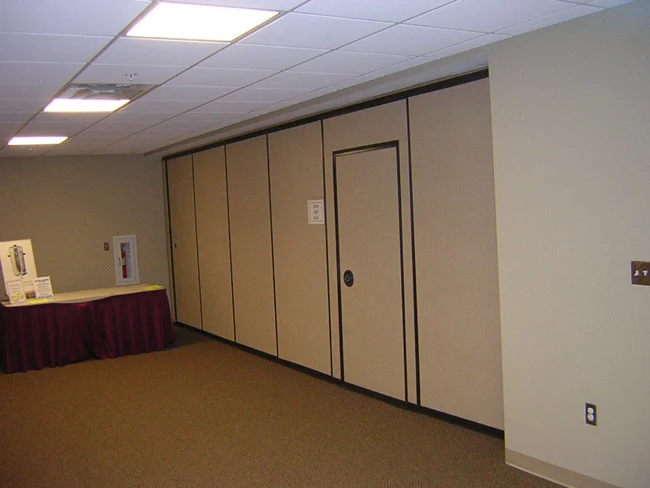
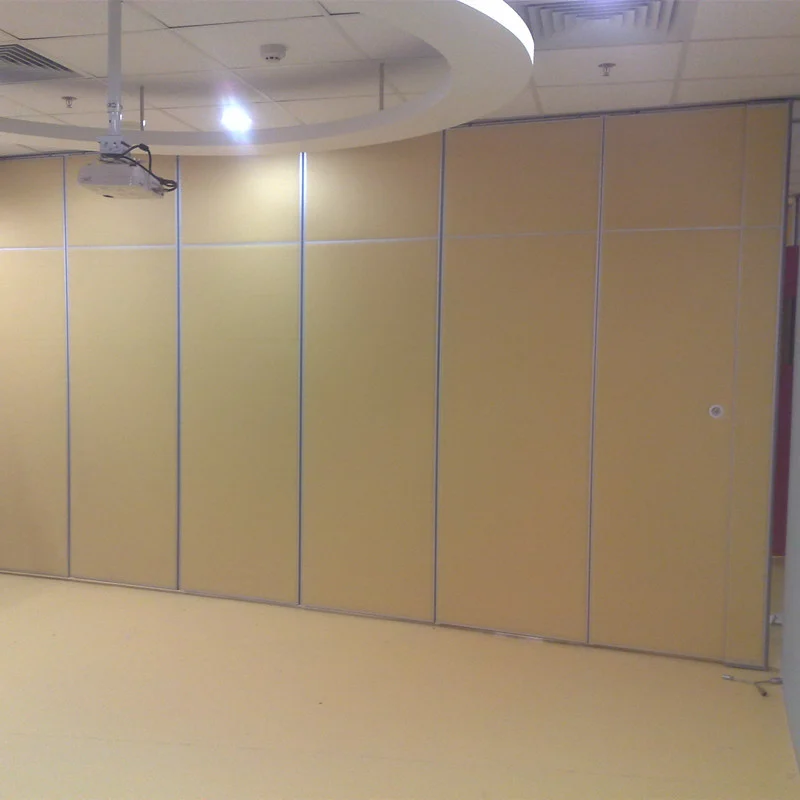
Movable panels are individually movable, suspended from a top track, cross the opening without a floor track, and park at a planned stacking position. The register should therefore reference the reviewed straight, turning and stacking routes, and note that every proposed movement path requires a continuous connected overhead route and project-specific support review.
3. Finish and Surface Fields
Confirmed finish options include laminate, melamine, fabric, leather, glass and other approved surfaces. Record the approved finish reference and the room where it applies.

4. Acoustic and Seal Documentation Fields
The register should point to the project’s own acoustic documentation rather than restating a number without context.
A Field Structure You Can Adapt
The table below is a planning skeleton. Adapt column names to the contract’s own submittal requirements.
| Field group | Example field | Evidence boundary |
|---|---|---|
| Identity | Register ID, room, drawing reference | Project-specific; confirm against issued drawings |
| Route | Straight, turning, stacking route reference | Requires continuous connected overhead route review |
| Finish | Approved finish reference | Finish name alone does not prove performance |
| Acoustic | Acoustic document reference | Confirm project-specific acoustic requirements |
| Pass-door | Pass-door requirement note | Discuss with the project team; do not assume |
| Open items | Action owner and review date | Keep unresolved items visible |
Numbered Process for Building the Register
- Collect the issued layout and identify each movable partition location.
- Assign a stable register ID before any document is attached.
- Map each location to its reviewed straight, turning and stacking routes.
- Record approved finish references without inferring performance.
- List acoustic and pass-door items as document references, not conclusions.
- Mark every unresolved item with an owner and a review date.
- Review the register against the project’s own submittal requirements before issue.
Evidence Notes: What the Register Should Not Claim
Do not derive hidden acoustic, fire, durability, load, maintenance, certification or commercial performance from a visible shape, finish, photograph or drawing. Comparative, absolute and causal statements require corresponding evidence; otherwise state the exact project-specific confirmation boundary.
This note is the discipline that keeps a register credible. A field can say that a document exists. It should not say what the document proves unless that evidence is actually attached and reviewed.
Coordination Across Overseas Teams
Overseas coordination adds distance, not new rules. The register should be readable without a phone call: consistent IDs, plain field names and a clear open-items section. Where language differs, keep the field labels short and put longer explanations in a linked note.
For product context, see the movable wall product page. For general planning material, the resources section collects supporting reading. The exact route, junction arrangement, continuous overhead path and parking position must be confirmed from the coordinated project drawings.
FAQ: Closeout Submittal Register Planning
What is a movable partition wall closeout submittal register?
It is an indexed record of handover documents and open items for the movable partition scope. It helps a reviewer find what exists and what still needs confirmation.
Which fields are essential?
At minimum: a stable ID, room or zone, drawing reference, route reference, finish reference, acoustic document reference, pass-door note and an open-items section.
Can the register state acoustic performance?
It should reference the project’s acoustic documentation.
How should movement routes be recorded?
Reference the reviewed straight, turning and stacking routes. Every proposed movement path requires a continuous connected overhead route and project-specific support review.
Do finish names prove performance?
No. A finish reference identifies an approved surface option.
When should the register be started?
Start it when the layout is first reviewed, then update it as decisions are confirmed. Late registers tend to duplicate records and hide open items.
Conclusion and Next Step
It does something more useful: it makes the handover traceable. Plan the fields early, separate confirmed facts from project-specific evidence, and keep unresolved items visible until they are closed.