
Quick answer: closeout submittal dependency map
Review focus: closeout submittal dependency map.
A movable partition wall closeout submittal dependency map is a planning tool that shows which handover records depend on which upstream trade activities. It helps overseas contractors, architects, interior designers and owners assemble documentation in a defensible sequence instead of collecting files at the end. This framework is about sequencing and evidence boundaries, not about promising performance. Every project still requires its own drawing review, support confirmation and acoustic coordination.
Why Closeout Submittals Depend on Upstream Trade Records
Project review term: closeout submittal dependency map.
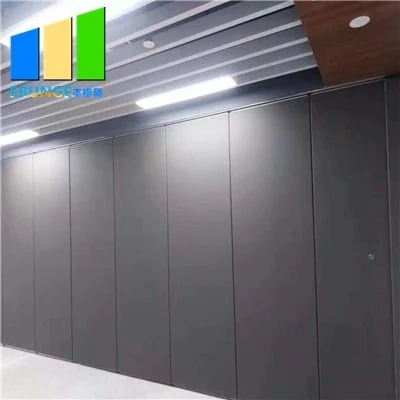
Movable partition panels are individually movable, suspended from a top track, cross the opening without a floor track, and park at a planned stacking position. That simple description hides a chain of dependencies. The overhead route must be continuous and supported. The parking zone must be coordinated with adjacent finishes and services. Panel finishes must match approved samples. Each of these items produces a record that another trade must first provide.
When teams treat closeout as a single collection task, they often discover missing records late. A dependency map makes the sequence visible early, so requests go to the right trade at the right time.
Core Record Groups in a Movable Partition Handover Package
Coordination scope: closeout submittal dependency map.
Most closeout packages can be organized into three record groups. The exact contents depend on the specification, contract and local requirements, but the grouping helps teams assign responsibility.
- The exact route, junction arrangement, continuous overhead path and parking position must be confirmed from the coordinated project drawings.
- Stack and parking records: approved stacking position, clearance coordination with adjacent elements, and confirmation that the parking zone remains available at handover.
- Panel records: approved finish samples, panel schedule, pass-door requirements where specified, and any project documentation agreed during the submittal process.
These groups are not independent. A panel schedule cannot be finalized until the opening and stacking layout is confirmed. A stacking position cannot be approved until the surrounding trades have coordinated their work.
Building the Dependency Map: A Step-by-Step Sequence
Checklist focus: closeout submittal dependency map.
The following sequence is a planning aid. It does not replace project-specific engineering, acoustic or dimensional confirmation.

- Confirm the layout routes. Review straight, turning and stacking routes from the project layout. Identify every point where the overhead route must remain continuous and supported.
- Assign the support record owner. Determine which trade or discipline is responsible for confirming the overhead support condition, and record that responsibility in the submittal register.
- Freeze the stacking position. Coordinate the planned parking location with adjacent walls, services and finishes before panel production records are requested.
- Approve finishes and pass-door requirements. Confirm laminate, melamine, fabric, leather, glass or other approved surfaces, and clarify any pass-door needs with the project team.
- Link each submittal to its upstream record. In the register, note which trade record must be received before each closeout item can be considered complete.
- Review dependencies before each trade handover. Revisit the map at each stage so that late changes do not silently invalidate earlier records.
Dependency Map at a Glance
The table below shows a simplified dependency logic. It is a planning example, not a contractual requirement list.
| Closeout record | Depends on | Typical upstream owner |
|---|---|---|
| Track route confirmation | Reviewed layout and overhead support coordination | Structural or ceiling trade |
| Stacking position approval | Adjacent finishes and services coordination | Finishing and MEP trades |
| Panel finish approval | Approved samples and specification | Design team and supplier |
| Pass-door record | Confirmed pass-door requirement | Project team and supplier |
Coordinating Track, Stack and Panel Records Across Trades
Track records usually sit between the partition supplier and the trade responsible for the overhead structure. Stack records sit between the partition layout and the finishing trades. Panel records sit between the design team and the supplier. Each interface needs a named contact and a defined review point.
A useful practice is to hold a short coordination review before each trade completes its work. The review checks whether the overhead route remains continuous, whether the stacking zone is still clear, and whether finish approvals are still valid. This is not a performance test; it is a documentation checkpoint.
Evidence Boundaries and Acoustic Concepts
The suitability of each route and parking arrangement depends on the approved layout, circulation, ceiling interfaces and operating sequence.
Evidence note: Do not infer acoustic, fire, durability, load or maintenance performance from a finish sample, photograph or drawing. Confirm project-specific support, acoustic and dimensional requirements before relying on any closeout record.
Seals and acoustic concepts can be explained generically, but the actual configuration must be confirmed for the project. The same applies to support points, clearances and dimensional tolerances.
Common Sequencing Mistakes to Avoid
One common mistake is requesting panel finish approvals before the stacking layout is fixed. Another is treating the overhead support record as a supplier-only item when it depends on another trade. A third is leaving pass-door requirements until after panel records are issued.
These mistakes are avoidable when the dependency map is reviewed at each trade handover. The map should be a living document, not a one-time checklist.

Frequently Asked Questions
What is a movable partition wall closeout submittal dependency map?
It is a planning document that links each closeout submittal to the upstream trade record it depends on, so records are requested and reviewed in a logical sequence.
Does every project need the same dependency map?
No. The structure can be similar, but the specific dependencies depend on the layout, trades, contract requirements and project-specific support and acoustic confirmation.
When should the dependency map be created?
It is most useful during early coordination, before track, stack and panel records are requested, and it should be updated as the project progresses.
Can the supplier provide all closeout records alone?
No. Some records depend on other trades, such as overhead support coordination or adjacent finish confirmation. The map should identify those interfaces clearly.
How are acoustic ratings handled in closeout documentation?
They should be confirmed against the required specification and tested assembly, not assumed from a generic description.
What should be confirmed before handover?
Confirm project-specific support, acoustic and dimensional requirements, and verify that all linked upstream records have been received and reviewed.
Conclusion and Next Steps
A movable partition wall closeout submittal dependency map helps project teams sequence track, stack and panel records across trades. It does not replace engineering, acoustic or dimensional confirmation, but it makes the documentation process more defensible and less ad hoc. Start by listing the record groups, assign upstream owners, and review dependencies at each trade handover.
To discuss project documentation, pass-door requirements or layout review for your next flexible-space project, contact EBUNGE. You can also review the movable wall product range and browse additional project resources for planning guidance.