
Quick project answer
Review focus: closeout record retrieval drill.
A movable partition wall closeout record retrieval drill is a rehearsal, not a filing exercise. It tests whether a facility team can actually locate, open and interpret the handover documentation for a top-hung partition installation while a room is needed, a contractor is on site, or an operator is standing at the stacking position waiting for an answer. The drill assumes nothing about the quality of the folder. It measures retrieval under time pressure.
This framework is written for overseas contractors, architects, interior designers, owners, renovation companies, distributors and construction teams who inherit or hand over flexible-space installations. It binds every recommendation to maintained product facts, visible evidence limits and project-specific drawing review. The suitability of each route and parking arrangement depends on the approved layout, circulation, ceiling interfaces and operating sequence.
Why a Filed Closeout Record Is Not a Usable One
Project review term: closeout record retrieval drill.
Closeout documentation for a movable partition wall typically includes drawings, finish schedules, route information and coordination notes. A document can be complete and still be unusable if nobody can find the correct revision, identify which panel group it describes, or explain what a note means without calling the original installer.
The gap is not storage. The gap is retrieval and interpretation. A retrieval drill exposes that gap before a real query arrives. It also reveals whether the record set reflects the installed condition or only the intended condition.
What the drill can and cannot prove
A drill can prove that a named person found a named document within a defined timeframe and could read it. Those require project-specific evidence and confirmation. Keep the drill focused on access and comprehension.
Define the Query Response Timeframe Before the Drill
Coordination scope: closeout record retrieval drill.
A query response timeframe is the maximum elapsed time allowed between a question being raised and a usable answer being produced. Define it by query type, not by a single blanket number. A question about the stacking position is different from a question about a finish schedule revision.
Set the timeframe with the facility team, the owner and the handover coordinator. Record it in the closeout index. The timeframe is a project decision, not a product specification.
Suggested query categories
- Route queries: where panels travel, turn and park, based on the reviewed layout.
- Finish queries: which approved surface applies to which panel group.
- Pass-door queries: whether a pass-door requirement was discussed and how it is documented.
- Revision queries: which drawing set matches the installed condition.
- Contact queries: who to ask when the record is silent or ambiguous.
Run the Retrieval Drill in Four Numbered Steps
Checklist focus: closeout record retrieval drill.

- Assign a questioner and a retriever. The questioner uses realistic facility questions. The retriever works only from the closeout record set.
- Start the clock. Record the time from question to a document being opened and read aloud.
- Score interpretation, not just location. Mark whether the retriever could explain the answer without guessing or calling the installer.
- Log every failure. Note missing files, wrong revisions, unclear notes and unanswered questions for follow-up.
Run the drill at least once before final handover and once after any major renovation. Repeat it when the facility team changes. A drill that only the original project manager can pass is not a completed handover.
Build a Closeout Index That Survives Staff Changes
Review focus: closeout record retrieval drill.
The index is the front door to the record set. It should list document names, revision dates, the panel group or route each document covers, and the person responsible for answering queries. Keep it short enough to read in one sitting.
Link the index to the reviewed layout drawings. Straight, turning and stacking routes are reviewed from the layout, so the index should point to the drawing that shows those routes. If a route changed during installation, the index should say so.
Evidence note
Confirm project-specific support, acoustic and dimensional requirements before treating any closeout record as final. A drawing or finish sample does not by itself establish performance, capacity or compliance.
Query Response Timeframe Framework by Query Type
Project review term: closeout record retrieval drill.
Use a compact framework so the team knows what “fast enough” means. The table below is a planning structure, not a contractual promise. Adjust it to the project and record the agreed values.
| Query type | What must be produced | Timeframe owner |
|---|---|---|
| Route or stacking position | Reviewed layout drawing and parking note | Facility lead |
| Finish schedule | Approved finish list by panel group | Handover coordinator |
| Pass-door requirement | Recorded coordination note | Project manager |
| Revision conflict | Latest issued drawing set | Design lead |
| Unresolved question | Named contact and response path | Owner representative |

Review the framework after the first drill. If one query type consistently fails, the problem is usually the index or the revision control, not the timeframe.
Interpretation Failures That Drills Commonly Expose
Coordination scope: closeout record retrieval drill.
Retrieval is only half the test. Interpretation failures are more expensive because they look like success. A retriever finds a drawing, reads a note, and gives an answer that does not match the installed condition.
Common causes include mixed revision sets, finish schedules that do not identify panel groups, route notes that describe an earlier layout, and pass-door requirements recorded in meeting minutes but not in the closeout index.
Checklist for interpretation readiness
- Every document names the panel group or route it covers.
- Every revision has a date and an issuer.
- Route drawings show straight, turning and stacking paths as reviewed.
- Finish references match the approved surface list.
- Pass-door requirements are recorded where a facility team will look.
- At least one named contact can answer questions the record does not cover.
Coordinate Handover Documentation Across Project Parties
Checklist focus: closeout record retrieval drill.
Handover Documentation coordination fails when each party keeps its own copy. Contractors, designers, owners and facility teams should agree on one master index and one revision rule before the drill. The rule can be simple: the index points to the latest issued document, and superseded documents are marked.
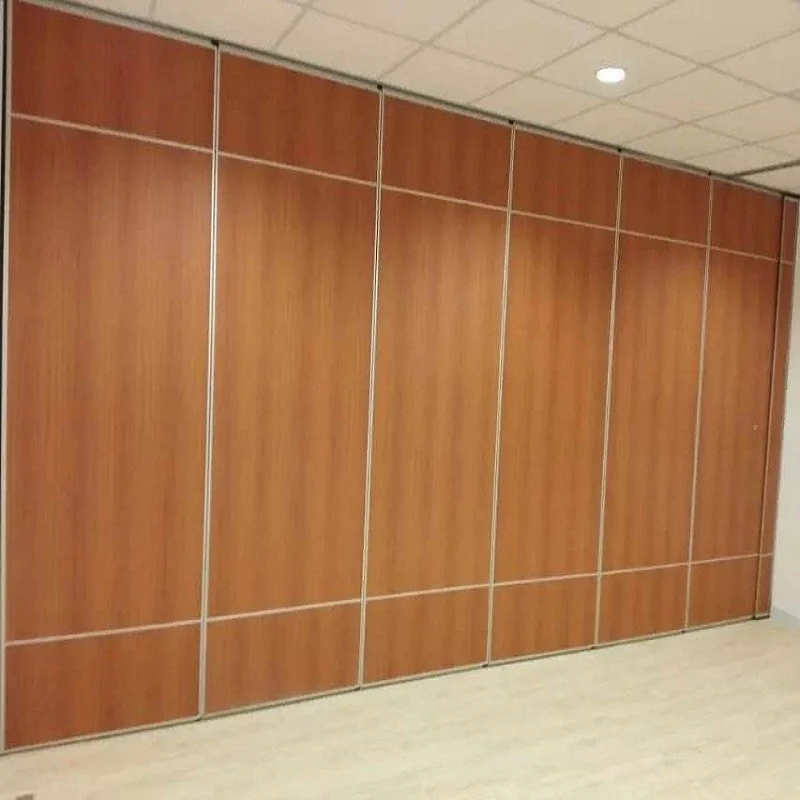
Movable partition panels are individually movable, suspended from a top track, cross the opening without a floor track, and park at a planned stacking position. The closeout record should make those facts traceable to the reviewed layout, without implying performance that has not been confirmed.
For product context, see the movable walls range. For general planning material, see the resources library. When a query cannot be resolved from the record, use the contact page to reach the project team.
FAQ: Closeout Record Retrieval Drills
How often should a facility team run a movable partition wall closeout record retrieval drill?
Run one before final handover, one after any renovation that changes routes or finishes, and one whenever the facility team changes. The goal is to confirm that the current team can retrieve and interpret the record without relying on memory.
What is a reasonable query response timeframe?
Set it by query type with the owner and handover coordinator. A route question may need a drawing, while a finish question may need a schedule. Record the agreed timeframe in the closeout index rather than assuming a single number fits every query.
Does a retrieval drill prove acoustic performance?
No. A drill tests access and interpretation. Do not treat a located document as proof of performance.
What should the closeout index contain?
Document names, revision dates, the panel group or route each document covers, and the person responsible for answering queries. Keep it linked to the reviewed layout drawings and mark superseded documents clearly.
How do we handle a question the record cannot answer?
Log it during the drill and assign a named contact and response path. The exact overhead route and support arrangement must be confirmed by the responsible project team from coordinated drawings.
Can the drill be run without the original installer present?
Yes, and it should be. The purpose is to test whether the record set works for the people who will use it. If the drill only succeeds with the installer present, the handover is incomplete.
Conclusion: Rehearse Retrieval Before You Need It
A closeout record is only as good as the team’s ability to find and read it under pressure. The retrieval drill and query response timeframe framework turn handover documentation into a tested capability rather than a stored file. Start with a small question set, run the drill, log the failures, and fix the index before the next query arrives.
Confirm project-specific support, acoustic and dimensional requirements with the project team. For movable partition wall planning and handover coordination, contact EBUNGE to discuss your project documentation needs.