
Quick answer: movable partition wall closeout record
Review focus: movable partition wall closeout record.
In overseas construction and fit-out projects, the movable partition wall closeout record handover trigger is often left undefined until the final weeks of a programme. That delay creates friction between contractors, architects, owners and distributors because no one has agreed which completed actions formally start the handover clock. This article offers a planning framework, not a project-specific outcome. Every recommendation must be checked against the coordinated drawings, the approved submittals and the project-specific support, acoustic and dimensional requirements confirmed for your building.
Why the Handover Trigger Needs a Written Definition
Project review term: movable partition wall closeout record.
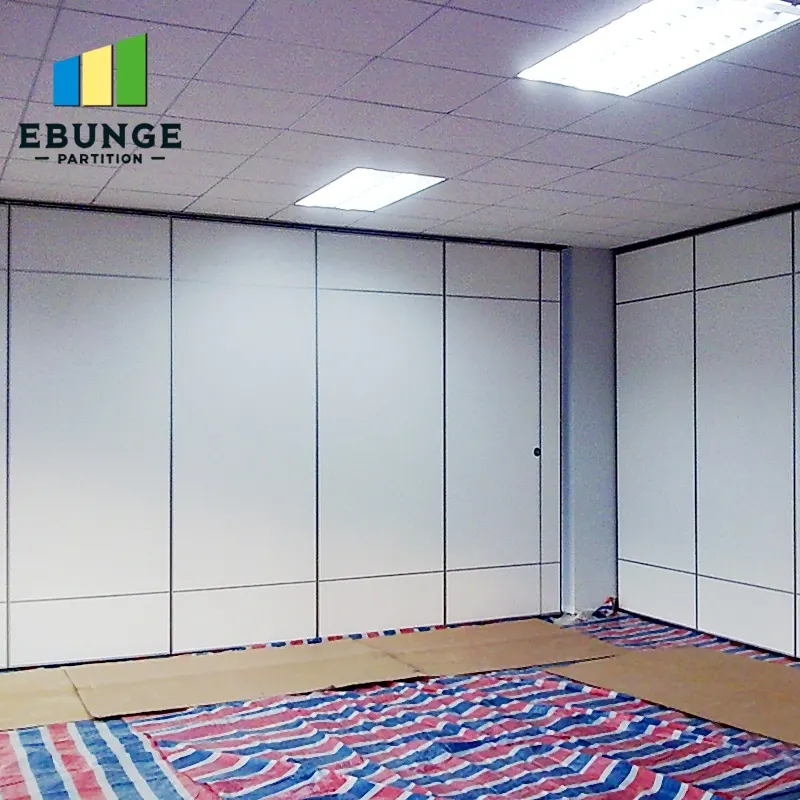
A movable partition is not a static wall. Panels are individually movable, suspended from a top track, cross the opening without a floor track, and park at a planned stacking position. Because the system involves movement paths, parking zones and interface conditions, the evidence that proves completion is broader than a visual inspection of a closed elevation.
Without a written trigger, teams may disagree about whether handover begins after installation, after the first successful movement test, or after documentation is compiled. The trigger should be a defined event or set of events recorded in the project quality plan, not an informal verbal milestone.
Core Records That Support a Closeout Package
Coordination scope: movable partition wall closeout record.
Closeout documentation for a movable partition installation typically draws on several record families. The exact list depends on the contract, the jurisdiction and the project specification. The categories below are planning prompts, not a claim that every project requires every item.
- Approved layout drawings showing straight, turning and stacking routes reviewed from the layout.
- Track and support coordination records confirming the overhead route is continuous and connected where movement is proposed.
- Finish confirmation for laminate, melamine, fabric, leather, glass or other approved surfaces.
- Pass-door requirements and any agreed project documentation discussed with the supplier.
- Inspection and observation records tied to the agreed acceptance window.
- Operation and maintenance information appropriate to the delivered configuration.
Each record should be traceable to a drawing revision or an approved submittal. A closeout package that cannot be traced back to coordinated documents is difficult to defend during acceptance.
Defining the Closeout Record Handover Trigger
Checklist focus: movable partition wall closeout record.
The trigger is the point at which the contractor formally declares that the installation and its supporting records are ready for the owner’s review. It should be written so that both parties can independently verify whether the condition has been met.
Trigger options to discuss with the project team
- Completion of installation and parking-zone readiness as shown on the coordinated layout.
- Successful demonstration that panels move along the reviewed routes and park at the planned stacking position.
- Submission of the agreed record set, including drawing revisions and finish confirmations.
- The exact overhead route and support arrangement must be confirmed by the responsible project team from coordinated drawings.
- Written notice from the contractor stating that the trigger condition has been achieved.
Some contracts combine these into a single trigger; others separate physical completion from documentation completion. The important planning step is to decide which model applies and to record it before installation begins.
Structuring the Acceptance Window
An acceptance window is the period during which the owner or their representative reviews the installation and the closeout records. It should have a defined start, a defined duration and a defined method for recording observations.
Practical elements of an acceptance window
- A start date tied to the written trigger notice.
- A review checklist aligned with the approved drawings and finish schedule.
- A named person or role responsible for recording observations.
- A process for classifying observations as closed, pending information or requiring re-inspection.
- A defined point at which the window closes and the record set is considered accepted or returned.
The suitability of each route and parking arrangement depends on the approved layout, circulation, ceiling interfaces and operating sequence.
Evidence Boundaries During Handover
Handover is an evidence-bounded activity. Visible references can support layout discussion but do not verify hidden construction or performance. Those characteristics require matching project evidence.
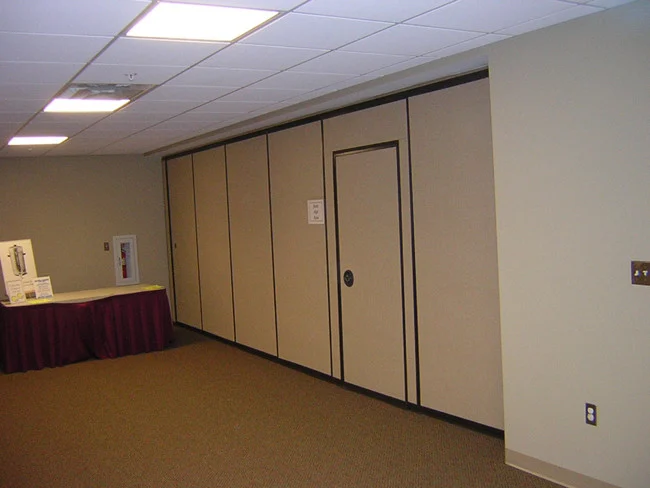
Planning note: do not infer hidden performance from a visible shape, finish or drawing. Confirm project-specific support, acoustic and dimensional requirements before relying on any closeout statement.
This boundary protects both the contractor and the owner. It also keeps the closeout conversation focused on what can be verified against approved documents.
Coordination Roles and Information Flow
The contractor typically manages installation records and trigger notices. The architect or designer confirms that finishes and layout intent match the approved submittals. The owner or their representative manages the acceptance window and records observations.
Distributors and suppliers can support the process by providing the documentation agreed for the project. Because pass-door requirements and project documentation can be discussed, those items should be raised during coordination rather than assumed at the end.
Common Planning Gaps to Avoid
Several recurring gaps delay movable partition handover. The trigger is described only verbally. The acceptance window has no defined start. Movement routes are reviewed without confirming the overhead support condition. Finish approvals are separated from the closeout package. Observations are recorded without a closure process.
Each gap can be addressed in the project quality plan. The goal is not to add bureaucracy but to make the handover condition verifiable by both sides.
FAQ: Closeout Records and Acceptance Windows
What is a movable partition wall closeout record handover trigger?
It is the defined event or set of events that formally starts the handover process for a movable partition installation. It should be written into the project quality plan and verifiable against approved drawings and records.
When should the trigger be agreed?
Ideally before installation begins, or at the latest during the coordination stage when layout, support and finish decisions are still open. Late agreement increases the risk of disputed completion.
How long should an acceptance window last?
The duration is project-specific and should be stated in the contract or quality plan. What matters is that the window has a defined start, a review method and a closure process.
Does a closed partition elevation prove acoustic performance?
No. The exact route, junction arrangement, continuous overhead path and parking position must be confirmed from the coordinated project drawings.
What records should be included in the closeout package?
The package should follow the project specification. Typical categories include approved layout drawings, support coordination records, finish confirmations, inspection records and agreed operation and maintenance information.
Can pass-door requirements be included in handover documentation?
Pass-door requirements and project documentation can be discussed with the supplier and should be confirmed for the specific project. They should not be assumed from a generic example.
Conclusion and Next Steps
A clear movable partition wall closeout record handover trigger and a structured acceptance window reduce ambiguity at the end of a project. Define the trigger in writing, align it with approved drawings and records, and confirm project-specific support, acoustic and dimensional requirements before relying on any closeout statement.
To review your project requirements, visit the movable walls product page, explore additional guidance in our resources section, or contact our team to discuss pass-door requirements and project documentation for your next installation.