
Quick answer: movable partition wall
Review focus: movable partition wall.
The movable partition wall closeout record acceptance criteria rejection loop is a structured method for facility teams to decide whether submitted handover documents are complete enough to support safe, maintainable operation. It replaces informal sign-off with a repeatable review that separates acceptable evidence from missing or unclear information. The loop matters because movable partitions are top-hung systems: panels are individually movable, suspended from a top track, cross the opening without a floor track, and park at a planned stacking position. If the closeout record does not clearly describe the reviewed straight, turning and stacking routes, the facility team inherits uncertainty about how the installed system should be operated and maintained.
This article provides an evidence-bounded framework for reviewing track, stack, and panel records before sign-off. It does not replace project-specific engineering, acoustic or dimensional confirmation. Every acceptance decision should be tied to the approved project drawings, the maintained product facts, and the documentation actually submitted.
Why Closeout Records Need Their Own Acceptance Criteria
Project review term: movable partition wall.
Closeout documentation is often treated as a administrative package rather than an operational tool. For movable partitions, that approach creates risk. The system depends on a continuous overhead route, a planned parking position, and panels that move individually.
Acceptance criteria should therefore focus on whether the record demonstrates that the installed system follows the approved straight, turning and stacking routes. They should also confirm that finish selections, pass-door requirements, and any project-specific support or acoustic documentation have been addressed.
What Acceptance Means in Practice
Acceptance means the submitted record contains enough visible, referenced evidence for the facility team to understand the installed arrangement and its operational boundaries. The suitability of each route and parking arrangement depends on the approved layout, circulation, ceiling interfaces and operating sequence.
Track Record Review: Continuous Route and Support Evidence
Coordination scope: movable partition wall.
The track record should allow the reviewer to trace the overhead route from the parked position across the opening and through any turning condition. Because panels are suspended from a top track and do not use a floor track, the overhead route is the primary movement path.
Reviewers should also look for documentation that the support structure was reviewed for the project. The exact route, junction arrangement, continuous overhead path and parking position must be confirmed from the coordinated project drawings.
Track Record Checklist
- Does the record show the full straight route and any turning route as reviewed in the layout?
- Is the parking or stacking position clearly identified and consistent with the approved drawings?
- Are support locations and any project-specific structural review references included?
- Does the record avoid implying that panels can cross an untracked gap?
Stack Record Review: Parking Position and Clearance Documentation
Checklist focus: movable partition wall.
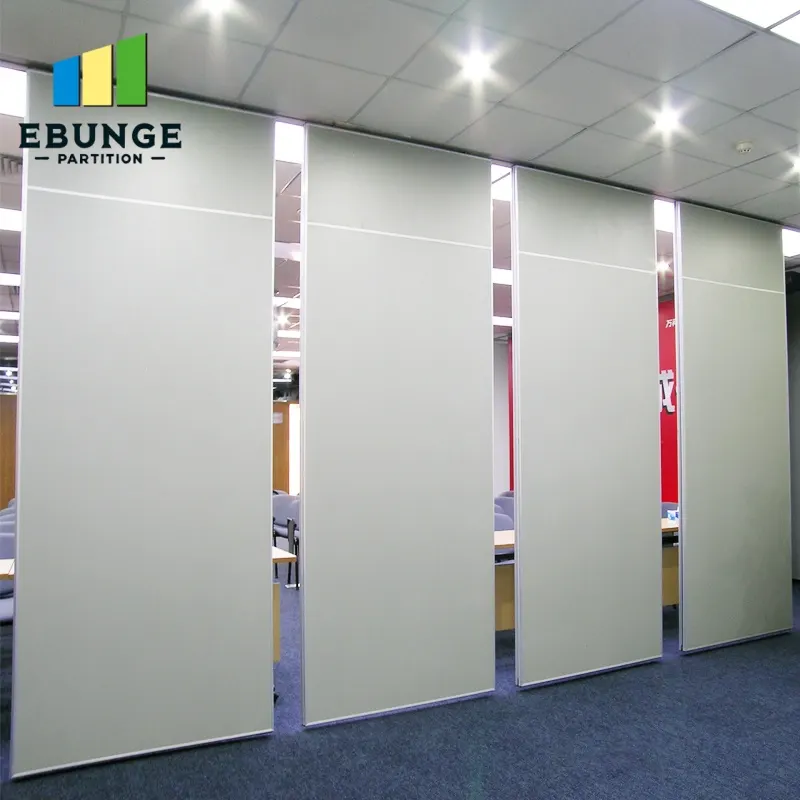
Stacking is a planned operation, not an afterthought. The record should identify where panels park, how they are arranged, and what clearance is required for the reviewed stacking position.
A stack record that omits the relationship between the parking position and adjacent walls, columns, or services is difficult to accept. The facility team needs to know that the parked panels will not obstruct required clearances or conflict with other building elements.
Stack Record Evidence Note
Acceptance of a stack record depends on visible consistency with the approved layout. If the record does not show the parking position in relation to the opening and surrounding conditions, request clarification before sign-off. Do not infer clearance or support capacity from a photograph or a finish sample.
Panel Record Review: Finish, Pass-Door and Movement Documentation
Review focus: movable partition wall.
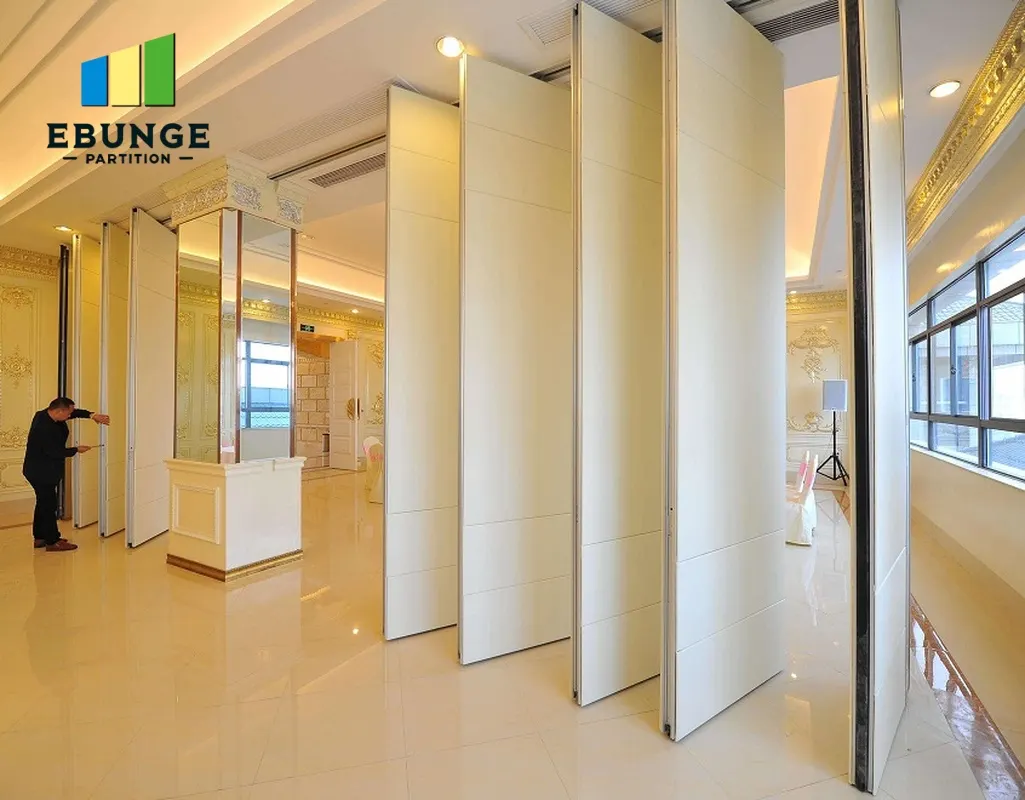
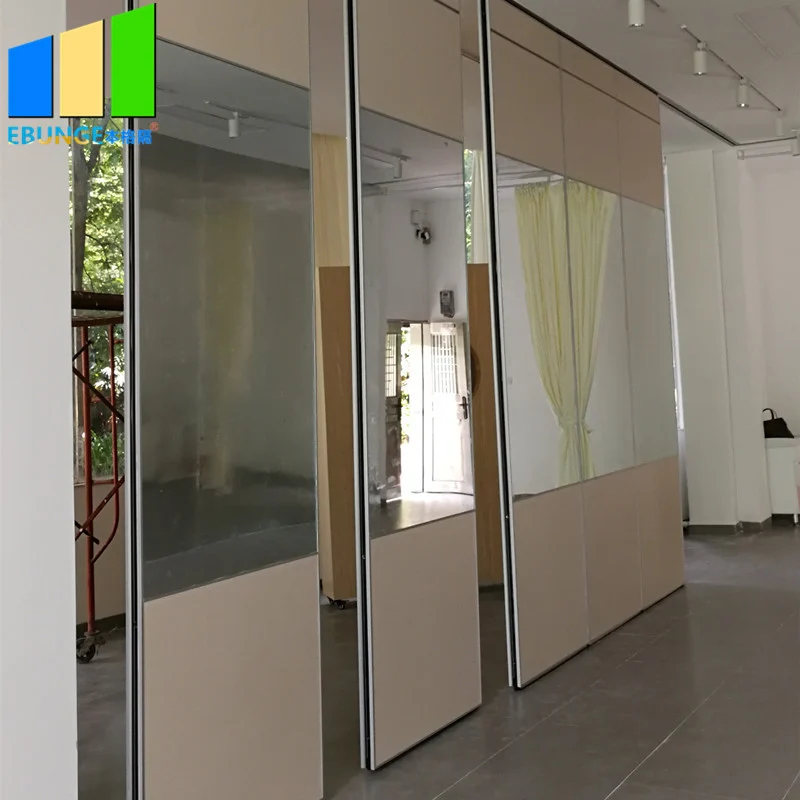
Panel records should confirm the approved finish option and any pass-door requirement. Confirmed finish options include laminate, melamine, fabric, leather, glass and other approved surfaces. Visible references can support layout discussion but do not verify hidden construction or performance.
Pass-door requirements should be documented where applicable, including how the pass-door integrates with the panel movement and stacking sequence. If the project includes a pass-door, the closeout record should show that the reviewed layout accounts for it.
Panel Record Checklist
- Is the supplied finish identified and matched to the approved selection?
- Are pass-door requirements documented and coordinated with the movement route?
- Does the record describe panels as individually movable and top-hung?
- Are any project-specific acoustic or dimensional confirmations referenced rather than assumed?
Defining Rejection Reasons and the Resubmission Loop
Project review term: movable partition wall.
A rejection loop only works if rejection reasons are specific, categorized, and traceable. Generic comments such as “incomplete” or “not acceptable” force the contractor to guess.
Each rejection should identify the exact record, the missing or unclear item, and the evidence required for resubmission. The contractor then resubmits only the affected record, and the reviewer checks it against the same acceptance criteria. This loop continues until each track, stack, and panel record is fit for operational use.
Numbered Resubmission Process
- Log the submitted record and assign a unique review reference.
- Compare the record against the approved layout and the acceptance criteria for its category.
- If acceptable, mark it accepted and record the date and reviewer.
- If not acceptable, issue a rejection notice with a specific category and the evidence required.
- Return the rejection to the contractor and set a resubmission expectation.
- Review the resubmitted record against the same criteria and close the loop when acceptable.
Compact Comparison: Acceptable vs. Rejected Record Characteristics
| Record Type | Acceptable Characteristic | Common Rejection Reason |
|---|---|---|
| Track record | Shows continuous overhead route and reviewed support references | Partial route or untracked gap implied |
| Stack record | Identifies planned parking position and clearances | Parking position not related to approved layout |
| Panel record | Matches approved finish and documents pass-door requirements | Finish mismatch or missing pass-door coordination |
| Acoustic documentation | References project-specific confirmation where required | STC or Rw treated as a simple decibel count |
Building the Review Log and Sign-Off Gate
The review log should record each record type, submission date, reviewer, acceptance status, rejection category, and resubmission date. This log becomes the audit trail for the closeout process. The sign-off gate should not open until every required record is either accepted or formally deferred with a documented reason.
Facility teams should also confirm that the final record set includes the approved layout drawings, finish selections, pass-door documentation, and any project-specific support or acoustic confirmations. If a record relies on a drawing that has since been revised, the reviewer should request the current version before acceptance.
FAQ: Closeout Record Acceptance and Rejection
What is the first step in the closeout record acceptance process?
Start by confirming the approved layout drawings and the list of required records. Then compare each submitted record against the acceptance criteria for its category before making any sign-off decision.
How specific should a rejection reason be?
A rejection reason should name the record, the missing or unclear item, and the evidence required for resubmission. Avoid generic comments that force the contractor to guess what is wrong.
Can a finish sample prove acoustic performance?
No.
What should the track record show about support?
The track record should reference the project-specific support review and show the continuous overhead route. It should not imply generic load capacity or untracked movement.
How does the rejection loop end?
The loop ends when the resubmitted record meets the same acceptance criteria and is marked accepted in the review log. Each record type should be closed individually.
Who should confirm project-specific acoustic and dimensional requirements?
The project team, including the contractor, architect, and facility representative, should confirm acoustic and dimensional requirements against the approved drawings and any project-specific documentation.
Conclusion: A Repeatable Gate for Operational Readiness
A movable partition wall closeout record acceptance criteria rejection loop gives facility teams a defensible way to review track, stack, and panel records before sign-off. By tying acceptance to visible evidence, approved drawings, and maintained product facts, the process reduces ambiguity without inventing performance claims. The loop should be documented, tracked, and closed record by record.
To discuss documentation expectations or request project coordination, contact EBUNGE. You can also review the movable wall product page and the resources section for general planning context.