
Quick answer: track zone service rough
Review focus: track zone service rough.
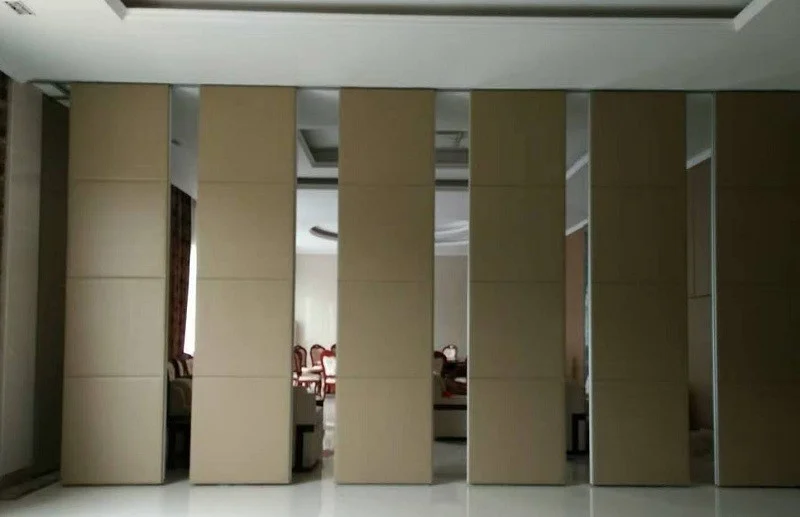
A movable partition track zone service rough-in freeze is the point in ceiling coordination when the services routed inside the partition track zone are fixed for construction. Because EBUNGE movable partition panels are individually movable, suspended from a top track, cross the opening without a floor track, and park at a planned stacking position, the ceiling above the opening and the stacking area becomes a shared corridor for structure, services and finishes. Freezing that corridor early protects the movement path. It also gives every later penetration request a documented route for review instead of an informal site decision.
Why the Track Zone Is a Shared Ceiling Corridor
Project review term: track zone service rough.
The track zone is not only the width of the track. It is the band of ceiling that must remain available for the track, its support interface, the panel route and the parking position. Straight, turning and stacking routes are reviewed from the layout, so the zone may extend beyond the visible opening.
Services that cross this band can conflict with the route or with future access to the ceiling. The freeze is therefore a coordination instrument, not a construction ban. It defines which services are already coordinated and which changes must return to the drawing review process.
What the Freeze Should Cover
Coordination scope: track zone service rough.
A freeze is only useful when its scope is written down. Use the checklist below as a starting point and adapt it to the project drawings.
- Track alignment and the full panel movement route, including turning and stacking positions.
- The exact route, junction arrangement, continuous overhead path and parking position must be confirmed from the coordinated project drawings.
- Service routes that cross or run parallel to the track zone, with their coordinated elevations.
- Ceiling finish zones, access panels and maintenance routes that may intersect the partition route.
- Pass-door locations and any related ceiling conditions, where the project requires them.
- Document status, revision number and the date the freeze takes effect.
A Step-by-Step Freeze Process
Checklist focus: track zone service rough.
The sequence below keeps the freeze tied to drawings rather than to assumptions. It does not replace the project’s own design and construction procedures.
- Issue the current partition layout and confirm the straight, turning and stacking routes with the design team.
- Overlay the ceiling service drawings on the track zone and mark every crossing or parallel route.
- Resolve conflicts on paper and record the coordinated elevations and support interfaces.
- Publish the freeze notice with a revision number, scope and effective date.
- Route every later penetration request through the change control step before site work proceeds.
- Re-verify the freeze after any approved change and reissue the affected drawings.
Late-Penetration Change Control
Late requests are normal on complex projects. The risk is not the request itself but an undocumented change that quietly alters the track zone. A simple change-control record should capture the requester, the proposed service, its location relative to the track and panel route, the reason for the change, and the review outcome.
Review should confirm that the proposed penetration does not obstruct the movement path, the parking position or the support interface. If the request cannot be resolved from the available drawings, it should be held for project-specific review rather than approved on site.
Evidence note: what drawings can and cannot show
A drawing can show a coordinated route and a documented freeze. It cannot, by itself, prove acoustic performance, structural capacity, fire behaviour or cleaning compatibility. Those topics require matching project-specific evidence and confirmation.
Acoustic and Sealing Concepts at the Ceiling Interface
The suitability of each route and parking arrangement depends on the approved layout, circulation, ceiling interfaces and operating sequence. At the ceiling interface, the general principle is continuity: the partition, the track zone and the surrounding ceiling construction need to be coordinated so that the intended separation is not undermined by an unplanned opening.
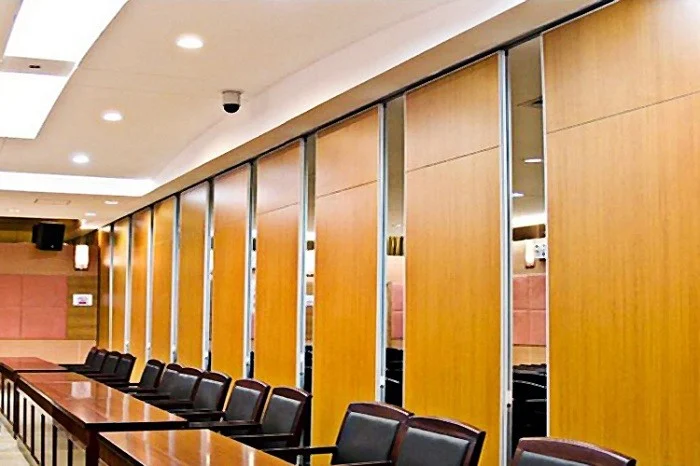
Seals and acoustic treatments are project-specific. Their selection, detailing and expected contribution must be confirmed against the project requirements and the relevant documentation.
Finishes, Pass Doors and Documentation
Confirmed finish options include laminate, melamine, fabric, leather, glass and other approved surfaces. Finish selection can affect the visual relationship between the partition and the ceiling, so it should be coordinated with the freeze drawings where the ceiling line is visible.
Pass-door requirements and project documentation can be discussed with the EBUNGE team. Where a pass door is planned, its position and swing should be checked against the track zone and the parking position. Documentation should record the agreed configuration, the drawing revisions and the confirmation boundaries.
Roles and Review Points
Ceiling coordination usually involves the architect, the ceiling and service contractors, the partition supplier and the site team. Each party needs a clear review point: layout confirmation, service overlay, freeze issue, change review and final verification. The freeze is most effective when one named person owns the register and the revision history.
For product context, see the movable walls product page. Additional planning material is available in the resources section. Project-specific questions can be raised through contact.
Frequently Asked Questions
What is a track zone service rough-in freeze?
It is the documented point when ceiling services inside the movable partition track zone are fixed for construction, with later changes routed through change control.
Does a freeze mean no services can cross the track zone?
No. It means crossings must be coordinated on the drawings and reviewed against the panel route, parking position and support interface before work proceeds.
Can the freeze be updated later?
Yes, through the project change-control process. The update should be recorded, reviewed and reissued so the current revision remains clear.
How does the panel route affect the freeze area?
Straight, turning and stacking routes are reviewed from the layout. The freeze area should cover the full route and the planned parking position, not only the opening.
Can STC or Rw values be confirmed from a drawing?
No. A drawing alone does not establish it.
What should a late-penetration request include?
The requester, the proposed service, its location relative to the track and panel route, the reason for the change and the review outcome.
Conclusion and Next Step
A track zone service rough-in freeze works when it is specific, visible in the drawings and supported by a simple change-control habit. Confirm the movement route, publish the freeze, and treat every late penetration as a review item rather than a site shortcut.
To discuss your ceiling interface coordination, contact the EBUNGE team with your layout and ceiling drawings.