
Quick answer: movable partition track zone hold
Review focus: movable partition track zone hold.
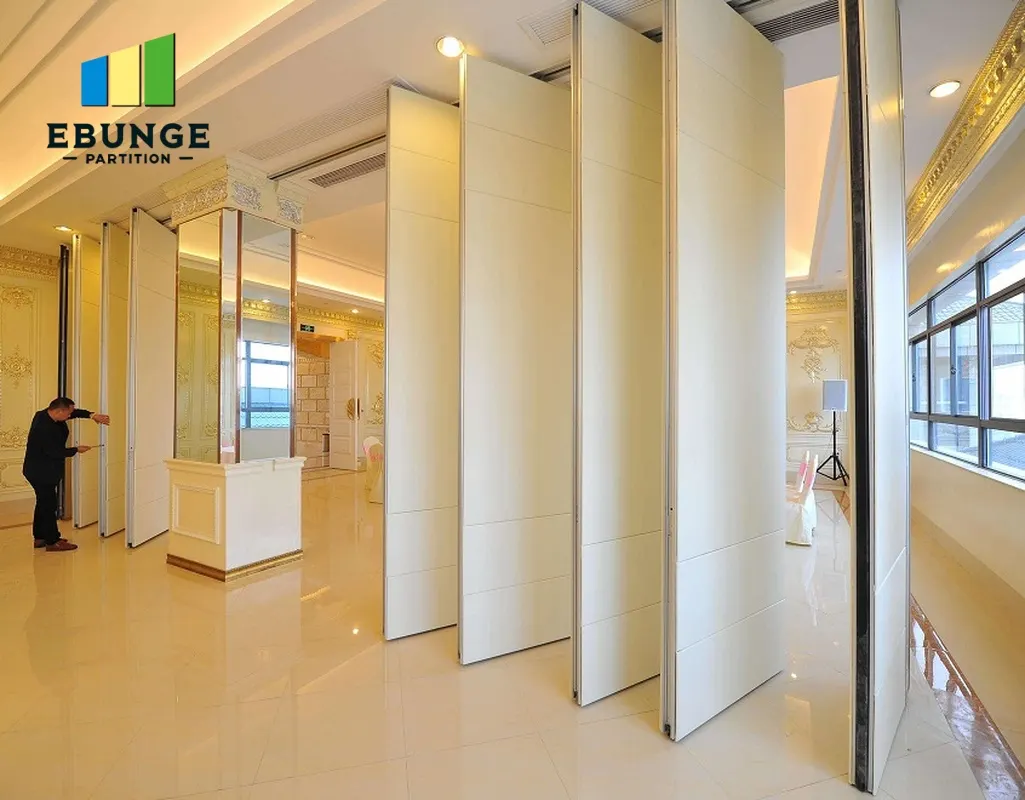
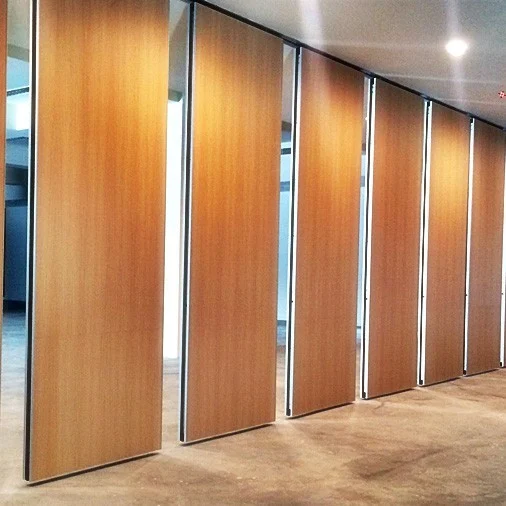
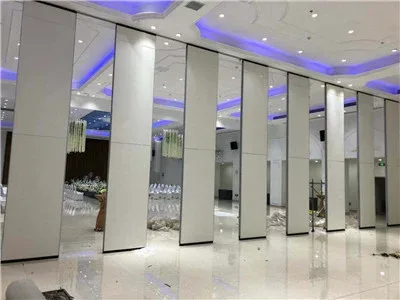
A movable partition track zone hold-point release schedule is a sequencing tool: it prevents track fixing until ceiling service rough-in inside each defined track zone is verified as complete. Because EBUNGE movable partition panels are individually movable, suspended from a top track, cross the opening without a floor track, and park at a planned stacking position, the overhead route is the controlling interface. Straight, turning and stacking routes must be reviewed from the layout. This article sets out a hold-point framework for overseas project teams, bounded by maintained product facts and project-specific drawing review.
Why the Track Zone, Not the Room, Controls the Sequence
Project review term: movable partition track zone hold.
Teams often sequence by room: ceiling grid, then services, then partitions. That logic breaks down at the track. The track follows a continuous connected overhead route across the opening and on to the parking position. If ceiling services are roughed in after track fixing, later work can obstruct the route or force rework.
Defining track zones first converts a room-level argument into a zone-level release decision. Each zone has one question: is the ceiling service rough-in within this zone verified complete? Until the answer is documented, the track hold point stays closed.
Defining Track Zones from the Approved Layout
Coordination scope: movable partition track zone hold.
Zone boundaries should come from the reviewed layout, not from site convenience. A zone typically covers a straight run, a turning section, and the stacking position, because these are the parts of the route that must remain connected and unobstructed.
Zone definition inputs
- Approved partition layout showing straight, turning and stacking routes.
- Reflected ceiling plan with service routes that cross or run parallel to the track line.
- The suitability of each route and parking arrangement depends on the approved layout, circulation, ceiling interfaces and operating sequence.
- Parking position and its relationship to adjacent walls, columns and ceiling features.
- Pass-door requirements, which can affect panel sequencing and route planning.
Where the layout changes, zone boundaries should be reissued rather than adjusted informally on site. A verbal zone change is not evidence.
The Hold-Point Release Schedule Explained
Checklist focus: movable partition track zone hold.
A hold point is a documented gate. It is not a reminder. The schedule lists each zone, the rough-in items that must be complete, the evidence required, and the person authorised to release the zone for track fixing.
| Hold point | Zone condition | Evidence to record | Release authority |
|---|---|---|---|
| HP-1 | Zone boundaries agreed from approved layout | Marked-up layout and ceiling plan | Project manager and designer |
| HP-2 | Ceiling service rough-in complete in zone | Signed inspection record with photographs | Site supervisor and services trade |
| HP-3 | Overhead route clear and continuous | Route walk-down record | Partition installer and site supervisor |
| HP-4 | Support and fixing details confirmed for the project | Reviewed project drawings and engineer confirmation | Responsible engineer |
| HP-5 | Zone released for track fixing | Signed release note | Project manager |
The table is a coordination template. The exact route, junction arrangement, continuous overhead path and parking position must be confirmed from the coordinated project drawings.
Evidence Boundaries: What a Release Note Can and Cannot Prove
Review focus: movable partition track zone hold.
A release note proves that a defined inspection happened on a defined date. Those are separate questions with separate evidence.
Evidence note: a photograph of a clear ceiling void shows visible clearance only. It does not demonstrate support capacity, acoustic separation or route suitability for every panel configuration.
Where acoustic separation matters, confirm the project-specific requirement with the responsible acoustic consultant and with EBUNGE through the contact channel.
Sequencing Ceiling Services Before Track Fixing
The practical order is: agree zones, complete rough-in, inspect, release, then fix track. Each step should close before the next opens.
Numbered release process
- Issue the approved layout and reflected ceiling plan to all trades.
- Mark track zones on site using the approved drawing reference.
- Complete ceiling service rough-in within each zone, including any pass-door related provisions.
- Inspect the zone and record evidence against the hold-point table.
- Confirm the overhead route is continuous and unobstructed across straight, turning and stacking sections.
- Obtain project-specific confirmation of support and fixing requirements.
- Sign the release note and only then begin track fixing in that zone.
If a zone fails inspection, close the hold point again. Partial release across a zone boundary creates exactly the coordination gap the schedule exists to prevent.
Finish and Interface Decisions That Follow Release
Finish selection is a separate decision from track release. Confirmed finish options include laminate, melamine, fabric, leather, glass and other approved surfaces.
Interface decisions that commonly follow release include ceiling closure details, parking position treatment, and pass-door requirements. These should be discussed with EBUNGE and the design team using the project drawings. Further planning context is available in the resources section, and product context is summarised on the movable walls product page.
Common Coordination Failures and How Hold Points Prevent Them
Most failures are sequencing failures, not product failures. Services installed after track fixing, zones changed without reissue, and release given verbally are recurring patterns.
Decision checklist before releasing any zone
- Is the zone boundary traceable to the current approved layout?
- Is ceiling service rough-in complete and inspected within the zone?
- Is the overhead route continuous across straight, turning and stacking sections?
- Has project-specific support and fixing confirmation been received?
- Is the release note signed by the authorised person?
- Are pass-door and parking requirements recorded for this zone?
Any negative answer keeps the hold point closed. That is the schedule working as intended.
Frequently Asked Questions
What is a movable partition track zone hold-point release schedule?
It is a project sequencing document that divides the track route into zones and defines the verified conditions that must be met before track fixing begins in each zone.
Why must ceiling service rough-in finish before track fixing?
Because the track follows a continuous overhead route. Later service work can obstruct that route or force rework, so rough-in is verified first within each zone.
Does a signed release note confirm acoustic performance?
No. It confirms that defined inspection conditions were met.
Can zones be changed on site without reissuing drawings?
Zone changes should be reissued through the drawing process. Informal site changes break the traceability that makes the release schedule useful.
Who should authorise a zone release?
The project should name an authorised person, typically the project manager, with input from the responsible engineer and the partition installer.
What information does EBUNGE need to support coordination?
Approved layouts, reflected ceiling plans, route information and project-specific requirements. Pass-door requirements and project documentation can be discussed directly.
Conclusion and Next Step
A track zone hold-point release schedule turns ceiling coordination into a sequence of verifiable gates. It keeps track fixing behind verified rough-in, protects the continuous overhead route, and gives every trade a clear release condition. It does not replace project-specific support, acoustic and dimensional confirmation, which remain essential.
To review your layout, route and documentation against this framework, contact EBUNGE and share the project drawings for discussion.