
Quick answer: movable partition track tolerance verification
Review focus: movable partition track tolerance verification.
Movable partition track tolerance verification is the discipline of proving that the overhead route is straight, level and continuously supported before any panel is hung. Because EBUNGE movable partition panels are individually movable, suspended from a top track and cross the opening without a floor track, the track is the single element that governs how the whole system behaves. If alignment is wrong, panels may bind, drift or resist parking. This framework helps overseas contractors structure checks, document evidence and raise queries early.
Why Track Verification Comes Before Panel Hanging
Project review term: movable partition track tolerance verification.
In a top-hung system, panels carry no floor guidance. The exact route, junction arrangement, continuous overhead path and parking position must be confirmed from the coordinated project drawings. A deviation that looks minor on a drawing can become a handling problem once panels are in place, because there is no floor hardware to correct the path.
Verification is therefore a pre-installation activity, not a correction activity. It converts assumptions in the layout into measured, recorded conditions. It also creates a shared record between the contractor, the architect and the supplier, so that any decision to proceed is based on observed geometry rather than expectation.
The Evidence Boundary: What Drawings Do and Do Not Prove
Coordination scope: movable partition track tolerance verification.
Layout drawings show intent: where the track runs, where panels park and how the opening is crossed. They do not prove that the supporting structure is level, that the route is continuous or that the specified finish will suit the space. Those are project-specific questions.
Treat every drawing as a question to be answered on site. The suitability of each route and parking arrangement depends on the approved layout, circulation, ceiling interfaces and operating sequence. Where a condition cannot be verified, record it as an open item rather than assuming it will be resolved later.
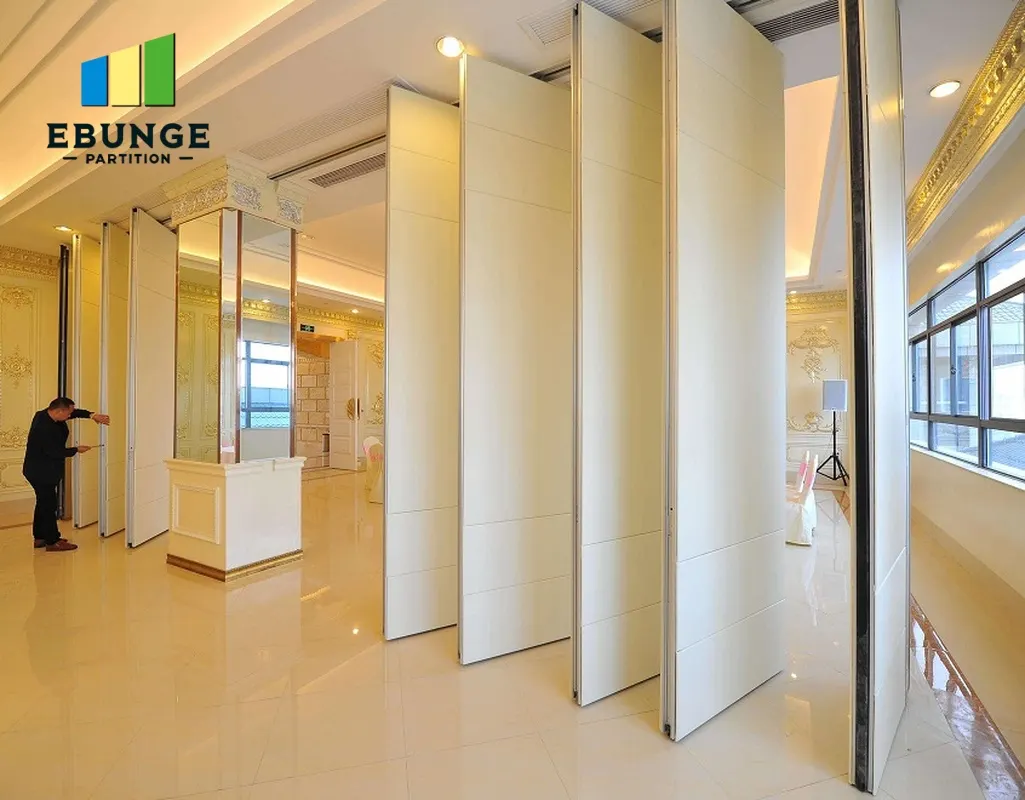
Evidence note: a visible track line, finish sample or photograph does not confirm acoustic performance, structural capacity or application reference outcomes. Those require matching project-specific evidence.
A Six-Step Track Tolerance Verification Sequence
- Confirm the route. Walk the straight, turning and stacking routes from the approved layout and mark each change of direction.
- Establish a datum. Agree a single reference line and level with the project team before measuring anything.
- Survey the support. Check that the supporting structure is continuous along the full route, including turning and parking zones.
- Measure alignment. Record level and straightness readings at agreed intervals and at every transition point.
- Check interfaces. Verify clearances at openings, adjacent finishes and any pass-door location.
- Sign off or escalate. Compare readings with the project specification and raise deviations before hanging begins.
Alignment Checks That Matter Most
Level along the travel path
Level is checked along the direction of travel, not only across the track. A track that is level side to side but falls along its length can change how panels behave as they move toward the parking position.
Straightness at transitions
Turning and stacking routes deserve extra attention because they combine direction changes with parking.
Support continuity
Every part of the route, including the parking zone, needs continuous overhead support.
Coordination With Other Trades
Track installation rarely happens in isolation. Early coordination reduces the chance that a verified track is disturbed by later work.
Agree a sequence with the project team: when the support is ready, when the track is set, when alignment is measured and when panels may be hung. Keep the verification record with the project documentation so that any later change can be assessed against the original condition.
Decision Checklist Before Hanging Panels

- Approved layout shows straight, turning and stacking routes.
- Supporting structure confirmed as continuous and suitable by the responsible party.
- Datum agreed and recorded.
- Alignment readings taken at transitions and parking zones.
- Pass-door requirements and clearances discussed.
- Finish direction confirmed for laminate, melamine, fabric, leather, glass or another approved surface.
- Open items listed with owners and dates.
Acoustic Concepts and Their Limits
Seals, junctions and adjacent construction all influence the result.
EBUNGE can discuss project documentation and pass-door requirements, but performance must be confirmed against the specific configuration.
Documentation and Handover
Keep a simple verification pack: the approved layout, the datum record, alignment readings, photographs of the route and a list of open items. This pack supports handover and helps future maintenance or reconfiguration.
If a reading falls outside the project specification, escalate before hanging.
Frequently Asked Questions
What is movable partition track tolerance verification?
It is the process of measuring and recording the overhead track’s level, straightness, continuity and support before panels are hung, so that the travel and parking routes match the approved layout.
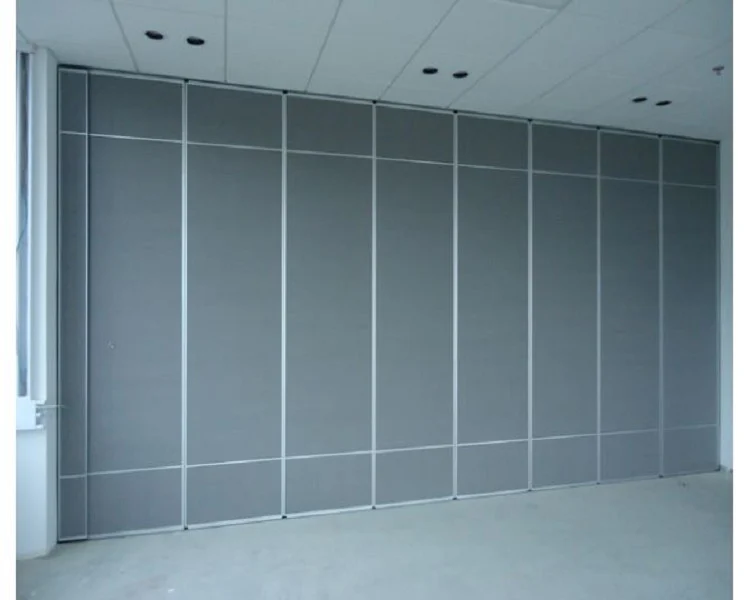
Do movable partition panels need a floor track?
EBUNGE movable partition panels are top-hung and cross the opening without a continuous floor running track or floor hardware along the partition line. The overhead route carries the movement.
Which measurements should be recorded?
Record level and straightness at agreed intervals, at every direction change and at the parking zone. The exact intervals and acceptance values are project-specific and should come from the project specification.
Can a track cross a gap in the supporting structure?
No. Every proposed movement path requires a continuous connected overhead route and project-specific support review.
How are finish options confirmed?
Confirmed finish options include laminate, melamine, fabric, leather, glass and other approved surfaces. Suitability, direction and cleaning compatibility should be confirmed for the specific project.
When should the supplier be involved?
Involve the supplier early, when the layout and support strategy are being reviewed.
Conclusion: Verify, Record, Then Hang
Movable partition track tolerance verification is a small amount of structured work that protects the whole installation. Confirm the route, establish a datum, survey support, measure alignment, check interfaces and sign off before hanging. Keep the evidence pack with the project file and escalate deviations early.
For project-specific support, acoustic and dimensional requirements, review the movable partition wall range, explore planning resources, or contact EBUNGE to discuss your layout, pass-door needs and documentation.