
Quick answer: track penetration zone reservation register
Review focus: track penetration zone reservation register.
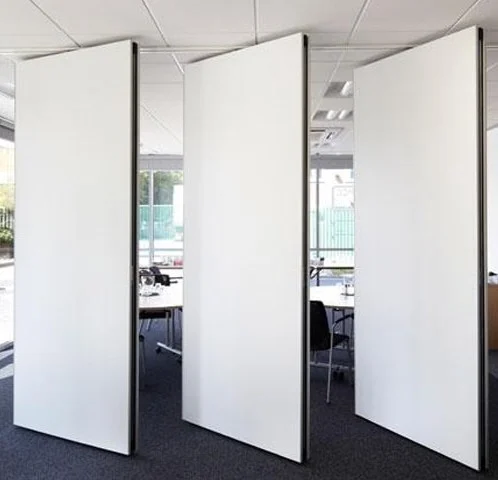
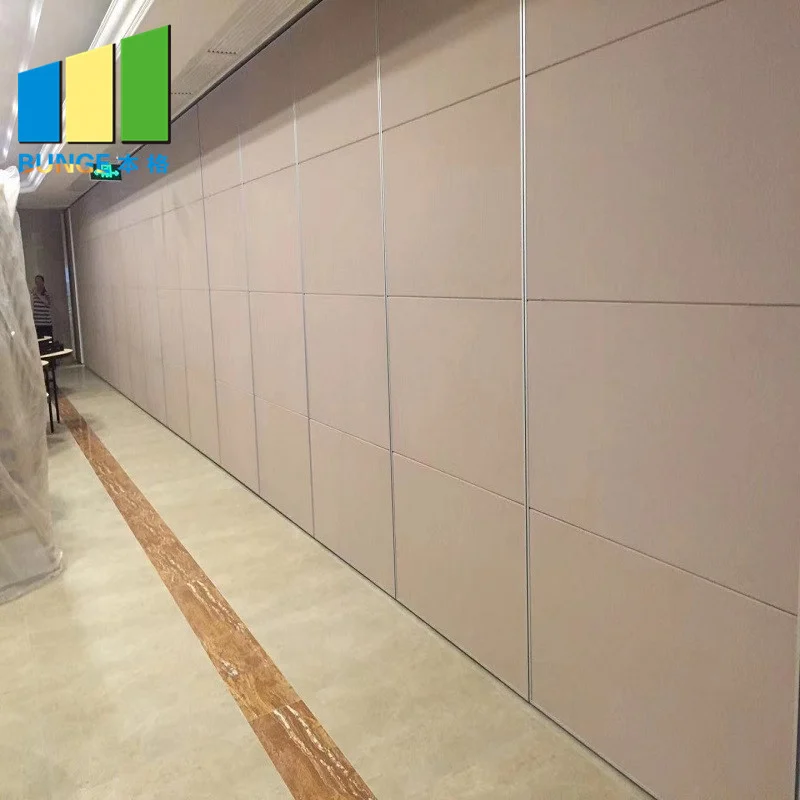
On a busy ceiling, the movable partition track penetration zone reservation register is the shared record that stops service rough-in and partition fixing from competing for the same strip of overhead space. EBUNGE movable partition panels are individually movable, suspended from a top track, cross the opening without a floor track, and park at a planned stacking position. That operating principle makes the ceiling interface a coordination problem before it becomes an installation problem. This article is planning guidance for overseas contractors, architects, interior designers, owners and construction teams. It does not replace project-specific support, acoustic or dimensional confirmation.
Why the Ceiling Interface Needs a Reservation Register
Project review term: track penetration zone reservation register.
A top-hung partition depends on a continuous connected overhead route. Straight, turning and stacking routes are reviewed from the layout, not assumed from a single elevation. When ductwork, cable trays, sprinkler mains, lighting supports and access panels are installed first, the partition route can be blocked or left without a clear fixing zone.
A reservation register is a simple control document. It records which ceiling strip is held for the partition track, which trades may enter it, and what must be confirmed before any fixing begins. The suitability of each route and parking arrangement depends on the approved layout, circulation, ceiling interfaces and operating sequence. It is a sequencing tool that keeps the interface visible to everyone.
What the Register Should Contain
Coordination scope: track penetration zone reservation register.
Keep the register short enough to be used on site. Each line should identify a zone, an owner and a status. Avoid filling it with assumptions that have not been reviewed against the coordinated drawings.
Core fields for each reserved zone
- Zone reference and the partition route it serves.
- Ceiling strip width and length as shown on the coordinated layout.
- Services that cross, run parallel to, or terminate near the zone.
- Trade responsible for each service and the date it is expected to clear the zone.
- Status: reserved, partially occupied, released for partition review, or on hold.
- Open questions requiring architect, engineer or supplier confirmation.

Evidence note
This register records coordination intent only. It does not confirm support capacity, acoustic performance, fire performance or dimensional fit. Those items require project-specific review and matching documentation before fixing.
Sequencing Rough-In Trades Before Track Fixing
Checklist focus: track penetration zone reservation register.
The practical sequence is to reserve first, rough in second, and fix only after the zone is released. The exact overhead route and support arrangement must be confirmed by the responsible project team from coordinated drawings.
- Issue the draft register with the ceiling layout and partition route.
- Hold a coordination review with the ceiling service trades.
- Confirm which services can be rerouted outside the reserved strip.
- Record agreed clearances and access needs in the register.
- Release the zone only when the listed services are installed or relocated.
- Review the partition route against the final coordinated ceiling before fixing.
Visible references can support layout discussion but do not verify hidden construction or performance. It simply reduces the chance that the partition route is discovered late by the ceiling team.
Coordination Points for Straight, Turning and Stacking Routes
Straight runs are usually the easiest to reserve because the route is obvious on plan. The exact route, junction arrangement, continuous overhead path and parking position must be confirmed from the coordinated project drawings. Stacking routes need a planned parking position, and that position must be coordinated with ceiling services, lighting and access panels.
Every proposed movement path requires a continuous connected overhead route and project-specific support review. If the layout shows a turn or a stack, the register should identify the zone for that geometry rather than treating the whole ceiling as one uniform strip.
Interface Checks Before Fixing
Before any track fixing, walk the route with the coordinated ceiling drawing and the register. Check that the reserved strip is still clear, that no service has been added without a register update, and that the parking position remains available.
Decision checklist
- Is the overhead route continuous and connected for the full travel path?
- Has every crossing service been recorded and reviewed?
- Is the stacking position coordinated with ceiling elements?
- Are pass-door requirements and project documentation discussed with the supplier?
- Have support, acoustic and dimensional requirements been confirmed for this project?
Finish options such as laminate, melamine, fabric, leather, glass and other approved surfaces can be discussed separately.
Documentation and Responsibility Boundaries
The ceiling service trades own their rough-in dates. The partition supplier can review the route and interface, but support and dimensional confirmation remain project-specific. The architect or engineer should confirm the ceiling structure and any required coordination with other disciplines.
Seals and acoustic concepts can be explained generically, but the actual performance of an installed assembly depends on the complete construction.
Common Coordination Failures to Avoid
Most failures are not technical mysteries. They are late discoveries.
Another failure is treating the register as a one-time document. It should be updated when services move, when the ceiling layout changes, or when the partition route is revised. A register that is not maintained stops being a coordination tool.
FAQ
What is a movable partition track penetration zone reservation register?
It is a coordination record that identifies the ceiling strip reserved for the movable partition track and the services that must be sequenced around it before fixing.
Does the register confirm structural support?
No. It records coordination intent.
Can the partition route turn or stack?
Turning and stacking routes are reviewed from the layout. Every proposed path requires a continuous connected overhead route and project-specific support review.
When should ceiling service trades finish?
The zone should be released only after the listed services are installed or relocated, and before partition track fixing begins.
Does finish choice affect acoustic performance?
Acoustic requirements need project-specific evidence.
Who should maintain the register?
The project team should assign a coordinator. The register must be updated whenever services, ceiling layout or partition routes change.
Conclusion and Next Step
A track penetration zone reservation register is a practical way to sequence ceiling service rough-in before movable partition track fixing. It keeps the overhead route visible, records who owns each zone, and reduces late conflicts. It does not replace project-specific support, acoustic or dimensional confirmation.
To discuss your layout, pass-door requirements and project documentation, contact EBUNGE. You can also review movable wall products and browse planning resources before your next coordination meeting.