
Quick project answer
Review focus: track penetration sequencing register.
Ceiling services and movable partition tracks compete for the same overhead zone. A movable partition track penetration sequencing register is a simple coordination tool: it lists every ceiling service that must cross, run near, or terminate above the partition track fixing zone, and it fixes the order in which those services are roughed in relative to track installation. The suitability of each route and parking arrangement depends on the approved layout, circulation, ceiling interfaces and operating sequence. It gives the project team a shared sequence so that sprinkler drops, duct branches, cable trays, lighting supports and access panels are placed before the track zone is closed.
This article explains how to build and use the register on overseas projects, and where project-specific confirmation is required.
Why the Ceiling Interface Needs Its Own Register
Project review term: track penetration sequencing register.
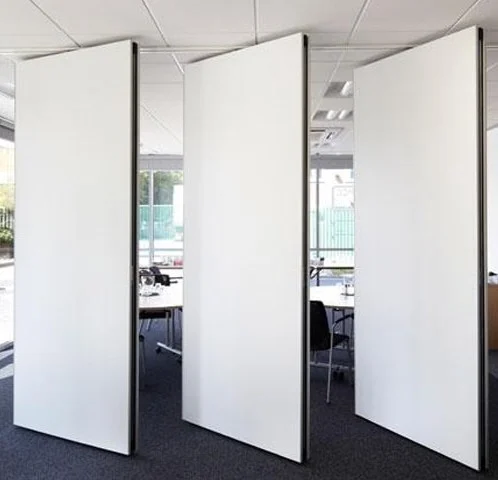
Movable wall panels are individually movable, suspended from a top track, cross the opening without a floor track, and park at a planned stacking position. That top track must follow a continuous connected overhead route. The exact overhead route and support arrangement must be confirmed by the responsible project team from coordinated drawings. A register turns those conflicts into a visible sequence before rough-in begins.
The register is not a performance document. It records coordination decisions: what service crosses, where it crosses, which trade installs first, and what must be verified on site. Where the drawings do not show a clear route, the item stays open until the project team confirms it.
What the Register Should Contain
Coordination scope: track penetration sequencing register.
Start with a single table that every trade can read. Each row represents one penetration or one service run that interacts with the track zone. Keep the language neutral and factual. Do not record assumed loads, acoustic ratings or fire ratings unless the project has matching evidence.

| Register field | What to record | Why it matters |
|---|---|---|
| Service ID | Sprinkler, duct, cable tray, lighting, access panel, other | Links the row to the service drawing |
| Crossing type | Crosses track line, runs parallel, terminates above track | Defines the conflict type |
| Planned rough-in stage | Before track fixing, after track fixing, or coordinated simultaneously | Sets the trade sequence |
| Track route reference | Drawing number and grid line for the overhead route | Keeps the route continuous and connected |
| Support review status | Open, reviewed, or confirmed by the responsible engineer | Prevents unsupported assumptions |
| Evidence note | Drawing, RFI, or site verification reference | Shows what has actually been checked |
Add a column for finish coordination where the ceiling finish or partition finish is affected. Confirmed finish options include laminate, melamine, fabric, leather, glass and other approved surfaces. The register should note where a finish interface needs a sample or a detail review, not assume compatibility.
Sequencing Rough-In Before Track Fixing
Checklist focus: track penetration sequencing register.
The sequence below is a planning order, not a fixed construction method.
- Issue the draft register. List every ceiling service that crosses or runs near the proposed track route.
- Review the layout routes. Straight, turning and stacking routes are reviewed from the layout. Confirm that each route is continuous and connected overhead.
- Mark rough-in stages. Identify which services must be installed before track fixing and which can follow.
- Hold a coordination review. Bring the ceiling, mechanical, electrical and partition trades together to resolve open rows.
- Confirm support and dimensional requirements. The responsible engineer confirms support conditions and dimensions for the project.
- Release rough-in. Only release rows that are marked confirmed or reviewed.
- Verify before track fixing. Walk the ceiling zone and check that installed services match the register.
- Close the register. Record as-built positions and any agreed deviations for future reference.
Coordination Points That Commonly Cause Rework
Review focus: track penetration sequencing register.
Track route continuity
Every proposed movement path requires a continuous connected overhead route. A gap in the route cannot be crossed by panels. The register should flag any service that interrupts the route and require a coordinated solution before track fixing.
Stacking zone clearance
Panels park at a planned stacking position. Ceiling services, lighting or access panels in that zone can reduce usable parking space. The register should show the stacking zone on the ceiling plan and note any service that enters it.
Pass doors and access
Pass-door requirements and project documentation can be discussed with the supplier. Where a pass door is planned, the register should note the door location and any ceiling service that affects its head detail.
Acoustic concepts
The register should not claim a rating. Instead, it should record where a penetration may affect the acoustic interface and refer the detail to the project acoustic consultant.
Evidence Boundaries for the Register
The register is only as reliable as the evidence behind each row. Visible references can support layout discussion but do not verify hidden construction or performance. Comparative, absolute and causal statements require corresponding evidence. If evidence is missing, the row stays open and the project team confirms the requirement.
Register rule: no row is closed without a drawing reference, an RFI response, or a site verification note. Assumptions are recorded as open items, not as confirmed facts.
This boundary protects the project from late changes. It also keeps the register useful during handover, when the operations team needs to understand what was installed above the ceiling.
Reviewing the Register with the Project Team
Schedule the register review before ceiling rough-in starts. Invite the trades that install services, the partition installer, the ceiling contractor and the project engineer. Walk the ceiling zone together and mark each row as open, reviewed or confirmed. Where a row cannot be resolved, record the responsible party and the date for the next review.
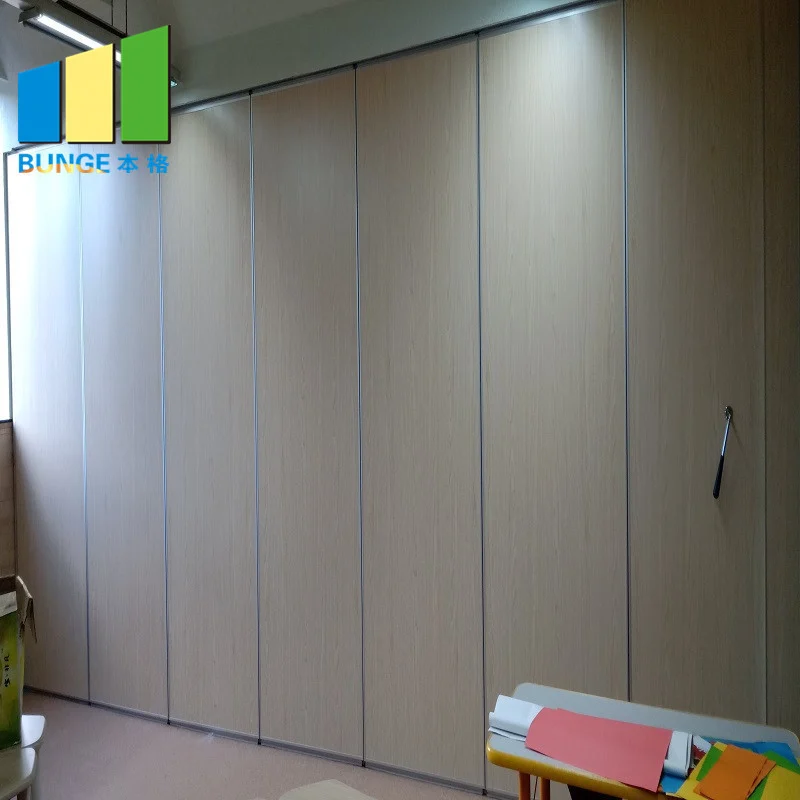
After track fixing, update the register with as-built positions. This record helps future renovations and service maintenance. It also shows where a service was moved and whether the track route was affected.
FAQ: Track Penetration Sequencing Register
What is a movable partition track penetration sequencing register?
It is a coordination table that lists ceiling services crossing or running near a movable partition track route and sets the order in which those services are roughed in relative to track fixing.
Who should own the register?
The project team should assign one coordinator, often the general contractor or ceiling coordinator, to maintain the register and call reviews. The partition supplier can provide layout and product information, but project-specific support and dimensional requirements must be confirmed by the responsible engineer.
Can the register guarantee acoustic performance?
No. The register records coordination, not performance.
What if a ceiling service crosses the track route after track fixing?
That is a late change. The register should record the conflict, and the project team should review whether the service can be rerouted or whether the track route needs adjustment. Do not assume the track can be modified without engineering review.
Does the register apply to renovation projects?
Yes. Renovation projects often have existing ceiling services and limited space. The register helps identify what must be moved or protected before new track fixing begins.
How does the register relate to finish selection?
Finish options include laminate, melamine, fabric, leather, glass and other approved surfaces.
Conclusion and Next Steps
A movable partition track penetration sequencing register keeps ceiling rough-in and track fixing in a logical order. It does not replace engineering, but it makes coordination visible and evidence-based. Start with the layout routes, list every service that interacts with the track zone, and keep rows open until the project team confirms them. Confirm project-specific support, acoustic and dimensional requirements before installation. To discuss pass-door requirements, project documentation or layout review, contact EBUNGE. You can also review movable wall products and project resources for further planning context.