
Quick answer: track fixing hold point
Review focus: track fixing hold point.
The movable partition track fixing hold-point release ceiling rough-in schedule is a coordination tool, not a construction shortcut. It sequences the release of the overhead track fixing only after ceiling service rough-in is complete and verified, so that the partition interface is not disturbed by later MEP work. This article sets out a hold-point release framework for overseas project teams, with evidence boundaries and drawing-review steps that must be confirmed for each project.
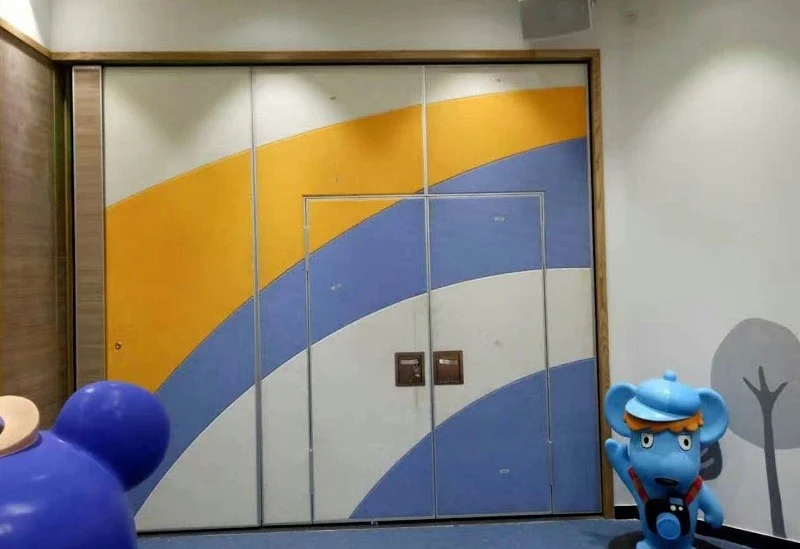
Movable partition panels are individually movable, suspended from a top track, cross the opening without a floor track, and park at a planned stacking position. Straight, turning and stacking routes are reviewed from the layout. Those maintained facts shape the ceiling interface: the track needs a continuous connected overhead route, and the ceiling zone above it must be coordinated with services before fixing is released.
Why the Ceiling Interface Drives Track Fixing Sequence
Project review term: track fixing hold point.
The suitability of each route and parking arrangement depends on the approved layout, circulation, ceiling interfaces and operating sequence. The exact overhead route and support arrangement must be confirmed by the responsible project team from coordinated drawings. That is the rework this schedule is designed to reduce.
This is a sequencing principle, not a performance claim. The exact route, junction arrangement, continuous overhead path and parking position must be confirmed from the coordinated project drawings.
What Counts as Ceiling Service Rough-In Completion
Coordination scope: track fixing hold point.
Rough-in completion is a project-defined state. The project team should agree what must be finished and inspected before the track fixing hold point can be released. Typical items include the services that pass through or near the track zone, the ceiling framing that will surround the interface, and the access needed for inspection.
Evidence note: what this article does not establish
This article does not establish structural capacity, acoustic performance, fire performance, dimensional limits, support spacing, load values, installation time or cost. Those items require project-specific evidence and review. STC and Rw are acoustic rating concepts; they are not a direct count of decibels and must not be used as a simple score.
A Hold-Point Release Schedule Tied to Rough-In
Checklist focus: track fixing hold point.
The schedule below is a coordination sequence. It should be adapted to the project programme and contract requirements. Each hold point should have a named verifier and a recorded release.
- HP-01 — Layout and route review. Confirm the straight, turning and stacking routes from the layout. Confirm that the overhead route is continuous and connected where the panels will travel.
- HP-02 — Ceiling service rough-in freeze. Confirm that the services in the track zone are roughed in and that no further rough-in work is planned in that zone.
- HP-03 — Support and interface review. Confirm the project-specific support arrangement and the ceiling interface details against the approved drawings.
- HP-04 — Track fixing release. Release the track fixing only after HP-01 to HP-03 are signed off. Record the release date and any conditions.
- HP-05 — Post-fixing protection. Protect the fixed track and interface from subsequent ceiling, finishing and service work until handover.
Decision Checklist for the Project Team
Review focus: track fixing hold point.
Use this checklist before releasing the track fixing hold point. It is a coordination aid, not a substitute for project-specific engineering.
- Are the straight, turning and stacking routes confirmed from the layout?
- Is the overhead route continuous and connected for the full travel path?
- Is ceiling service rough-in complete and frozen in the track zone?
- Are the support and interface details confirmed against the approved drawings?
- Are pass-door requirements and project documentation discussed and recorded?
- Are the finish selections — laminate, melamine, fabric, leather, glass or other approved surfaces — confirmed for the project?
- Are the project-specific support, acoustic and dimensional requirements confirmed?
Coordination Roles and Information Flow
The hold-point release works when information flows between the ceiling contractor, the services trades, the partition installer and the project manager. The partition track fixing should not be released on a verbal instruction alone. A written release tied to the rough-in completion record reduces the risk of conflicting work.
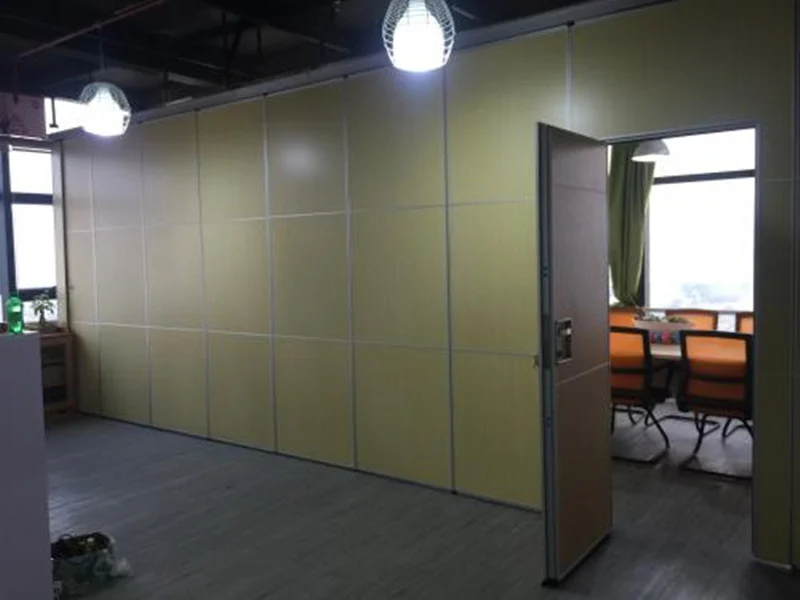
Where the project uses a main contractor and specialist subcontractors, the release should sit in the project quality plan. The verifier should be able to see the ceiling zone and confirm that the rough-in state matches the agreed condition.
Common Coordination Failures and How to Avoid Them
Most ceiling interface problems come from sequencing, not from the partition itself. If services are installed after the track is fixed, the track zone may be opened again. If the ceiling framing is changed after the track is set, the interface may need rework.
Another common failure is treating the layout as fixed before the routes are reviewed. Straight, turning and stacking routes must be reviewed from the layout, because the parking position and the travel path affect the ceiling zone. A route that is not continuous and connected cannot be assumed.
Documentation and Release Records
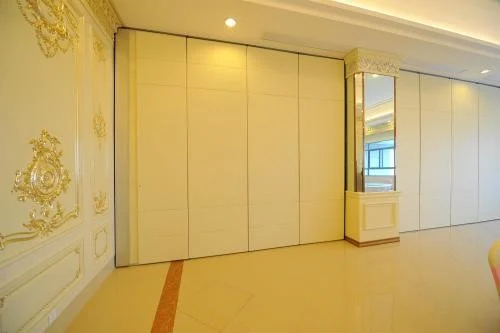
Each hold point should produce a simple record: the hold-point number, the date, the verifier, the condition checked and the release decision. Visible references can support layout discussion but do not verify hidden construction or performance. They show the visible state at the time of release.
Project documentation can be discussed with the EBUNGE team through the contact page. The movable walls product page provides maintained product context, and the resources page supports buyer and project planning.
Frequently Asked Questions
What is a track fixing hold-point release?
It is a formal point in the programme where the overhead track fixing is released for installation only after agreed prior conditions, such as ceiling service rough-in completion, are verified and recorded.
Why tie the release to ceiling service rough-in completion?
Because later service work in the track zone can disturb a fixed track and cause rework at the ceiling interface. Sequencing the release after rough-in completion reduces that risk.
Does this schedule guarantee acoustic performance?
No.
Can the track be fixed before the ceiling is finished?
The track fixing release is tied to rough-in completion, not final ceiling finish. The exact condition should be agreed for the project, because ceiling framing and access requirements vary.
What information is needed from the layout?
The straight, turning and stacking routes should be reviewed from the layout. The overhead route must be continuous and connected for the full travel path, and the parking position should be planned.
Who should verify the hold point?
The project team should name a verifier, often the project manager or a nominated quality representative, who can confirm the agreed condition and record the release.
Conclusion and Next Steps
The hold-point release schedule is a practical way to coordinate the ceiling interface. It keeps the track fixing tied to ceiling service rough-in completion, reduces avoidable rework, and gives the project team a clear record of when the interface was released.
Before applying it, confirm the project-specific support, acoustic and dimensional requirements. Review the straight, turning and stacking routes from the layout, and confirm that the overhead route is continuous and connected. Discuss pass-door requirements and project documentation with the EBUNGE team.
To discuss your project, contact EBUNGE and share your layout and ceiling interface drawings for review.