
Quick answer: track fixing crew mobilization sequence
Review focus: track fixing crew mobilization sequence.
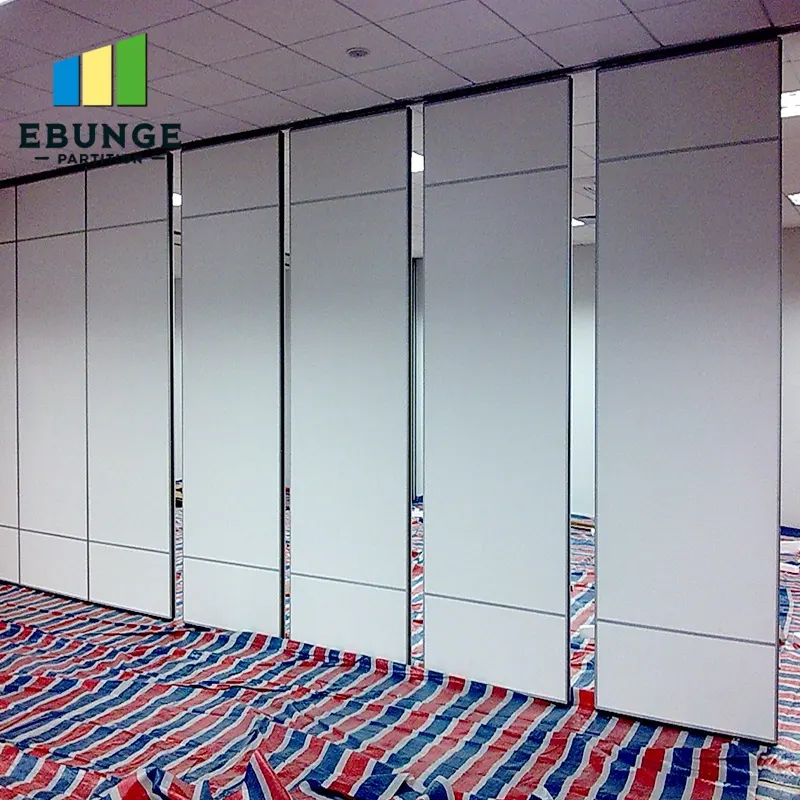
For overseas contractors, the movable partition track fixing crew mobilization sequence is not a single site visit. It is a controlled release of labor and access against verified zone readiness. EBUNGE movable partition panels are individually movable, suspended from a top track, cross the opening without a floor track, and park at a planned stacking position. The exact overhead route and support arrangement must be confirmed by the responsible project team from coordinated drawings. This framework helps project teams decide when to mobilize, what to verify first, and which statements still require project-specific confirmation.
Why Track Fixing Comes Before Panel Delivery
Project review term: track fixing crew mobilization sequence.
Top-hung operation means the partition line depends on a continuous connected overhead route. Straight, turning and stacking routes are reviewed from the layout, not assumed on site. If the route is incomplete or the supporting structure is not ready, panel delivery and hanging cannot proceed safely or predictably.
Track fixing is therefore a gating activity. The suitability of each route and parking arrangement depends on the approved layout, circulation, ceiling interfaces and operating sequence. The crew that fixes track does not need to be the same crew that hangs panels, but the handover between them must be explicit. Confirm project-specific support, acoustic and dimensional requirements with the responsible engineer before releasing either activity.
Zone Readiness Verification Before Crew Release
Coordination scope: track fixing crew mobilization sequence.
Zone readiness is a checklist decision, not a verbal assurance. The following items should be verified and recorded before the track fixing crew is mobilized to a zone.
- Overhead structure is accessible and available for the reviewed fixing condition.
- The reviewed track route matches the current layout, including straight, turning and stacking paths.
- Parking position is defined and does not conflict with other trades or stored materials.
- Adjacent finishes and services are protected or sequenced to avoid rework.
- Access, lifting and working-at-height arrangements are agreed for the zone.
- Current drawings and any approved revisions are on site and match the issued set.
Each item is a release condition. If one is unresolved, the crew should not be committed to that zone. This protects both schedule and workmanship without implying any performance outcome.
A Numbered Mobilization Sequence for Contractors
Checklist focus: track fixing crew mobilization sequence.
The sequence below is a planning order, not a fixed duration. Project teams should adapt it to site conditions and confirm all engineering requirements separately.
- Confirm the reviewed layout and route drawings are current and issued for construction coordination.
- Release the track fixing crew only to zones that pass the readiness checklist.
- Complete track fixing and record the installed condition for the zone.
- Inspect the installed track route against the reviewed drawing before panel movement.
- Release panel delivery and hanging only after the route inspection is accepted.
- Confirm parking and stacking behavior in the coordinated design before final handover.
This order keeps the overhead route ahead of the panels. It also creates a clear inspection point between track fixing and panel installation, which is useful when multiple trades share the same zone.
Drawing Review and Evidence Boundaries
Review focus: track fixing crew mobilization sequence.
Drawings are the primary coordination tool, but they are not evidence of performance. Those items require matching project-specific evidence and review.
Seals and acoustic concepts can be explained generically, but the actual configuration must be confirmed for the project.
Evidence note: finish options such as laminate, melamine, fabric, leather, glass and other approved surfaces describe appearance and surface selection. They do not by themselves confirm acoustic, fire, durability or cleaning performance. Confirm project-specific requirements before specifying.
Coordination With Other Trades and Handover
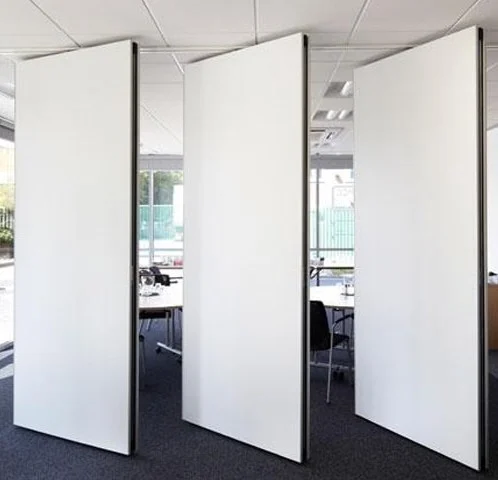
Track fixing rarely happens in isolation. Ceiling, lighting, HVAC, sprinkler and finish trades may all occupy the same overhead zone. The mobilization sequence should identify which trade releases the zone and which trade takes it back after track fixing.
A simple handover record can reduce disputes. Record the zone, the date, the reviewed drawing reference and any outstanding items. This is a coordination tool, not a certification of performance. Pass-door requirements and project documentation can be discussed with the supplier so that the layout and access strategy are aligned before installation begins.
Common Planning Gaps That Delay Installation
Most delays come from releasing crews before readiness is verified. Typical gaps include an outdated layout, an unresolved stacking position, or a track route that was changed without updating the drawing set. Another common gap is treating a generic finish sample as confirmation of a project requirement.
To avoid these gaps, keep one controlled drawing set, verify each zone against the checklist, and confirm support, acoustic and dimensional requirements with the responsible parties. Do not infer hidden performance from a photograph, a sample or a previous project.
FAQ: Track Fixing Crew Mobilization Planning
What is the movable partition track fixing crew mobilization sequence?
It is the planned order in which a track fixing crew is released to a zone after readiness checks, followed by inspection and then panel installation. It is a coordination framework, not a fixed schedule.
Can panels be installed before the track route is complete?
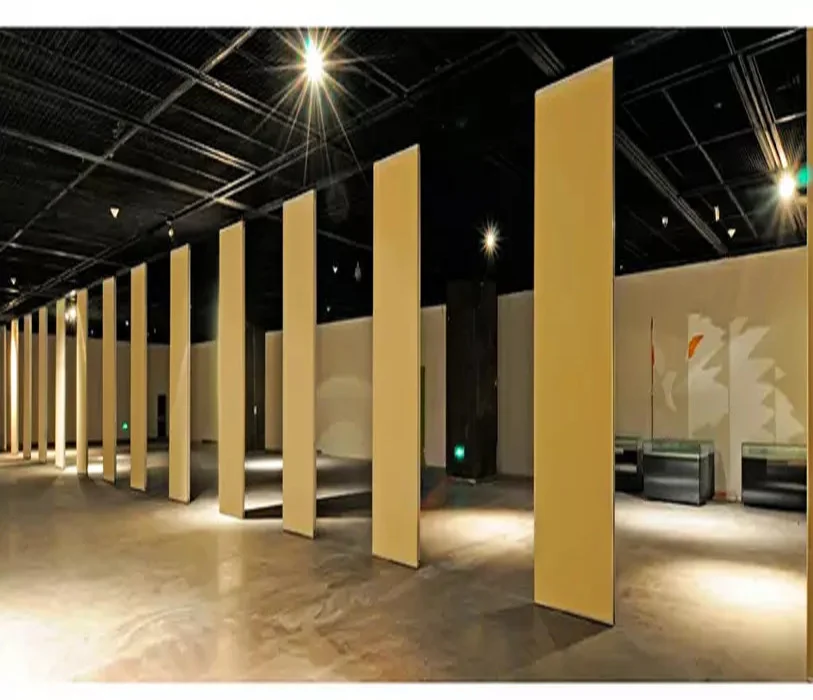
No. Panels are top-hung and require a continuous connected overhead route. The reviewed route, including straight, turning and stacking paths, should be complete and inspected before panel movement.
Do movable partitions need a floor track?
EBUNGE movable partition panels are suspended from a top track and cross the opening without a floor track. The exact route, junction arrangement, continuous overhead path and parking position must be confirmed from the coordinated project drawings.
Which finish options are available?
Confirmed finish options include laminate, melamine, fabric, leather, glass and other approved surfaces. Finish selection does not confirm acoustic, fire or durability performance; confirm project-specific requirements separately.
How should acoustic requirements be handled?
Acoustic requirements should be confirmed against project-specific evidence.
When should the contractor contact the supplier?
Contact the supplier during drawing review, before crew mobilization, so that route, parking, pass-door and documentation questions can be discussed while changes are still inexpensive to coordinate.
Conclusion and Next Step
A disciplined mobilization sequence protects the overhead route, the panels and the project schedule. Verify zone readiness, release the track fixing crew only to approved zones, inspect the installed route, and then proceed to panel installation. Keep every performance, support and dimensional statement tied to project-specific confirmation.
To review your layout, route and documentation requirements, contact the EBUNGE team. You can also review the movable wall product range and the planning resources before your next coordination meeting.