
Quick answer: movable partition track anchor substrate verification
Review focus: movable partition track anchor substrate verification.
Movable partition track anchor substrate verification is the step that decides whether a top-hung system can be installed as drawn. EBUNGE movable wall panels are individually movable, suspended from a top track, cross the opening without a floor track, and park at a planned stacking position. Because the panels hang from above, the overhead structure carries the installation logic. This article sets out a pre-panel-hang sequence for contractors: confirm the drawings, verify the substrate evidence, review the continuous route, and record what still needs project-specific confirmation.
Why Verification Happens Before Panel Hang
Project review term: movable partition track anchor substrate verification.
Once panels are hung, correcting a track position or support condition becomes disruptive. The verification sequence exists to catch mismatches while the overhead work is still open and accessible. The suitability of each route and parking arrangement depends on the approved layout, circulation, ceiling interfaces and operating sequence.
Treat every recommendation here as a prompt for project-specific confirmation. The exact overhead route and support arrangement must be confirmed by the responsible project team from coordinated drawings.
Step 1: Confirm the Layout and Movement Routes
Coordination scope: movable partition track anchor substrate verification.
Start with the approved layout drawing. The exact route, junction arrangement, continuous overhead path and parking position must be confirmed from the coordinated project drawings. EBUNGE reviews straight, turning and stacking routes from the layout, so the drawing is the first evidence item to check.
What the route review must show
- The full opening the panels will close.
- Any change of direction along the track path.
- The parking or stacking zone and how panels reach it.
- Adjacent structure, services or finishes that could obstruct movement.
Every proposed movement path requires a continuous connected overhead route and project-specific support review.
Step 2: Verify the Substrate Evidence
The contractor should confirm what the structure is, how it was built, and what evidence exists for its condition. Visible appearance alone is not evidence of capacity.
Evidence note
Do not derive hidden structural, acoustic, fire, durability or load performance from a visible shape, finish, photograph or drawing. Where the substrate record is incomplete, raise it as an open item before panel hang.
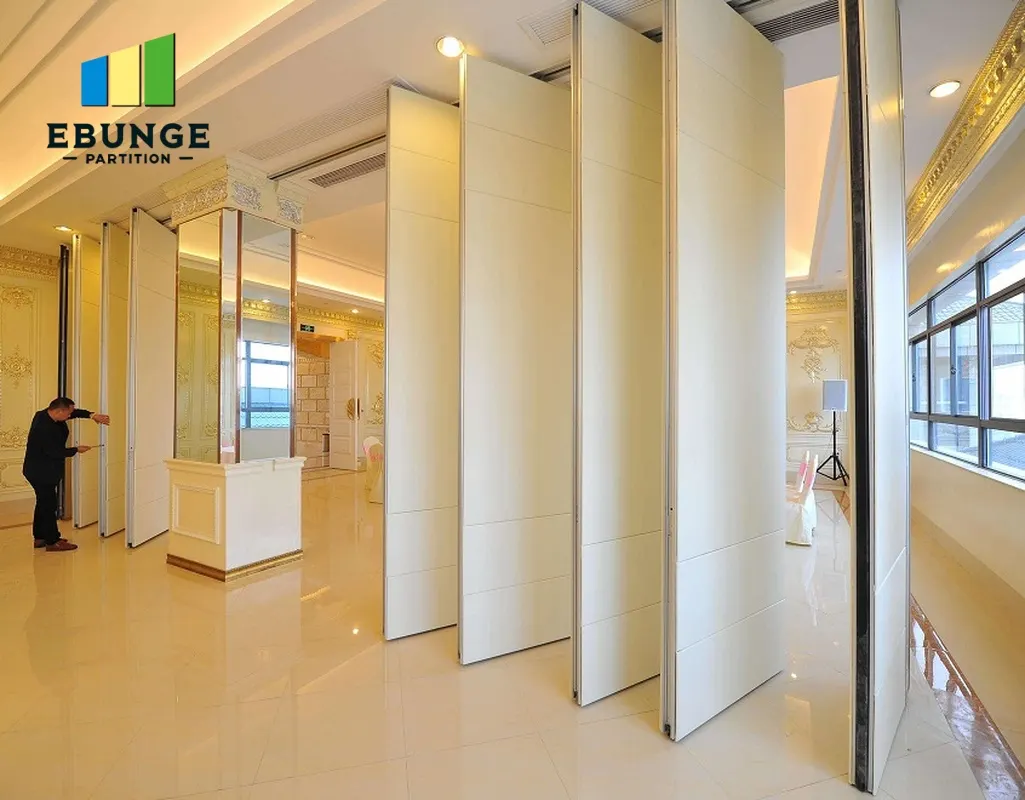
If the substrate is a slab, beam, steel section or secondary framing, the relevant design professional should confirm that the support arrangement is acceptable.
Step 3: Plan the Track Anchor Pull-Out Check
Pull-out readiness is a project-specific engineering question. The sequence below keeps the check organised without inventing values.
- Identify each anchor location from the approved track setting-out.
- Confirm the substrate type and condition at each location.
- Confirm that the anchor type and fixing method are specified for that substrate.
- Confirm who will inspect and record the installed anchors.
- Confirm the hold point: no panel hang until the check is signed off.
Do not treat a generic fixing detail as proof of capacity. Anchor selection, spacing and verification criteria must come from the project specification and the responsible engineer.
Step 4: Coordinate Interfaces and Finishes
Confirm the sequence with the ceiling and MEP trades so that access is not closed off before the track is set and checked.
Coordination checklist
- Ceiling void depth and access openings.
- Service routes that cross the track line.
- Finish interfaces at the track and at the stacking zone.
- Protection of finished surfaces during movement testing.
Finish selection is separate from support verification. Confirmed finish options include laminate, melamine, fabric, leather, glass and other approved surfaces.
Step 5: Review Acoustic and Dimensional Requirements
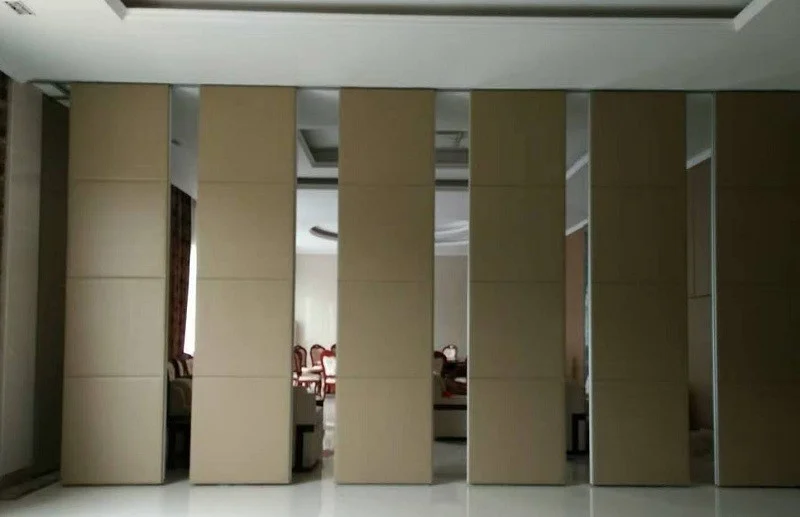
Visible references can support layout discussion but do not verify hidden construction or performance.
Dimensional requirements also need confirmation: opening size, panel height, track length, turning geometry and stacking space. Pass-door requirements and project documentation can be discussed with EBUNGE so that the layout and the installation sequence stay aligned.
Step 6: Hold Point and Sign-Off Before Panel Hang
Use a written hold point. The track should not receive panels until the substrate, anchor and route checks are recorded as complete. This protects the installation sequence and gives the project team a clear basis for the next stage.
Pre-hang verification record
| Item | Evidence to record | Status |
|---|---|---|
| Approved layout | Drawing reference and revision | Open / Closed |
| Substrate condition | Inspection note or project record | Open / Closed |
| Anchor specification | Project specification reference | Open / Closed |
| Pull-out check | Inspection sign-off | Open / Closed |
| Continuous route | Route drawing and site check | Open / Closed |
| Stacking zone | Layout confirmation | Open / Closed |
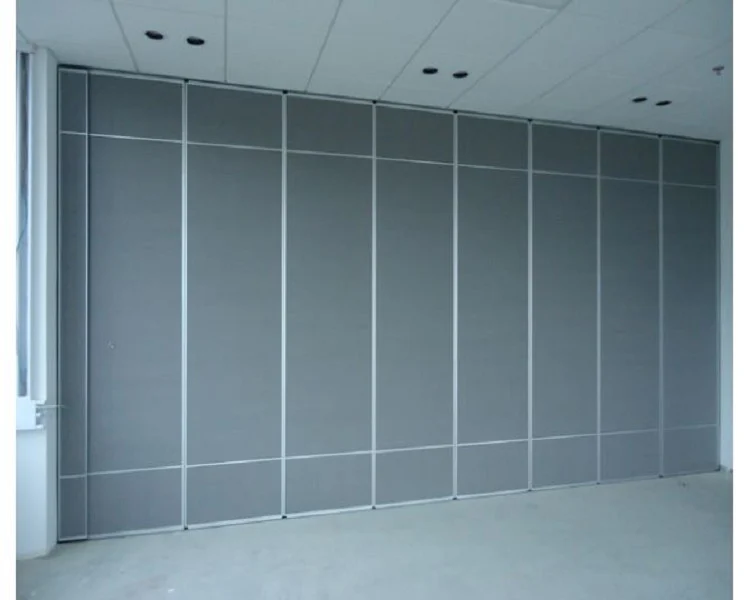
For product context, see the movable partition wall page. Additional planning material is available in the resources section.
Frequently Asked Questions
What is movable partition track anchor substrate verification?
It is the process of confirming that the overhead structure and anchor arrangement match the approved drawings and project specification before panels are hung. It combines drawing review, substrate evidence and a documented pull-out check.
Can EBUNGE confirm the structural capacity of my substrate?
No. EBUNGE can discuss project documentation and layout requirements, but support and anchor capacity must be confirmed for the specific building.
Do movable partitions need a floor track?
EBUNGE movable partition panels are top-hung and move without a continuous floor running track or floor hardware along the partition line.
How should acoustic requirements be handled?
Provide the current layout, opening dimensions, ceiling information, intended room use, and relevant project drawings for review. The exact overhead route and support arrangement must be confirmed by the responsible project team from coordinated drawings.
When should the pull-out check happen?
Before panel hang, as a defined hold point. The exact timing, inspection method and acceptance criteria should be agreed with the project team and recorded.
Can pass doors be included?
Pass-door requirements and project documentation can be discussed with EBUNGE. The final configuration depends on the layout, route and project-specific confirmation.
Conclusion and Next Step
Movable partition track anchor substrate verification is a sequence, not a single inspection. Confirm the layout and routes, verify the substrate evidence, plan the pull-out check, coordinate interfaces, review acoustic and dimensional requirements, and hold panel hang until the record is closed.
Every project has its own support, acoustic and dimensional conditions. Confirm those requirements with the responsible professionals before installation proceeds. To discuss your layout, documentation and pass-door requirements, contact EBUNGE.