
Quick answer: tender returnable schedule cross
Review focus: tender returnable schedule cross.
When a movable partition wall package goes to tender, the returnable schedule is the spine of the evaluation. If a required document is missing from the instructions, absent from the form of tender, or disconnected from a priced row, scoring begins on an incomplete picture. This movable partition wall tender returnable schedule cross-reference framework gives procurement reviewers a repeatable way to surface those gaps before evaluation opens rather than after an award recommendation. It is a document-control method, not a performance claim, and every project-specific support, acoustic and dimensional requirement still needs confirmation against the drawings and specification.
Why the Returnable Schedule Deserves Its Own Review Pass
Project review term: tender returnable schedule cross.
Most tender documents are assembled by different authors at different times. The instructions to bidders may be adapted from a previous project, the form of tender may be a standard template, and the priced schedule may be built by a quantity surveyor working from drawings. Each document can be internally consistent while the three together leave a returnable unrequested, unreferenced or unpriced.
For movable partitions, the risk is compounded because the scope includes both product and route. A bidder may be asked to price panels but not the review of straight, turning and stacking routes, or to confirm finishes without a place to record which approved surface is offered. A cross-reference pass catches these mismatches while there is still time to issue a clarification.
The Three-Way Cross-Reference Model
Coordination scope: tender returnable schedule cross.
Treat every returnable as a row that must exist in three places: the instructions to bidders, the form of tender, and the priced schedule. The instructions define what must be submitted. The form of tender captures the bidder’s commitment. The priced schedule gives that commitment a commercial row. A returnable that appears in only one or two of the three is a defect.
| Returnable type | Instructions to bidders | Form of tender | Priced schedule |
|---|---|---|---|
| Layout and route review acknowledgement | Required | Signature or declaration | Related row or included item |
| Finish selection schedule | Submission requirement | Offered finish reference | Finish-related row |
| Pass-door requirement statement | Scope description | Confirmation field | Associated row |
| Project documentation list | Document register | Attachment reference | Not always priced |
The table is a control aid, not a mandatory form. The exact overhead route and support arrangement must be confirmed by the responsible project team from coordinated drawings.
Step-by-Step Reviewer Workflow Before Evaluation Opens
Checklist focus: tender returnable schedule cross.
- Extract every returnable named in the instructions to bidders into a single register.
- Mark each register item as priced, declared, or both, according to the tender structure.
- Open the form of tender and confirm each declared item has a matching field, signature line or attachment reference.
- Open the priced schedule and confirm each priced item has a row that a bidder can complete.
- Flag any register item that is missing from either downstream document.
- Check that route review, finish selection and pass-door requirements are represented consistently across all three documents.
- Issue clarifications before the return date, not after bids are opened.
This sequence is deliberately document-first. It does not require the reviewer to judge panel performance, only to confirm that the tender asks for the information the evaluation will later need.
Common Misalignments and How They Surface
Review focus: tender returnable schedule cross.
Instructions require a submission the form of tender cannot capture

This happens when a bespoke requirement is added to the instructions but the form of tender remains a standard template. The bidder has no structured place to respond, so the answer may arrive in a covering letter that is easy to overlook during scoring.
The priced schedule has rows with no corresponding requirement
Extra rows can invite bidders to price items the specification does not require, or to leave them blank and create ambiguity about what is included. Cross-referencing the schedule against the instructions clarifies whether each row is mandatory, optional or informational.
Route and stacking review is implied but not requested
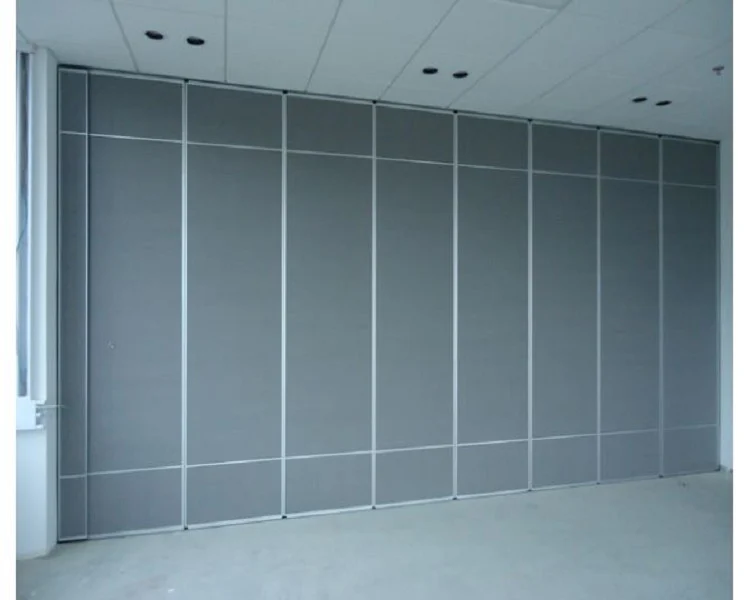
Movable wall panels are individually movable, suspended from a top track, cross the opening without a floor track, and park at a planned stacking position. Straight, turning and stacking routes are reviewed from the layout. If the tender does not explicitly ask bidders to acknowledge that review, the evaluation may proceed without a common understanding of the route.
Evidence Boundaries for Reviewers
Cross-referencing confirms that the tender asks for information. It does not confirm that any bidder’s proposed system will meet the project’s acoustic, dimensional or support requirements. Those remain subject to project-specific review.
The suitability of each route and parking arrangement depends on the approved layout, circulation, ceiling interfaces and operating sequence. Where acoustic requirements appear, confirm with the project team how they are to be demonstrated and documented.
Similarly, finish options such as laminate, melamine, fabric, leather, glass and other approved surfaces describe available categories, not a guarantee of suitability for a particular room, cleaning regime or design intent.
Building the Cross-Reference Register
A simple register with columns for returnable name, source clause, form-of-tender reference, priced-schedule row and status is enough for most packages. Keep it as a live document through the clarification period. When an addendum changes a requirement, update the register and re-check the three-way match.

For teams that prefer a checklist, the minimum set usually includes: layout and route acknowledgement, finish selection, pass-door requirements, project documentation, and any project-specific declarations the specification introduces. Confirm the actual set with the project team, because tender structures vary by client and jurisdiction.
Frequently Asked Questions
What is a tender returnable schedule cross-reference?
It is a review method that checks whether every required returnable appears in the instructions to bidders, is captured in the form of tender, and is traceable to a priced row or declaration before evaluation begins.
Why does this matter for movable partition wall packages?
Movable partition scope includes product, finish and route considerations. A missing returnable can leave the evaluation without a common basis for comparing offers, especially where layout review or pass-door requirements are involved.
Does cross-referencing confirm acoustic performance?
No. It confirms that the tender asks for the relevant information.
Can the register be used with any tender format?
Yes, the register is a control aid. Adapt the columns and rows to the project’s own documents, and confirm with the project team which items are priced and which are declarations.
When should clarifications be issued?
As soon as a mismatch is found and before the return date, so bidders can respond within the same tender period rather than through post-tender correspondence.
Where can reviewers find supporting project documentation guidance?
Review the maintained resources for general planning context, and discuss project documentation requirements directly with the supplier during the tender period.
Conclusion and Next Step
A disciplined cross-reference pass protects the integrity of the evaluation. It does not replace technical review, but it ensures the tender asks for what the evaluation needs. Start with the register, confirm the three-way match, and resolve gaps before scoring opens.
To discuss pass-door requirements, project documentation or the layout review process for a specific movable partition package, contact the EBUNGE team. You can also review the movable wall product range for general context before preparing your tender queries.