
Quick answer: movable partition wall
Review focus: movable partition wall.
Movable partition wall tender returnable reconciliation is the discipline of checking, before bids are opened, that every document the tender asked for has actually arrived and that each bidder answered the same question in the same place. It is not a scoring exercise and it does not decide the winner. It protects the evaluation from avoidable confusion: a missing drawing, a schedule submitted in a different format, or an acoustic statement that cannot be compared with its neighbours. This article sets out a reviewer’s framework for mapping required submittals to bidder responses, using only maintained product facts and clearly stated evidence limits.
Why Reconcile Returnables Before Opening
Project review term: movable partition wall.
Once bids are opened, the room for clarification narrows. Reviewers may still seek missing documents, but the comparison becomes harder when submissions are structured differently. A pre-opening reconciliation pass gives the evaluation team a clean baseline: which returnables exist, which are absent, and which need a defined clarification route.
The goal is comparability, not completeness for its own sake. A bidder who submits a beautifully formatted document that does not answer the tender question is less useful than one who submits a plain response that does. Reconciliation separates those two situations.
Start With the Tender’s Own Returnable Schedule
Coordination scope: movable partition wall.
The tender returnable schedule is the controlling document. Before looking at any bidder response, rebuild it as a numbered list with one row per required item. Include the exact wording used in the tender, because paraphrasing during reconciliation can hide a mismatch.
Classify Each Returnable by Type
- Commercial: forms, declarations, pricing schedules and validity statements.
- Technical: layout drawings, route reviews, finish schedules and interface notes.
- Compliance: certificates, declarations and project-specific confirmations requested by the tender.
- Programme: delivery, installation and coordination statements requested in the documents.
Classification matters because different returnables fail in different ways. A missing commercial form is usually a simple absence. A technical returnable may be present but misaligned with the tender’s own drawing set.
Map Bidder Responses to the Schedule
Checklist focus: movable partition wall.
Create a matrix with returnables as rows and bidders as columns. For each cell, record one of four states: present and aligned, present but misaligned, absent, or unclear. Avoid free-text notes in the matrix itself; keep the matrix scannable and put detail in a separate log.
What ‘Aligned’ Means in Practice
Aligned means the bidder answered the question the tender asked, using the tender’s units, drawing references and terminology. It does not mean the answer is acceptable. Acceptance is an evaluation decision made later by the responsible team.
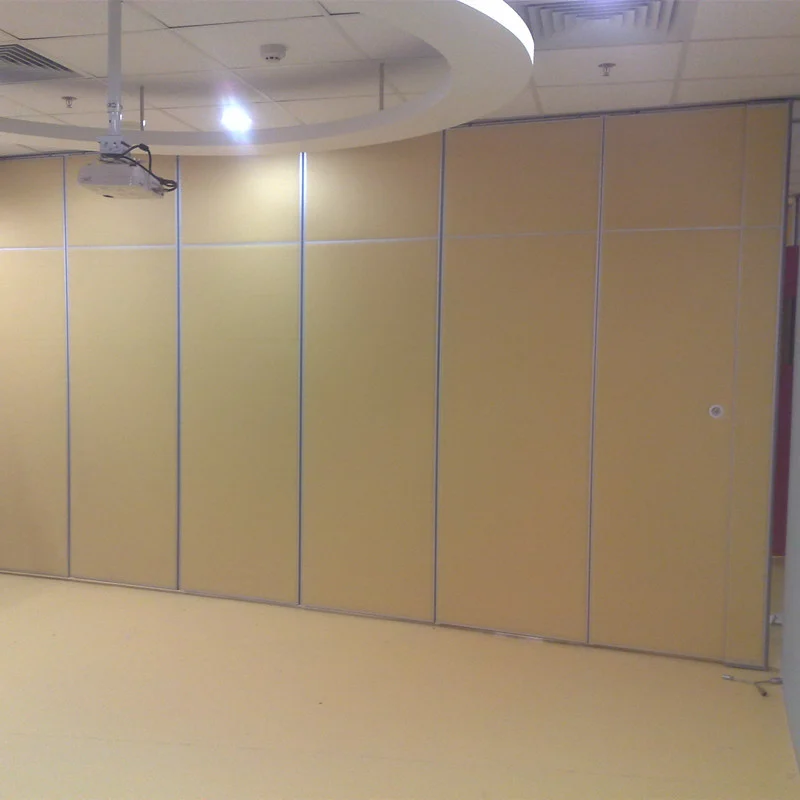
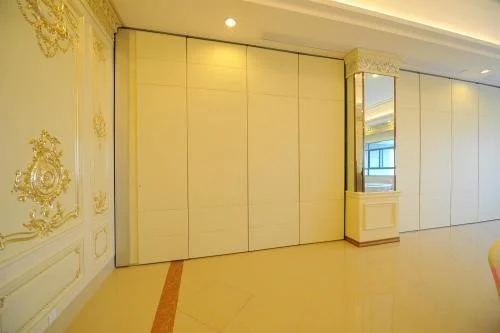
For movable partition packages, alignment often turns on layout. EBUNGE movable wall panels are individually movable, suspended from a top track, cross the opening without a floor track, and park at a planned stacking position. Straight, turning and stacking routes are reviewed from the layout. A bidder response that shows panels crossing an opening but does not address the overhead route or the parking position is present but misaligned with the tender’s technical intent.
Evidence Boundaries Reviewers Should Apply
Review focus: movable partition wall.
Reconciliation is also a check on claims. Reviewers should not infer performance from a finish name, a photograph or a drawing shape. Confirmed finish options include laminate, melamine, fabric, leather, glass and other approved surfaces. The suitability of each route and parking arrangement depends on the approved layout, circulation, ceiling interfaces and operating sequence.
Evidence note: STC and Rw are single-number rating concepts used to describe acoustic performance. They are not a count of decibels, and a rating value should never be treated as a direct measurement of how loud a room will be. Where acoustic performance matters, the project team must confirm the applicable requirement, the test evidence offered and the boundary conditions of that evidence.
Where a bidder submits an acoustic statement, record what it covers and what it does not. Do not assume that a seal detail shown on a drawing performs in a particular way without project-specific confirmation.
A Five-Step Pre-Opening Reconciliation Process
Project review term: movable partition wall.
- Freeze the returnable list. Use the tender’s exact wording and issue a controlled version number.
- Build the matrix. Rows for returnables, columns for bidders, four states per cell.
- Check technical alignment. Compare layout, route and parking information against the tender drawings, not against another bidder.
- Log gaps and ambiguities. Separate true absences from responses that need clarification.
- Prepare clarification questions. Write neutral questions that do not reveal evaluation preferences.

This process does not assume any project outcome. It simply ensures the evaluation team knows what it has before opening.
Common Misalignments in Movable Partition Packages
Several patterns recur across tenders. Recognising them speeds up review without changing the rules.
Layout and Route Misalignment
A bidder may submit a plan showing the partition line but omit the turning or stacking route. Because panels are top-hung and cross the opening without a floor track, the overhead route and the parking position are central to the layout review. A response that ignores them is incomplete for reconciliation purposes.
Finish Schedule Misalignment
Finish schedules may list surfaces without matching the tender’s room-by-room requirements. Confirmed finish options are broad, but the tender may specify particular surfaces in particular locations. Reconciliation checks that the bidder addressed the locations the tender named.
Documentation Misalignment
Pass-door requirements and project documentation can be discussed with the supplier. Where the tender asks for documentation about these items, the reviewer should confirm the bidder responded to the same scope, not a generic substitute.
Decision Checklist for the Review Lead
- Is the returnable list frozen and version-controlled?
- Does every bidder appear as a column in the matrix?
- Are technical responses compared against the tender drawings rather than against each other?
- Are acoustic statements recorded with their evidence boundaries intact?
- Are clarification questions neutral and traceable to a specific returnable?
- Has the team confirmed project-specific support, acoustic and dimensional requirements before drawing conclusions?
Frequently Asked Questions
What is movable partition wall tender returnable reconciliation?
It is the pre-opening review that maps each required tender submittal to the corresponding bidder response, recording whether the response is present and aligned, present but misaligned, absent or unclear.
Does reconciliation decide which bidder wins?
No. Reconciliation establishes comparability and identifies gaps. Evaluation and award decisions remain with the responsible procurement team under the tender rules.
How should acoustic statements be handled during reconciliation?
Record what the statement covers and its boundary conditions. Project-specific acoustic requirements must be confirmed separately.
Why do layout and route drawings matter so much for movable partitions?
Because the panels are top-hung and cross the opening without a floor track, the straight, turning and stacking routes must be reviewed from the layout. A response that omits the overhead route or parking position is incomplete for comparison.
Can finish options be used as evidence of performance?
No. Confirmed finish options such as laminate, melamine, fabric, leather and glass describe surface selection.
When should the reviewer ask for clarification?
When a returnable is absent, unclear or misaligned in a way that prevents comparison. Clarification questions should be neutral, specific and traceable to the returnable list.
Conclusion and Next Steps
A disciplined reconciliation pass turns a pile of bidder documents into a comparable set before opening. The method is deliberately modest: freeze the returnable list, build the matrix, check technical alignment against the tender drawings, log gaps, and prepare neutral clarifications. It does not require performance assumptions, and it does not replace project-specific confirmation of support, acoustic and dimensional requirements.
For product context, review the movable wall systems page. For planning resources, see the resources library. To discuss pass-door requirements, documentation or project-specific coordination, contact the EBUNGE team.